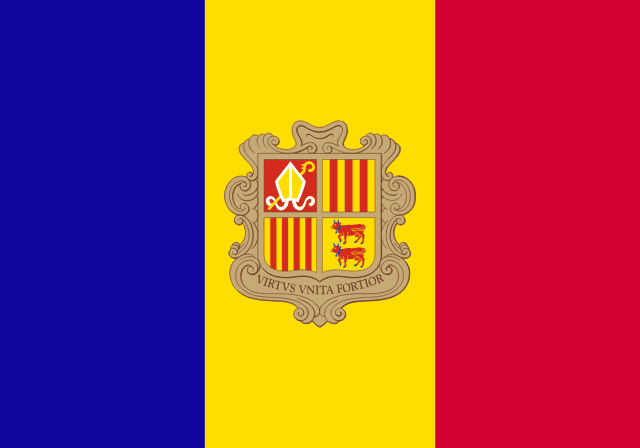
At a Glance
Alliances & Memberships
- UN
- OSCE
- Council of Europe
- IBERAMERICA
Foreign Policy Overview
Andorra maintains a foreign policy rooted in neutrality, peaceful coexistence, and cooperation, particularly with its larger neighbors, France and Spain. It actively participates in international organizations, promoting multilateralism, human rights, and sustainable development. The country prioritizes economic diversification, environmental protection, and strengthening its position within Europe while seeking closer ties with the European Union. Andorra generally avoids military involvement and focuses on soft power diplomacy.
Key Positions on Major Issues
Climate: Andorra is committed to environmental protection and sustainable development, supporting international efforts to combat climate change and protect biodiversity. It aims to become a leader in green energy and alpine conservation. Security: Andorra maintains a neutral and demilitarized status, relying on international cooperation for security. It advocates for peaceful resolution of conflicts and adherence to international law. Human Rights: Andorra strongly upholds human rights and fundamental freedoms, actively participating in Council of Europe initiatives and promoting equality and non-discrimination. Trade: Andorra seeks to diversify its economy and integrate further into the European market, negotiating an association agreement with the EU to facilitate trade and investment. Regional: Andorra prioritizes strong bilateral relations with France and Spain, its closest neighbors and co-principality partners. It also actively engages with other European microstates and regional bodies.
UN Voting Record Notes
Andorra generally aligns with Western European voting blocs in the UNGA, often cosponsoring resolutions on human rights, environmental protection, and international law. For instance, it consistently voted in favor of resolutions condemning Russian aggression in Ukraine since 2022. It also supports resolutions promoting sustainable development goals and gender equality. Given its demilitarized status, it often advocates for peaceful dispute resolution.
Economy & Trade
Andorra’s economy is primarily driven by tourism, particularly skiing, and its status as a tax haven, though this is gradually changing. Banking and finance, as well as retail, are significant sectors. The primary trade partners are Spain and France. The euro is the official currency. The country is working to diversify its economy beyond tourism and finance and attract foreign investment in new sectors.
Military & Security
Andorra has no standing army. Its defense is primarily the responsibility of France and Spain under a long-standing agreement. It maintains a small internal police force. Andorra is not a member of NATO and remains militarily neutral, focusing its security efforts on policing, border control, and international cooperation against crime. There are no nuclear or WMD facilities or ambitions.
Recent History
In the early 1990s, Andorra adopted its first constitution in 1993, transitioning from a feudal co-principality to a modern parliamentary democracy while retaining its unique co-princes. This move led to its entry into the United Nations in 1993, signifying its formal recognition on the international stage. In the 2000s, Andorra focused on economic modernization, gradually moving away from its traditional tax haven status to align with international financial transparency standards, a process that accelerated after the 2008 financial crisis. From 2011 onwards, Andorra intensified negotiations for an association agreement with the European Union to deepen economic integration and market access, addressing concerns about its small market size and limited diversification. More recently, in 2023-2024, discussions regarding the terms of its EU association agreement remain a key focus, alongside efforts to promote sustainable tourism and environmental protection.
International Memberships
- UNsince 1993
Andorra joined the UN shortly after adopting its constitution, marking its full recognition as a sovereign state and its commitment to multilateralism and international cooperation.
- Council of Europesince 1994
Accession to the Council of Europe underscored Andorra's dedication to human rights, democracy, and the rule of law, aligning its legal framework with European standards.
- OSCEsince 1996
Membership in the OSCE reflects Andorra's commitment to security and cooperation in Europe, promoting dialogue on political, economic, and human rights issues.
- IBERAMERICAsince 12/20/1993
Andorra joined IBERAMERICA to foster closer cultural, economic, and political ties with other Spanish and Portuguese-speaking countries.
MUN Negotiation Profile
Andorra primarily aligns with Western European democratic and liberal blocs, frequently collaborating with nations within the European Union and the Council of Europe on issues of human rights, environmental policy, and peacebuilding.
Andorra often adopts a bridge-building and consensus-oriented negotiation style, aiming to find common ground and promote dialogue. It typically aligns with like-minded small European states and often seeks to mediate or facilitate agreements rather than push aggressive agendas, focusing on soft power and ethical diplomacy.
- National sovereignty
- Environmental protection standards
- Fiscal autonomy
- "My delegation emphasizes the importance of multilateral cooperation, particularly for small states, in addressing global challenges."
- "Andorra believes that sustainable development and environmental protection are crucial for future generations and must be prioritized."
- "We advocate for peaceful resolution of disputes and adherence to international law as the foundation of global stability."
- "My delegation stresses the unique cultural heritage of Andorra and the importance of preserving the identity of small nations."
- "Andorra supports initiatives that promote human rights, gender equality, and social inclusion worldwide."