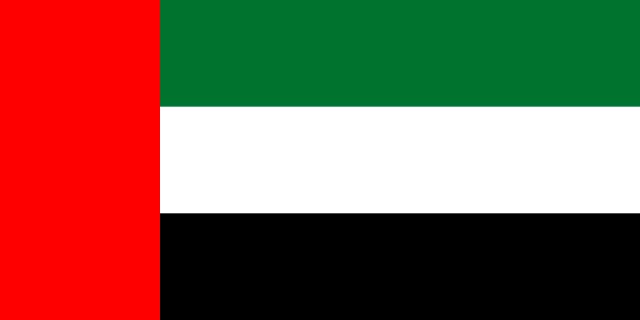
At a Glance
Alliances & Memberships
- Gulf Cooperation Council (GCC)
- Arab League
- OPEC
- BRICS+ (Joined 2024)
- OIC
- I2U2 Group
- Abraham Accords signatories
Foreign Policy Overview
The UAE follows a policy of pragmatic 'de-escalation' and 'economic diplomacy' aimed at maintaining regional stability to safeguard its role as a global trade hub. Its posture shifted from active military intervention (Yemen/Libya) toward a mediation-centric approach, evidenced by restoring ties with Iran and Turkey. The 2020 Abraham Accords represent a landmark shift toward normalization with Israel to counter regional threats. UAE policy prioritizes energy security, counter-terrorism, and pioneering climate technology within the global South. It maintains a strategic partnership with the US while deepening economic and BRICS-aligned ties with China and Russia.
Key Positions on Major Issues
CLIMATE: Committed to Net Zero by 2050; host of COP28; advocates for 'phasing out emissions' rather than 'phasing out fuels' through carbon capture and renewables (Masdar). SECURITY: Zero tolerance for non-state actors/militias (Hezbollah, Houthis); supports a two-state solution for Israel-Palestine; advocates for stricter maritime security in the Strait of Hormuz. HUMAN RIGHTS: Modernizing legal codes (2021 reforms) but maintains strict cybercrime laws; rejects foreign interference in domestic judicial sovereignty regarding labor (kafala system reforms). TRADE: Champion of Comprehensive Economic Partnership Agreements (CEPA); opposes unilateral sanctions that disrupt global supply chains. REGIONAL: Supports the sovereignty of Libya and Sudan via negotiated settlements; maintains claim over Greater/Lesser Tunbs and Abu Musa islands (occupied by Iran).
UN Voting Record Notes
In the UNGA, the UAE typically aligns with the Arab Group and G77. It voted to condemn the invasion of Ukraine (ES-11/1) but abstained on suspending Russia from the Human Rights Council. On Israel-Palestine, it consistently votes for resolutions supporting Palestinian statehood while using its UNSC seat to foster language emphasizing humanitarian aid (Res 2720). It frequently votes against resolutions that impose specific human rights mandates on sovereign states without their consent.
Economy & Trade
GDP composition: Petroleum (30%), wholesale/retail (12%), construction (9%). Currency: UAE Dirham (AED), pegged to USD ($1=3.67). Key exports: Crude oil, refined petroleum, gold, broadcasting equipment. Major partners: China, India, Japan, Saudi Arabia, USA. Economy is aggressively diversifying via 'We the UAE 2031' vision targeting non-oil exports.
Military & Security
Professional force (UAE Armed Forces) nicknamed 'Little Sparta' for high proficiency. Spending: approx. 5.6% of GDP. Alliances: Major Non-NATO Ally (MNNA) status with the USA. WMD: Signatory of NPT; operates the Barakah nuclear power plant under strict IAEA safeguards (Gold Standard). Doctrine focuses on rapid deployment, air superiority, and cyber-defense.
Recent History
Post-1990 history is defined by the rapid transformation of Dubai and Abu Dhabi into global finance/tourism hubs. The 2008 financial crisis saw Abu Dhabi bail out Dubai, centralizing federal power. Following the 2011 Arab Spring, UAE adopted a proactive counter-Islamist foreign policy. 2015-2020 saw military involvement in Yemen against Houthi rebels. 2020 marked the signing of the Abraham Accords. In 2022, the transition of power to Mohamed bin Zayed solidified a focus on 'The Next 50' years of technological and space expansion (Hope Mars Mission).
International Memberships
- United Nations (UN)since 1971
Non-permanent member 2022-2023; active on climate and youth.
- Gulf Cooperation Council (GCC)since 1981
Founding member; central to regional security and economic integration.
- OPECsince 1967
Major oil producer; influences global energy pricing.
- BRICS+since 2024
Strategic shift toward multipolarity and Global South cooperation.
- UNFCCCsince 1992
Committed to the Paris Agreement and hosting landmark summits.
MUN Negotiation Profile
Moderate Arab Bloc / Pro-Investment Globalists
Conciliatory, consensus-builder, focus on technical/economic feasible solutions over ideology.
- Direct condemnation of the UAE judicial system or internal domestic laws.
- Any resolution infringing upon the sovereign right to manage national oil and gas reserves.
- Recognition of Iranian sovereignty over the islands of Greater Tunbs, Lesser Tunbs, and Abu Musa.
- Measures that provide legitimacy to non-state paramilitary groups or militias.
- "The UAE believes that the transition to a green economy must be equitable and inclusive, ensuring energy security for the developing world."
- "We urge this committee to prioritize de-escalation and diplomatic dialogue over the cycle of retributive sanctions."
- "My delegation emphasizes that regional stability is the cornerstone of global trade, and we must act collectively to secure maritime corridors."
- "We present our 'Vision 2031' as a blueprint for how a nation can transition from resource-dependence to a knowledge-based economy."
- "The UAE stands ready to act as a bridge between the East and West, utilizing our seat at the table to foster multilateral cooperation."