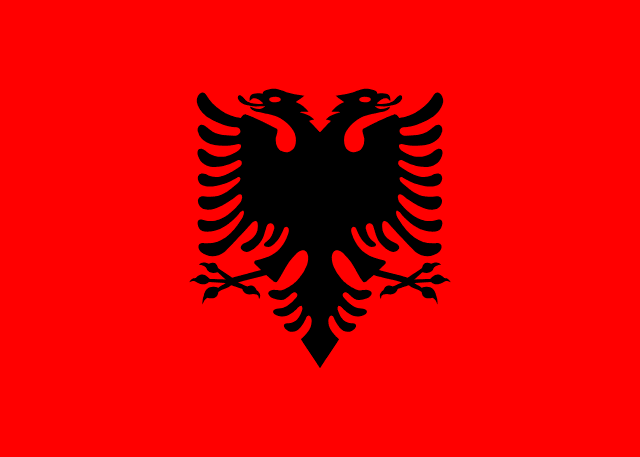
At a Glance
Alliances & Memberships
- NATO
- OSCE
- CEFTA
- BSEC
Foreign Policy Overview
Albania's foreign policy is anchored in Euro-Atlantic integration, primarily seeking full membership in the European Union. As a NATO member since 2009, it actively participates in collective defense and security initiatives. The country maintains strong bilateral relations with the United States and its regional neighbors, particularly Kosovo, with whom it shares close ethnic and cultural ties. Albania also focuses on promoting regional stability in the Western Balkans and combating transnational crime and terrorism, often aligning its foreign policy with broader EU and NATO objectives. Its foreign policy is further shaped by its commitment to multilateralism and international law.
Key Positions on Major Issues
Climate: Albania supports international efforts to combat climate change, actively participating in UNFCCC processes and aiming to increase renewable energy sources. Security: As a NATO member, Albania is committed to collective defense, contributing to peacekeeping operations and regional stability efforts, and condemning Russian aggression in Ukraine. Human Rights: Albania upholds international human rights standards, though challenges remain in areas such as corruption and judicial reform. Trade: Albania pursues liberalized trade policies, particularly within CEFTA, and aims to align its trade regulations with the EU acquis. Regional: Albania is a proactive player in the Western Balkans, advocating for regional cooperation and the European integration of all Western Balkan states, notably supporting Kosovo's sovereignty.
UN Voting Record Notes
Albania consistently aligns its voting patterns with Western democracies, particularly on issues concerning territorial integrity and international law. For instance, in the UN General Assembly, Albania has condemned Russia's invasion of Ukraine, voting in favor of resolutions demanding Russian troop withdrawal. Similarly, it has generally supported resolutions calling for a two-state solution in the Israel-Palestine conflict, often aligning with the EU consensus. On climate change, Albania typically votes in favor of resolutions promoting sustainable development and environmental protection, as seen in its support for resolutions emphasizing climate action and adaptation.
Economy & Trade
Albania's economy is a developing mixed economy, with a GDP composition leaning towards services (around 54%), followed by industry (24%) and agriculture (22%). Key industries include energy (hydropower), mining (chromium, copper), tourism, and textiles. Major exports include textiles and footwear, minerals, fuels, and food products, with top trade partners being Italy, Greece, Kosovo, and Germany. Imports primarily consist of machinery, equipment, foodstuffs, and chemicals. The national currency is the Albanian Lek (ALL). Notable economic challenges include high unemployment, especially among youth, and ongoing efforts to combat corruption and improve the business environment.
Military & Security
The Albanian Armed Forces number approximately 8,000 active personnel with a defense budget around 1.5% of GDP (estimated ~$350 million). A key aspect of Albania's military and security posture is its full integration into NATO since 2009, actively participating in NATO-led operations and exercises. Albania does not possess nuclear weapons or WMDs and is a signatory to relevant non-proliferation treaties. Key security concerns include regional stability in the Western Balkans, cybersecurity threats, and combating organized crime and terrorism. Its doctrine emphasizes collective defense through NATO and contributions to international peace and security.
Recent History
Following the collapse of communism in 1991, Albania transitioned to a democratic system, marked by significant political and economic reforms. The 1997 Albanian civil unrest, triggered by the collapse of pyramid schemes, highlighted the fragility of the post-communist state and led to international intervention for stabilization. In the early 2000s, Albania deepened its Euro-Atlantic aspirations, culminating in its membership in NATO in 2009. The country officially applied for European Union membership in 2009 and gained candidate status in 2014, with accession negotiations formally opening in 2022. Key events also include its active role in regional stability, particularly regarding the Kosovo conflict and its commitment to regional cooperation in the Western Balkans. Ongoing efforts since 2014 have focused on judicial reform and anti-corruption measures to meet EU accession criteria.
International Memberships
- NATOsince 2009
Accession to NATO marked a significant step in Albania's post-communist security alignment, motivated by a desire for collective defense and integration with Western security structures.
- European Union (Candidate)since 2014
Albania was granted EU candidate status in 2014, with the goal of full membership driven by aspirations for economic development, democratic consolidation, and regional stability.
- OSCEsince 1991
Albania joined the OSCE shortly after the fall of communism, reflecting its commitment to security, human rights, and cooperation in Europe during its democratic transition.
- CEFTAsince 2007
Albania's membership in CEFTA facilitates regional trade and economic integration, serving as a stepping stone towards closer ties with the European Union.
- United Nationssince 1955
Albania joined the United Nations during the Cold War era, aligning with global efforts for peace, security, and international cooperation after periods of isolation.
MUN Negotiation Profile
Albania is firmly aligned with the Euro-Atlantic bloc, particularly within NATO and as an EU candidate country, consistently supporting resolutions and initiatives that strengthen collective security, promote democratic values, and advance European integration.
Albania typically adopts a constructive and cooperative negotiation style within multilateral forums, aiming to build consensus and support for resolutions that align with its Euro-Atlantic foreign policy objectives. As a NATO member and EU candidate, it often acts as a bridge-builder between different regional interests, yet it holds firm on its pro-Western stance and core principles like territorial integrity. Its tactics often involve active participation in drafting resolutions and advocating for its regional interests within broader international frameworks.
- Territorial integrity of sovereign states
- Non-negotiable NATO commitments
- Recognition of Kosovo's independence
- "My delegation emphasizes the critical importance of collective security and active participation within NATO as a cornerstone of our foreign policy."
- "Albania remains steadfast in its commitment to the European integration process and urges continued support for the enlargement of the European Union to include the Western Balkans."
- "We strongly condemn any actions that undermine the territorial integrity and sovereignty of recognized states, upholding international law as paramount."
- "My delegation calls for enhanced regional cooperation in the Western Balkans to foster stability, economic growth, and a shared European future."
- "Albania urges all member states to prioritize human rights and rule of law, as these are fundamental to sustainable peace and development."