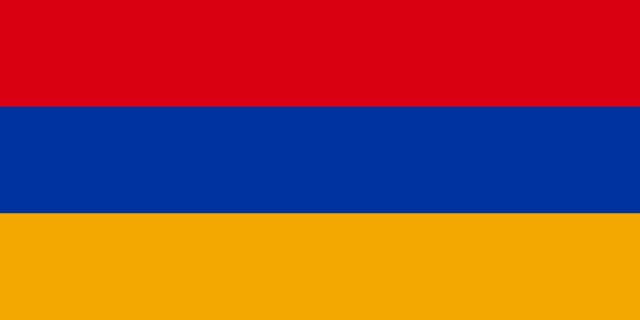
At a Glance
Alliances & Memberships
- CSTO (Collective Security Treaty Organization) - Recent Tensions
- EAEU (Eurasian Economic Union)
- Council of Europe
- OSCE - Minsk Group Framework
- EU Eastern Partnership (CEPA Agreement)
- Frankophonie (OIF)
Foreign Policy Overview
Armenia pursues a policy of 'multi-vectorism' but is currently undergoing a strategic pivot toward Western partnerships following perceived security failures by the CSTO. The central pillar is the preservation of national sovereignty and the security of the Armenian people in the face of Azerbaijani aggression. Armenia seeks the formalization of a peace treaty with Azerbaijan based on the 1991 Alma-Ata Declaration, ensuring territorial integrity of 29,800 sq km. Relations with Russia have cooled significantly due to Moscow's neutrality during the 2023 Artsakh takeover, leading Armenia to freeze participation in CSTO. Concurrently, Armenia is deepening ties with France, India, and the United States for military procurement and democratic stabilization. The 'Crossroads of Peace' project is the flagship regional initiative to unblock transport links without compromising sovereignty.
Key Positions on Major Issues
Security: Demands the reciprocal withdrawal of troops from the shared border based on 1975 USSR General Staff maps. Rejects the 'Zangezur Corridor' if it implies extraterritorial status. Climate: Committed to 40% reduction in GHG emissions by 2030 (relative to 1990) via the NDP. Focuses on scaling up nuclear power (Metsamor plant lifespan extension) and solar. Human Rights: Strong advocate for the prevention of genocide and crimes against humanity; pushes for the return of Armenian Prisoners of War (POWs) held in Baku. Trade: Seeks diversification away from Russian markets; promotes the 'Crossroads of Peace' project to link the Persian Gulf to the Black Sea via Armenian infrastructure. Regional: Normalization with Turkey without preconditions, though tied to progress in the Azerbaijan peace track.
UN Voting Record Notes
Historically aligned with Russia (e.g., abstaining on Ukraine/Crimea votes), but recently shifted. Armenia abstained or was absent for several 2022-2023 UNGA resolutions condemning Russia to maintain a balance, but has increasingly voted in favor of resolutions promoting territorial integrity. Consistently votes against Azerbaijan-sponsored resolutions on Karabakh that pre-date the 2023 ethnic cleansing. Active in voting for Human Rights Council initiatives regarding the prevention of genocide.
Economy & Trade
GDP Composition: Services (54.8%), Industry (24.3%), Agriculture (10.9%). Principal exports: Copper ore, gold, tobacco products, ferroalloys, and brandy. Key trade partners: Russia (35%+), China, Georgia, Iran, and Germany. Currency: Armenian Dram (AMD). Economy is heavily reliant on remittances and faces structural challenges due to the dual blockade by Turkey and Azerbaijan.
Military & Security
Active Personnel: ~45,000. Spending: ~5% of GDP ($1.2B in 2024). Doctrine: Transitioning from Soviet-standard 'Active Defense' to a 'Total Defense' model. Major suppliers: Historically Russia (90%+), now pivoting to India (Pinaka MLRS, Akash SAM) and France (Thales radars, Bastion APCs). WMD Status: Non-nuclear, signatory to NPT. Main security threat: Azerbaijani incursions into sovereign Armenian territory (Syunik and Gegharkunik provinces).
Recent History
The last 30 years have been dominated by the Nagorno-Karabakh conflict. After the 1994 ceasefire, the 'Velvet Revolution' of 2018 brought Nikol Pashinyan to power on an anti-corruption platform. The 44-Day War in 2020 resulted in significant territorial losses. In September 2022, Azerbaijan launched large-scale attacks on Armenia proper. Following a 9-month blockade of the Lachin Corridor, Azerbaijan conducted a military operation in September 2023, leading to the total ethnic cleansing of Nagorno-Karabakh's 120,000 Armenian residents. This tragedy triggered Armenia's current shift away from Russia, which failed to intervene via its peacekeeping mandate.
International Memberships
- CSTOsince 1992
Founding member; currently 'frozen' participation due to security dissatisfaction.
- EAEUsince 2015
Key framework for economic integration with post-Soviet states.
- EU-Armenia CEPA (Comprehensive and Enhanced Partnership Agreement)since 2021
Governs political and economic cooperation with the EU.
- United Nationssince 1992
Primary platform for advocating against ethnic cleansing and genocide.
- International Solar Alliance (ISA)since 2023
Observer status; seeking to join the International Solar Alliance.
MUN Negotiation Profile
Transitioning from Pro-Russian/CSTO to Pro-Western/Non-Aligned democratic bloc.
Principled and legalistic; emphasizes international law, sovereignty-based connectivity, and humanitarian imperatives. High focus on 'Territorial Integrity' vs 'Self-Determination'.
- Zero tolerance for extraterritorial corridors (Zangezur) through Armenian territory.
- Non-negotiable sovereignty over the 29,800 square kilometers defined in the 1991 Alma-Ata Declaration.
- No peace treaty without a clear, internationally monitored mechanism for border delimitation.
- Mandatory release of all POWs and political detainees from the 2020-2023 conflicts.
- "My government remains committed to the 'Crossroads of Peace,' but we will never compromise our sovereignty for the sake of transit."
- "Armenia reminds this committee that security is indivisible; when international mechanisms fail to protect one state, the entire system is at risk."
- "We call upon the international community to demand the immediate return of our citizens held in illegal detention in Baku."
- "The border between Armenia and Azerbaijan must be delimited based on the most recent and legitimate Soviet-era maps to prevent further encroachment."
- "Armenia stands ready to normalize relations with all neighbors, provided there is mutual respect for sovereignty and non-interference."