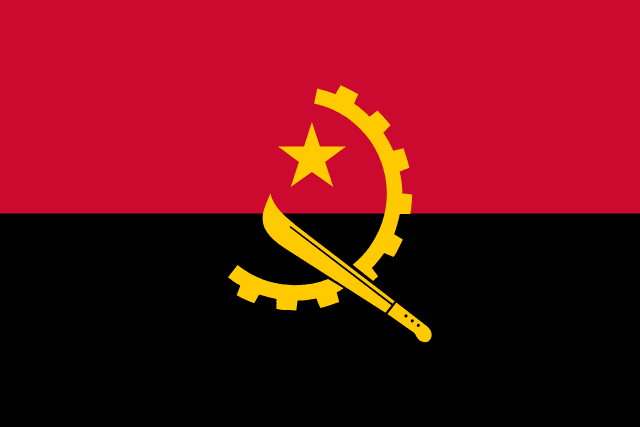
At a Glance
Alliances & Memberships
- UN
- AU
- SADC
- OPEC (suspended 2024)
- CPLP
Foreign Policy Overview
Balances ties with China (largest creditor), US, and Russia; mediator in Great Lakes conflicts.
Key Positions on Major Issues
Supports African Union solutions to African problems; oil-dependent diplomacy; backs DRC peace process.
UN Voting Record Notes
Generally non-aligned; abstains on contentious Russia votes.
Economy & Trade
Angola's economy is heavily dependent on the oil and gas sector, which accounts for roughly 90% of exports and one-third of GDP. Growth is currently driven by the National Development Plan 2023-2027, focusing on economic diversification into agriculture and mining (specifically diamonds). Key trading partners include China (by far the largest export destination), India, and the European Union, with the Kwanza (AOA) serving as the national currency. High external debt and vulnerability to global oil price fluctuations remain the primary macroeconomic challenges.
Military & Security
The Angolan Armed Forces (FAA) are among the largest in Southern Africa, with approximately 107,000 active personnel and a defense budget typically around 1-2% of GDP. Angola maintains a doctrine of non-alignment but holds a Strategic Partnership with Russia for hardware and has increasing security ties with the US and China. The country is a non-nuclear state and a signatory to the Treaty of Pelindaba, establishing Africa as a nuclear-weapon-free zone. Current military focus is on maritime security in the Gulf of Guinea and peacekeeping in the DR Congo.
Recent History
Following the end of the 27-year civil war in 2002, Angola underwent a period of rapid oil-led reconstruction under José Eduardo dos Santos. In 2017, João Lourenço succeeded him, launching a high-profile anti-corruption campaign targeting the former first family and entrenched elites. Recent years have been defined by 'multi-alignment,' as Angola balances deep financial ties with China against a burgeoning strategic partnership with the United States. Domestically, the government faces pressure regarding the high cost of living and youth unemployment. Internationally, President Lourenço has emerged as a key mediator in the 'Luanda Process' to de-escalate tensions between the DRC and Rwanda.
International Memberships
- African Union (AU)since 1975
Active member focused on regional stability and economic integration.
- Southern African Development Community (SADC)since 1980
Key player in regional security and the Lobito Corridor infrastructure project.
- Organization of the Petroleum Exporting Countries (OPEC) - Former Membersince 2007-2024
Angola remains a significant producer, though it recently withdrew from OPEC (Dec 2023) to maintain production autonomy.
- United Nations (UN)since 1976
Primary forum for international cooperation and peacekeeping mandates.
MUN Negotiation Profile
African Group / G77 + China / Non-Aligned Movement (NAM)
Pragmatic and mediation-oriented; often acts as a regional 'power broker' in Central/Southern African conflicts.
- Direct Western interference in sovereign internal governance or judicial processes.
- Sanctions that target the energy sector or impede debt restructuring.
- Any infringement on the sovereignty of the Democratic Republic of the Congo (DRC) by external actors.
- "Advocating for the reform of the UN Security Council to include permanent African representation."
- "Emphasizing the 'Lobito Corridor' as a model for sustainable infrastructure and regional trade."
- "Demanding global North accountability for climate financing and green energy transition support."