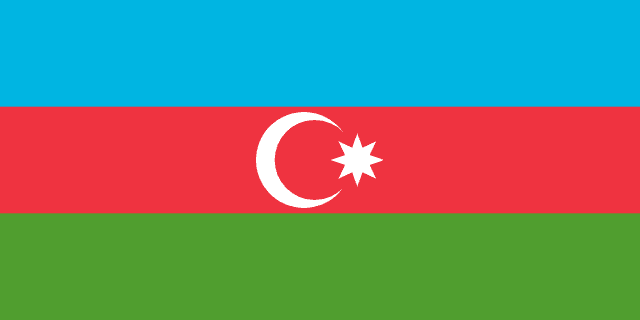
At a Glance
Alliances & Memberships
- Non-Aligned Movement (NAM)
- Organization of Turkic States (OTS)
- CSTO (Former Member)
- GUAM Organization for Democracy and Economic Development
- Eastern Partnership (EU Partner)
- OIC (Organization of Islamic Cooperation)
Foreign Policy Overview
Azerbaijan pursues a 'multi-vector' foreign policy designed to balance interests between Russia, Turkey, and the West while maintaining strategic autonomy. The central pillar is the restoration of territorial integrity, achieved following the 2020 44-Day War and the 2023 anti-terror operations in Karabakh. Azerbaijan maintains a strategic alliance with Turkey (Susha Declaration) and a consultative partnership with Russia. It avoids formal military blocs, chairing the Non-Aligned Movement (2019-2023). Relations with Iran remain tense over regional influence and the status of ethnic Azeris, while cooperation with Israel is robust, particularly in defense and intelligence.
Key Positions on Major Issues
Security: Absolute sovereignty over Karabakh is non-negotiable; seeks the 'Zangezur Corridor' to connect the Nakhchivan exclave to mainland Azerbaijan. Climate: Host of COP29 (2024); emphasizes 'Green Energy Zones' in liberated territories while defending the role of gas as a transitional fuel. Human Rights: Rejects 'Western interference' in internal legal matters; withdrew from PACE in 2024 citing bias. Trade: Positioned as a hub for the Middle Corridor (Trans-Caspian International Transport Route) linking China and Europe. Regional: Strongly opposes foreign military presence in the Caucasus (specifically Western monitoring missions in Armenia).
UN Voting Record Notes
Azerbaijan typically aligns with NAM positions. It votes in favor of Palestinian statehood and territorial integrity issues (supporting Ukraine's sovereignty in resolutions ES-11/1 while maintaining a neutral rhetoric toward Russia). It frequently votes against resolutions that target specific countries for human rights (e.g., Iran, Belarus) to uphold the principle of non-interference. It is highly active in energy-related UNGA resolutions.
Economy & Trade
GDP composition: Services (40%), Industry (52%), Agriculture (8%). Heavily reliant on hydrocarbons (oil and gas account for 90% of exports). Key exports: Crude oil, natural gas, fruit, cotton. Trade partners: Italy (key gas buyer), Turkey, Russia, China, Israel. Currency: Azerbaijani Manat (AZN). Leading projects: Southern Gas Corridor (SGC), TANAP, TAP.
Military & Security
Active personnel: 67,000. Defense budget: ~$3.5 billion. No nuclear weapons. Doctrine: 'Active Defense' transitioned to 'Post-Conflict Consolidation.' Key suppliers: Turkey (Bayraktar TB2 drones), Israel (Harop loitering munitions, Iron Dome components), and Russia. Member of NATO's Partnership for Peace (PfP). Strategic depth provided by the 2021 Shusha Declaration with Turkey.
Recent History
The last 30 years were defined by the First Nagorno-Karabakh War (1988-1994) resulting in Armenian occupation. Under Ilham Aliyev (2003-Present), Azerbaijan used oil wealth to modernize its military. The 2020 44-Day War saw Azerbaijan recapture seven surrounding districts and the city of Shusha. Following a blockade of the Lachin corridor and a lightning 24-hour offensive in September 2023, Azerbaijan restored full control over the entirety of Karabakh, leading to the dissolution of the 'Artsakh' separatist government. Current efforts focus on 'The Great Return'—rebuilding the Karabakh region and normalizing ties with Armenia on Baku's terms.
International Memberships
- Non-Aligned Movement (NAM)since 2011
Held the Chairmanship from 2019-2023, championing 'Bandung Principles'.
- Organization of Turkic States (OTS)since 2009
Founding member; strategic focus on Turkic integration and defense.
- European Union (Eastern Partnership) Wellnesssince 2009
Strategic energy partner; signatory of the Energy Charter Treaty.
- Organization of Islamic Cooperation (OIC)since 1992
Key platform for cultural and religious diplomacy.
- OSCEsince 1992
Primary forum for security dialogue in Europe; subject of frequent disputes over monitoring.
MUN Negotiation Profile
NAM / Turkic Bloc / Independent Pro-Energy
Assertive, bilateral-focused, and transactional. Azerbaijan often uses its energy leverage and 'petro-diplomacy' to secure political concessions. Expect high sensitivity regarding national sovereignty.
- Any attempt to include 'Nagorno-Karabakh' as a separate entity or autonomous region in international documents.
- International interference or 'fact-finding missions' in the Lachin or Zangezur regions without Baku's explicit consent.
- Criticism of the Aliyev administration's domestic judicial processes within human rights committees.
- Attempts to restrict natural gas production as part of climate mandates without financing for a transition.
- "Azerbaijan has restored its territorial integrity and international law; the Karabakh conflict is a closed chapter of history."
- "We call on the international community to support the demining of our liberated territories, which remain infested with hundreds of thousands of Armenian-laid mines."
- "As the host of COP29, Azerbaijan bridge the gap between the Global North and South, ensuring energy security alongside green transitions."
- "The Zangezur Corridor is not just a national project, but a vital link for the Middle Corridor that will benefit all Eurasian trade."
- "Sovereignty and non-interference are the bedrocks of the Non-Aligned Movement, and Azerbaijan will not tolerate neo-colonial agendas."