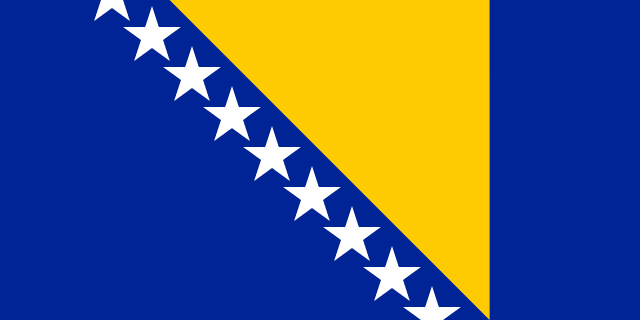
At a Glance
Alliances & Memberships
- UN
- Council of Europe
- OSCE
- CEFTA
Foreign Policy Overview
Bosnia and Herzegovina's foreign policy is primarily focused on Euro-Atlantic integration, aspiring for membership in the European Union and NATO. This involves significant cooperation with EU institutions on reforms and alignment with the Common Foreign and Security Policy (CFSP). Key bilateral relationships are maintained with neighboring countries (Serbia, Croatia, Montenegro) to foster regional stability and economic cooperation. The country also engages with international organizations to promote peace, human rights, and economic development, often balancing the differing foreign policy priorities of its constituent entities. A strong emphasis is placed on post-conflict reconciliation and regional stability.
Key Positions on Major Issues
Climate: Bosnia and Herzegovina supports international efforts to combat climate change, committed to reducing greenhouse gas emissions and adapting to climate impacts, in line with its Nationally Determined Contributions under the Paris Agreement. Security: Prioritizes regional security and stability, actively participating in international peacekeeping missions and aspiring to NATO membership. Counter-terrorism and organized crime are key concerns. Human Rights: Committed to upholding human rights and implementing European human rights standards, addressing issues of refugee return, minority rights, and judicial reform. Trade: Seeks to expand trade relations, particularly within CEFTA and with the EU, aiming for greater economic integration and attraction of foreign investment. Regional: Advocates for regional cooperation and good neighborly relations as essential for stability and economic development in the Western Balkans.
UN Voting Record Notes
Bosnia and Herzegovina's voting patterns in the UN General Assembly often reflect its declared foreign policy goal of Euro-Atlantic integration, tending to align with EU positions on critical issues. For example, BiH has consistently voted in favor of resolutions condemning Russia's aggression against Ukraine and supporting Ukraine's sovereignty and territorial integrity since 2022. On issues concerning Israel-Palestine, BiH has generally supported resolutions calling for a two-state solution and adherence to international law. Voting on human rights resolutions typically aligns with international consensus, emphasizing protections and accountability, while climate change votes support global efforts and sustainable development.
Economy & Trade
Bosnia and Herzegovina's economy is predominantly service-oriented (around 60% of GDP), with industry (around 25%) and agriculture (around 8%) contributing significantly. Key industries include chemicals, machinery, metals, automotive parts, textiles, and timber. Exports primarily consist of metals, chemicals, machinery, and wood products, with key trade partners being Germany, Croatia, Serbia, Italy, and Slovenia. Imports largely mirror these categories. The currency is the Convertible Mark (BAM), pegged to the Euro. Economic challenges include high unemployment, a large gray economy, limited foreign direct investment outside a few sectors, and a complex regulatory environment.
Military & Security
The Armed Forces of Bosnia and Herzegovina (AFBiH) number approximately 10,000 active personnel with an additional 5,000 in reserve. Defense spending is around 1.1% of GDP (approx. $250 million), aimed at modernizing its forces and fulfilling NATO partnership goals. BiH is a member of NATO's Partnership for Peace (PfP) program and actively seeks full membership, participating in various joint exercises and operations. The country officially committed to remain non-nuclear and does not possess WMDs. Key security concerns include regional instability, organized crime, illegal migration, and potential external influences, alongside the imperative of maintaining internal stability and inter-ethnic cooperation.
Recent History
The period following the 1992-1995 Bosnian War, which ended with the Dayton Agreement signed in December 1995, has profoundly shaped BiH's foreign policy. The agreement established a complex political system designed to ensure power-sharing among Bosniaks, Serbs, and Croats. In the early 2000s, BiH began its journey towards Euro-Atlantic integration, joining NATO's Partnership for Peace in 2006 and signing the Stabilization and Association Agreement with the EU in 2008. The country formally applied for EU membership in February 2016, receiving candidate status in December 2022. However, internal political divisions and ethnic tensions, particularly fueled by secessionist rhetoric from Republika Srpska leadership in recent years, continue to pose significant challenges to reform efforts and national cohesion, impacting its international standing and progress towards integration.
International Memberships
- UNsince 1992
Joined after gaining independence, solidifying its sovereign status and commitment to international peace and security.
- Council of Europesince 2002
Membership signified commitment to human rights, democracy, and the rule of law, aligning with European values and standards as a step towards broader European integration.
- OSCEsince 1992
Participation in the OSCE has been crucial for post-conflict stabilization, democratic development, and security cooperation in the region.
- CEFTAsince 2007
Membership in the Central European Free Trade Agreement promotes regional economic cooperation and integration, preparing the economy for the EU single market.
MUN Negotiation Profile
Bosnia and Herzegovina operates within a complex political landscape, often seeking alignment with the European Union and Western blocs due to its Euro-Atlantic integration aspirations. However, internal divisions mean that alignments can be influenced by the specific interests of its constituent entities, occasionally leading to varied stances or alignment with non-aligned principles.
Bosnia and Herzegovina typically adopts a bridge-building and consensus-oriented negotiation style, often navigating internal complexities to present a unified, albeit sometimes delayed, position. The delegation seeks common ground and emphasizes multilateral cooperation, often forming coalitions with other Western Balkan states and EU-aligned countries to advance shared interests, particularly concerning regional stability and European integration.
- Preservation of territorial integrity and sovereignty
- Non-negotiable path towards Euro-Atlantic integration
- Protection of human rights for all citizens
- Adherence to the Dayton Peace Agreement
- "My delegation emphasizes the imperative of regional stability and cooperation as foundational for peace and prosperity in the Western Balkans."
- "We believe that strict adherence to international law and respect for sovereign borders are paramount in addressing contemporary global challenges."
- "Bosnia and Herzegovina calls upon all member states to support our ongoing efforts towards Euro-Atlantic integration, crucial for long-term development and security."
- "My delegation strongly advocates for the promotion of human rights and inclusive governance as cornerstones of a just and equitable society."