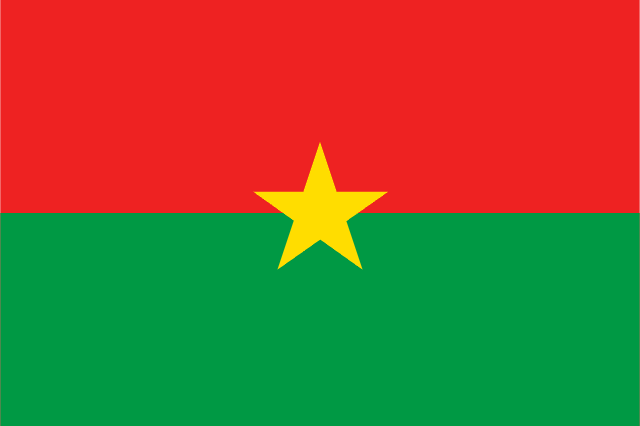
At a Glance
Alliances & Memberships
- UN
- AU (suspended)
- Alliance of Sahel States (AES)
- OIC
Foreign Policy Overview
Withdrew from ECOWAS (2024) with Mali and Niger; pivoted to Russia (Wagner/Africa Corps); expelled France.
Key Positions on Major Issues
Sovereigntist; anti-French; pro-Russia; Sahel jihadist insurgency.
UN Voting Record Notes
Often votes with Russia or abstains; anti-Western shift.
Economy & Trade
Burkina Faso's economy is heavily dependent on agriculture and mining, with gold accounting for over 70% of total export value. The nation uses the West African CFA franc (XOF), pegged to the Euro, though regional shifts toward the 'Eco' are being discussed amidst political tensions. Major trade partners include Switzerland (gold), India, and neighboring Côte d'Ivoire. Despite significant mineral wealth, the country remains one of the world's poorest, with a GDP composition roughly consisting of 30% agriculture, 25% industry, and 45% services.
Military & Security
The Burkinabè Armed Forces (FABF) are currently prioritized with a 'Total Defense' doctrine, integrating civilian volunteers (VDP) to combat a decade-long jihadist insurgency. Defense spending has surged to record levels, exceeding 20% of the national budget in recent years as the Transition Government seeks new security partners, notably Russia's Africa Corps. The nation is non-nuclear and has officially terminated its long-standing military cooperation agreements with France. Under Captain Ibrahim Traoré, the military’s role in domestic governance is absolute.
Recent History
Since 1987, Burkina Faso was characterized by the long-term rule of Blaise Compaoré, who was ousted in a 2014 popular uprising. Following a period of relative democratic transition, the country became the epicenter of the Sahelian security crisis, with Al-Qaeda and ISIS affiliates seizing vast territories. This instability led to two military coups in 2022: first by Lt. Col. Damiba in January, and then by Capt. Ibrahim Traoré in September. Under Traoré, Burkina Faso has fundamentally realigned its foreign policy, expelling French forces and forming the Alliance of Sahel States (AES) with Mali and Niger. The current administration focuses on 'endogenous development' and a total military mobilization to reclaim territory. In 2024, the government confirmed its intent to permanently exit ECOWAS, citing the bloc's failure to support their counter-terrorism efforts.
International Memberships
- African Union (AU)since 1963
Founding member; currently suspended following the 2022 coup d'état.
- Economic Community of West African States (ECOWAS)since 1975
Founding member; currently pursuing withdrawal in favor of the Alliance of Sahel States (AES).
- Alliance of Sahel States (AES)since 2023
A mutual defense and economic pact formed with Mali and Niger in response to regional isolation.
- United Nations (UN)since 1960
Burkina Faso maintains a permanent mission and participates in the Non-Aligned Movement (NAM) caucus.
MUN Negotiation Profile
West African Revolutionary/Pro-Multipolarity (aligned with Mali, Niger, and Russia).
Assertive, sovereignty-focused, and skeptical of Western-led initiatives; prioritizes 'Global South' solidarity.
- Any foreign intervention or military presence without prior Transition Government approval.
- Proposals requiring the immediate return to civilian rule before security stabilization is achieved.
- Sanctions or restrictions on the sale of gold or military hardware.
- "The failure of Western-led security frameworks (like the G5 Sahel) necessitated our pivot to new strategic partners."
- "State sovereignty and the fight against terrorism must precede discussions on electoral timelines."
- "Economic decolonization is essential for West African development, starting with the rejection of ECOWAS-imposed sanctions."