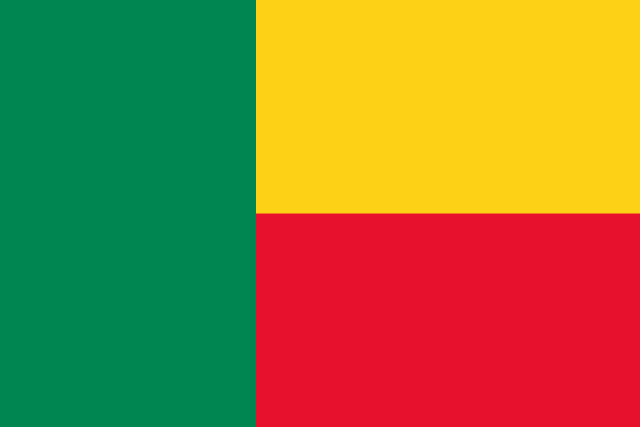
At a Glance
Alliances & Memberships
- UN
- AU
- ECOWAS
- OIF
- WAEMU
Foreign Policy Overview
Pro-Western; cotton and port economy; concerned about Sahel jihadist spillover.
Key Positions on Major Issues
Counterterrorism cooperation; opposed Niger coup; supports ECOWAS democracy clause.
UN Voting Record Notes
Generally aligns with African consensus; pro-democracy votes.
Economy & Trade
Benin's economy is heavily dependent on informal re-export trade with Nigeria and the cultivation of cotton, which accounts for roughly 40% of GDP and 80% of export earnings. The Port of Cotonou serves as a vital regional maritime hub, contributing significantly to national revenue through transit fees for landlocked neighbors. The currency is the West African CFA franc (XOF), pegged to the Euro, and major trade partners include China, India, Nigeria, and the UAE. Despite recent diversification efforts into agribusiness and tourism, the country remains vulnerable to fluctuations in global commodity prices and trade policy shifts in Nigeria.
Military & Security
The Benin Armed Forces (FAB) consist of approximately 7,500 active personnel, with a primary focus on internal security and counter-terrorism in the northern border regions near Burkina Faso and Niger. In response to the encroaching jihadist threat from the Sahel, Benin has significantly increased defense spending and entered into security cooperation agreements with France and Rwanda. Benin is a non-nuclear weapon state and a signatory to the Pelindaba Treaty, maintaining a defensive posture with no WMD capabilities. The nation contributes to UN peacekeeping missions, notably MINUSMA (prior to its drawdown), emphasizing regional stability.
Recent History
After transitioning to a multi-party democracy in 1991, Benin was long considered a 'model of democracy' in Africa. However, the presidency of Patrice Talon (2016–present) has been characterized by significant infrastructure development alongside controversial electoral reforms that have marginalized opposition parties. Since 2019, Benin has faced its first significant external security threat as Al-Qaeda and ISIS affiliates pushed southward from Burkina Faso into Benin's northern national parks (Pendjari and W). Regionally, Benin has shifted from a policy of strict neutrality to active involvement in ECOWAS-led efforts to restore constitutional order in neighboring coup-afflicted states. Domestically, the government is currently focused on the 'Government Action Program' (PAG 2) to industrialize the economy via the Glo-Djigbé Industrial Zone (GDIZ).
International Memberships
- ECOWAS (Economic Community of West African States)since 1975
Founding member; central to Benin's regional security and economic integration.
- WAEMU (West African Economic and Monetary Union)since 1994
Utilizes the CFA Franc; core of Benin's monetary policy.
- Organisation internationale de la Francophonie (OIF)since 1970
Active participant in South-South cooperation and Francophone cultural diplomacy.
- African Union (AU)since 1963
Key forum for addressing Sahelian insecurity and regional cooperation.
MUN Negotiation Profile
Non-Aligned / Francophone Africa / ECOWAS Bloc
Pragmatic and mediation-oriented; Benin often positions itself as a 'Bridge State' between Anglophone and Francophone interests in West Africa.
- Any violation of territorial integrity by non-state armed groups or spillover from Sahelian conflicts.
- Sanctions that disproportionately affect the Port of Cotonou's transit economy without providing humanitarian corridors.
- External interference in domestic constitutional reforms or electoral processes.
- "Urgent need for international intelligence sharing and logistical support to combat the spread of violent extremism into the Gulf of Guinea."
- "Debt relief and concessional financing for climate-vulnerable coastal nations."
- "The necessity of reforming the UN Security Council to include permanent African representation."