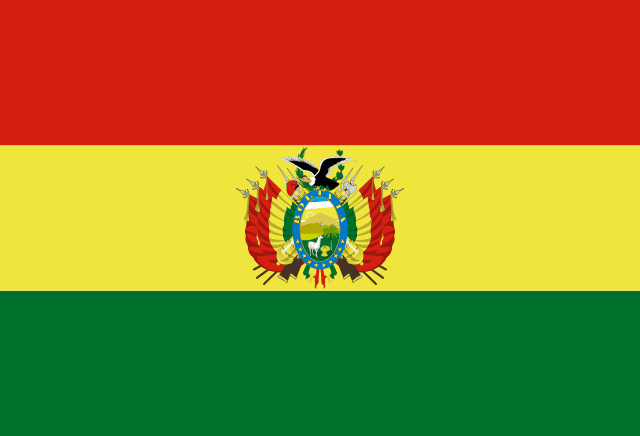
At a Glance
Alliances & Memberships
- UN
- ALBA
- CELAC
- Mercosur (acceding)
- G77
Foreign Policy Overview
Left-aligned; close ties to Cuba, Venezuela, Russia, China, Iran; lithium diplomacy.
Key Positions on Major Issues
Pro-Palestine (cut Israel ties 2023); anti-imperialist rhetoric; indigenous and climate rights.
UN Voting Record Notes
Votes with ALBA bloc; often opposes US-led resolutions.
Economy & Trade
Bolivia possesses a mixed economy heavily dependent on the extraction of natural resources, particularly natural gas and minerals like silver, zinc, and lithium. The country holds some of the world's largest lithium reserves, which the government manages through the state-owned YLB under a policy of 'sovereign industrialization.' Agriculture, specifically soy and coca production, remains a vital sector, while efforts to diversify into value-added manufacturing continue. Its top trading partners include Brazil, Argentina, China, and India, and the national currency remains the Boliviano (BOB).
Military & Security
The Armed Forces of Bolivia focus primarily on internal stability, border security, and disaster relief, with an active duty force of approximately 34,100 personnel. Defense spending is modest, typically hovering around 1.3% of GDP, and the country maintains no nuclear or WMD capabilities. Its security doctrine emphasizes the 'Casing of the Mother Earth' and the defense of natural resources from foreign exploitation. Bolivia has a long-standing constitutional mandate seeking a sovereign outlet to the Pacific Ocean, which remains a core strategic concern regarding its relationship with Chile.
Recent History
The last 30 years in Bolivia have been defined by the rise of the MAS (Movement Toward Socialism) party and the leadership of Evo Morales, who nationalized the hydrocarbon sector in 2006. A period of significant economic growth and poverty reduction was interrupted by the 2019 political crisis, which led to Morales' resignation and a transitional government under Jeanine Áñez. The 2020 elections saw a return to MAS leadership under President Luis Arce, who has focused on 'import substitution industrialization' and lithium development. Current policy is shaped by internal shifts within the MAS party and efforts to stabilize the economy following a decline in foreign exchange reserves. Internationally, Bolivia has strengthened ties with Russia, China, and Iran while often siding against Western-led resolutions in the UN Security Council and General Assembly.
International Memberships
- Mercosursince 2024
Full member status achieved recently to enhance regional integration.
- Andean Community (CAN)since 1969
Founding member; central to its regional diplomatic identity.
- ALBA-TCPsince 2006
Active participant in the 'Pink Tide' bloc for South-South cooperation.
- United Nationssince 1945
Advocates for Indigenous rights and climate justice within the UN framework.
MUN Negotiation Profile
Global South / G77 + China / ALBA-TCP (Left-leaning non-aligned)
Vocal and principle-driven, emphasizing anti-imperialism, Indigenous sovereignty (Vivir Bien), and environmental 'Rights of Nature'.
- Opposition to the privatization of water, lithium, or essential natural resources.
- Rejection of foreign military intervention or 'humanitarian' regimes that bypass state sovereignty.
- Non-negotiable stance on the recognition of the Coca leaf as part of cultural heritage rather than a narcotic.
- "Urging developed nations to pay 'Climate Debt' for historical carbon emissions."
- "Promoting the 'Universal Declaration of the Rights of Mother Earth' in UN resolutions."
- "Demanding multilateral reform to ensure equitable representation for landlocked developing countries (LLDCs)."