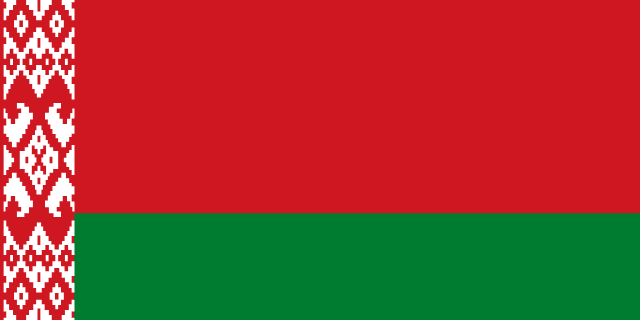
At a Glance
Alliances & Memberships
- CIS
- CSTO
- Union State of Russia and Belarus
Foreign Policy Overview
Belarus's foreign policy is heavily aligned with Russia, prioritizing strategic partnership and economic integration within the Union State. This has increasingly led to isolation from Western countries, particularly after the 2020 elections and subsequent human rights crackdowns, as well as Belarus's role in facilitating Russia's 2022 invasion of Ukraine. Belarus seeks to diversify its economic ties but remains deeply dependent on Russia for energy and security. Belarus actively participates in regional security organizations like the CSTO.
Key Positions on Major Issues
Climate: Belarus acknowledges climate change but prioritizes economic development, often aligning with Russia's stance on international climate initiatives. Security: Emphasizes collective security through the CSTO and strong military ties with Russia. Views NATO expansion as a direct threat. Human Rights: Faces significant international criticism for its human rights record, particularly regarding political freedoms, freedom of speech, and treatment of opposition figures. Trade: Seeks to expand trade with countries in Asia and Africa to reduce over-reliance on European markets, yet Russia remains its primary trading partner. Regional: Supports regional integration within the Eurasian Economic Union (EAEU) and the Commonwealth of Independent States (CIS), seeing these as crucial for economic stability and political influence.
UN Voting Record Notes
Belarus consistently votes with Russia in the UN General Assembly, particularly on resolutions concerning the conflict in Ukraine, human rights issues, and geopolitical matters involving Western nations. For example, Belarus voted against resolutions condemning Russia's annexation of Crimea and its full-scale invasion of Ukraine in 2022. It often abstains on resolutions critical of its allies or those perceived as interfering in internal affairs. This voting pattern reflects its strong political and military alignment with Russia.
Economy & Trade
Belarus's economy is largely state-controlled, with a significant industrial and agricultural base. Key industries include machine-building, metallurgy, textiles, chemicals, and food processing. Major exports include potash fertilizers, petroleum products (refined from Russian oil), machinery, and dairy products. Russia is by far its largest trade partner, followed by the EU, Ukraine, and China. The Belarusian Ruble is the national currency. The economy faces challenges due to international sanctions, limited market reforms, and dependence on Russian energy subsidies.
Military & Security
The Belarusian Armed Forces comprise approximately 45,000 active personnel. Military spending is estimated to be around 1.2-1.4% of GDP. Belarus maintains close military integration with Russia, including joint military exercises, shared air defense systems, and the presence of Russian troop contingents and tactical nuclear weapons on Belarusian soil. Belarus's military doctrine emphasizes defense of territorial integrity and the Union State, viewing NATO as a primary security threat. Key security concerns include border security and potential destabilization from neighboring countries.
Recent History
Following the collapse of the Soviet Union in 1991, Alexander Lukashenka was elected president in 1994 and has consolidated power ever since. In 1999, Belarus and Russia signed the Treaty on the Creation of a Union State, aiming for deeper political and economic integration. The 2000s saw increasing international criticism of Belarus's human rights record and democratic shortcomings, leading to sanctions from Western countries. In 2020, disputed presidential elections sparked widespread protests, met with a harsh government crackdown. In February 2022, Belarus allowed Russia to use its territory as a staging ground for the invasion of Ukraine, further deepening its international isolation and leading to expanded sanctions from the EU, US, and other nations. This period has seen Belarus increasingly reliant on Russia for economic and security stability.
International Memberships
- Commonwealth of Independent States (CIS)since 1991
Belarus was a founding member of the CIS, established after the dissolution of the Soviet Union to facilitate cooperation among former Soviet republics.
- Collective Security Treaty Organization (CSTO)since 1992
As a founding member of the CSTO, Belarus participates in a Russia-led military alliance aimed at collective defense and security in Eurasia.
- Union State of Russia and Belarussince 1999
Belarus entered into a Union State with Russia, aiming for deep political, economic, and military integration, which has been central to its foreign policy since.
- Eurasian Economic Union (EAEU)since 2015
Belarus is a founding member of the EAEU, advocating for economic integration and a common market among member states.
MUN Negotiation Profile
Belarus's primary bloc alignment is with Russia, forming the core of the Union State, CSTO, and EAEU. Within these blocs, Belarus generally follows Russia's lead on foreign policy and security matters, often acting as a supportive voice for Russian positions.
Belarus typically adopts a firm and principled negotiation style, often aligning with Russia's positions. It tends to be a loyal partner within its alliance structures, prioritizing bloc solidarity. While generally not a bridge-builder with Western nations, it seeks pragmatic economic cooperation where possible outside of political disagreements.
- National sovereignty and territorial integrity
- Non-interference in internal affairs
- Opposition to NATO expansion
- Economic integration with Russia
- "My delegation emphasizes the critical importance of collective security and stability within the CSTO framework to counter threats in our region."
- "We firmly believe that economic integration through the EAEU is vital for the prosperity and development of all member states."
- "Belarus reiterates its commitment to the Union State with Russia as a cornerstone of our strategic partnership and shared security."
- "My delegation calls for an end to unilateral sanctions that undermine international law and inflict undue hardship on our population."