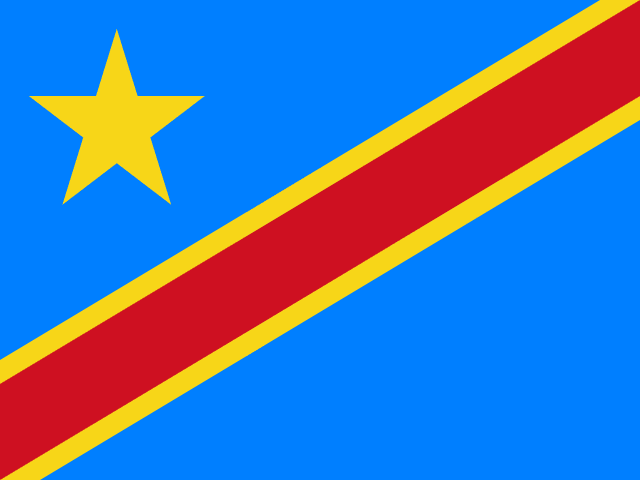
At a Glance
Alliances & Memberships
- UN
- AU
- SADC
- ECCAS
- OIF
Foreign Policy Overview
Conflict with Rwanda over M23 rebels in eastern DRC; critical minerals (cobalt, coltan) diplomacy; MONUSCO drawdown.
Key Positions on Major Issues
Anti-Rwanda; mineral sovereignty; supports stronger UN response in eastern Congo.
UN Voting Record Notes
African consensus; pro-Palestine.
Economy & Trade
The DRC possesses a GDP driven heavily by the extractive sector, particularly cobalt (supplying over 70% of global demand) and copper. While agriculture employs the majority of the population, mining accounts for roughly 95% of export earnings. Key trade partners include China (taking over 50% of exports), the UAE, and South Africa. The currency is the Congolese franc (CDF), which has faced significant depreciation, and the economy remains vulnerable to fluctuating global commodity prices and regional instability.
Military & Security
The Armed Forces of the DRC (FARDC) consist of approximately 130,000 active personnel, currently focused on countering over 120 armed groups in the eastern provinces, including the M23 and ADF. Defense spending has increased significantly to roughly $1 billion annually to stabilize the East and replace the departing MONUSCO mission. The DRC maintains no WMDs and relies on bilateral defense pacts with SADC members and recent military cooperation with China and France. Military doctrine is currently centered on territorial integrity and "African-led" security solutions through the SAMIDRC mission.
Recent History
Following the devastating Second Congo War (1998–2003), the DRC transitioned into a fragile peace overseen by the UN’s largest peacekeeping mission. The 2018 election of Félix Tshisekedi marked the first peaceful transfer of power in the nation's history, although it was contested by the opposition. Recent years have seen a resurgence of the M23 insurgency in North Kivu, leading to a severe diplomatic rift with Rwanda. In 2023, Tshisekedi was re-elected, subsequently focusing on mineral-for-infrastructure deals and regional security via the East African Community and SADC. The DRC's foreign policy is currently defined by securing its eastern borders and positioning itself as a leader in the green energy transition through its mineral wealth.
International Memberships
- SADC (Southern African Development Community)since 1997
Key regional economic powerhouse and security partner.
- EAC (East African Community)since 2022
Joined to enhance trade links with East African ports and security cooperation.
- African Union (AU)since 1963
Founding member of the primary continental body.
- United Nations (UN)since 1960
The DRC is a central focus of UN peacekeeping (MONUSCO).
MUN Negotiation Profile
African Group / Non-Aligned Movement (NAM) / G77+China
Assertive regarding national sovereignty; often collaborative with regional SADC partners; skeptical of Western 'interference' in internal security.
- Any violation of territorial integrity or recognition of rebel-held zones.
- Unilateral sanctions on Congolese mineral exports.
- External management of the country's natural resources without Kinshasa's oversight.
- "The urgent need for international condemnation of external support for the M23 rebels (pointing to Rwanda)."
- "Demanding equitable compensation for the DRC’s role as a 'Carbon Sink' and its vital role in the global energy transition via cobalt."
- "The gradual and responsible withdrawal of MONUSCO, ensuring no security vacuum is left behind."