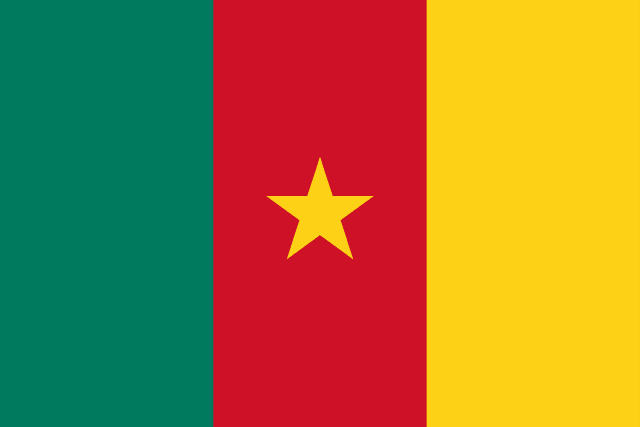
At a Glance
Alliances & Memberships
- UN
- AU
- ECCAS
- OIF
- Commonwealth
- OIC
Foreign Policy Overview
Balanced ties with France, US, China, Russia (military deal 2022); Anglophone crisis ongoing.
Key Positions on Major Issues
Counterterrorism (Boko Haram); Anglophone separatism; oil and cocoa exports.
UN Voting Record Notes
Abstains on Russia-Ukraine; African consensus voter.
Economy & Trade
Cameroon holds the largest economy in the Central African Economic and Monetary Community (CEMAC), heavily reliant on oil and gas, which account for about 40% of export earnings. The agricultural sector remains a primary employer, focusing on cocoa, coffee, palm oil, and timber, while the currency is the Central African CFA franc (XAF) pegged to the Euro. Top trade partners include China, France, and India, with current efforts focused on the "National Development Strategy 2020-2030" (SND30) to achieve emerging economy status through structural transformation and energy infrastructure projects.
Military & Security
The Cameroon Armed Forces (FAC) consist of approximately 50,000 personnel, managing a double-front threat: the Boko Haram insurgency in the Far North and the separatist "Ambazonia" conflict in the Northwest and Southwest regions. Defense spending is roughly 1.3% to 1.5% of GDP, with significant support from the Rapid Intervention Battalion (BIR), an elite unit often funded and trained through international partnerships. Cameroon maintains a Non-Nuclear Weapon State status and is a signatory to the Pelindaba Treaty. Military doctrine focuses on territorial integrity and counter-terrorism, heavily influenced by bilateral defense agreements with France.
Recent History
Since the mid-1990s, Cameroon's foreign policy has been defined by the peaceful resolution of the Bakassi Peninsula border dispute with Nigeria via the ICJ (2002) and Green Tree Accord (2006). President Paul Biya, in power since 1982, has transitioned the country through various economic crises and the 2008 constitutional amendments that removed term limits. Starting in 2014, the country was drawn into the regional fight against Boko Haram, leading to a massive influx of refugees and internal displacement. Since 2016, the 'Anglophone Crisis' has escalated into a low-level civil war between the central government and separatists, significantly staining the country's human rights record and shaping its current defensive diplomatic stance. Despite internal strife, Cameroon remains a pivotal regional hub for infrastructure and logistics for landlocked neighbors like Chad and CAR.
International Memberships
- African Union (AU)since 1963
Founding member; active in regional stability and economic integration.
- The Commonwealthsince 1995
One of the few countries with dual membership in the Commonwealth and Francophonie.
- CEMAC / ECCASsince 1964
Participates in regional monetary policy and the common market.
- United Nations (UN)since 1960
Active in the Lake Chad Basin Commission (LCBC) to fight Boko Haram.
MUN Negotiation Profile
Non-Aligned / Francophone Africa / CEMAC State
Pragmatic, sovereignty-focused, and cautious. Cameroon often acts as a regional stabilizer and prefers consensus-based decisions that do not infringe on domestic jurisdiction.
- International intervention or peacekeeping deployment within Cameroon borders without explicit government invitation.
- Any recognition of the independence or legitimacy of 'Ambazonia' separatist entities.
- Sanctions or external interference regarding domestic human rights management or electoral processes.
- "Enhanced international cooperation to combat the illicit flow of small arms and light weapons (SALW) in the Gulf of Guinea."
- "The necessity of climate finance for the Congo Basin, emphasizing Cameroon's role in the "Earth’s second lung.""
- "Reform of the UN Security Council to include permanent African representation (The Ezulwini Consensus)."