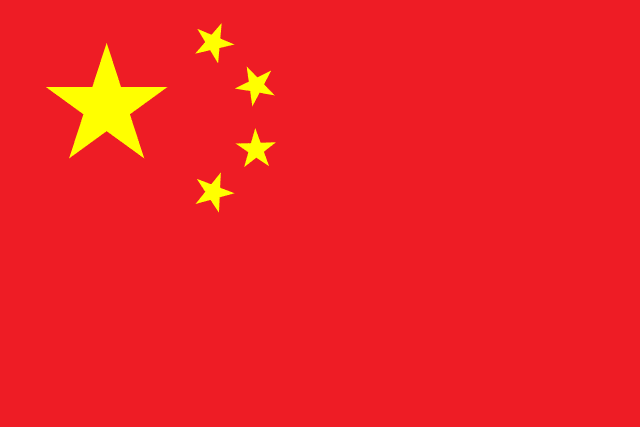
At a Glance
Alliances & Memberships
- BRICS+
- Shanghai Cooperation Organization (SCO)
- G77 + China
- Regional Comprehensive Economic Partnership (RCEP)
- ASEAN Plus Three (APT)
- AIIB (Founding Member)
Foreign Policy Overview
China pursues a doctrine of 'Major Country Diplomacy with Chinese Characteristics' under the 'Community with a Shared Future for Mankind' framework. Its posture is centered on the Global Development Initiative (GDI), Global Security Initiative (GSI), and Global Civilization Initiative (GCI). Beijing promotes a multipolar world order while staunchly defending the principle of non-interference in internal affairs. Key relationships include a 'no-limits' partnership with Russia, strategic competition with the United States, and deep infrastructure investment across the Global South via the Belt and Road Initiative (BRI). The policy is guided by the 'One China Principle' and the prioritization of national rejuvenation.
Key Positions on Major Issues
CLIMATE: Adheres to 'Common But Differentiated Responsibilities' (CBDR). Pledges carbon peaking by 2030 and carbon neutrality by 2060. Opposes carbon border taxes. SECURITY: Opposes NATO expansion and 'Cold War mentalities.' Advocates for the 'indivisible security' principle. Deeply skeptical of AUKUS and Quad groupings. HUMAN RIGHTS: Defines 'the rights to subsistence and development' as the primary human rights. Rejects 'politicization' of human rights and interference in Xinjiang, Tibet, or Hong Kong. TRADE: Champions multilateralism via the WTO. Advocates for the reform of the IMS to increase representation of developing nations. REGIONAL: Asserts sovereignty over the South China Sea based on the 'Nine-Dash Line.' Rejects the 2016 PCA ruling. Insists that Taiwan is an inalienable part of China.
UN Voting Record Notes
Consistently votes against interventions (e.g., Syria, Myanmar) on sovereignty grounds. Frequently abstains on resolutions condemning Russia's actions in Ukraine to balance 'sovereign integrity' with 'strategic partnership.' Aggressively votes down resolutions mentioning 'human rights' in specific Chinese territories. Voted 'Yes' on the expansion of BRICS (2023) and 'No' on US-led resolutions regarding North Korean sanctions since 2022.
Economy & Trade
GDP Composition: Agriculture (7.1%), Industry (38.3%), Services (54.6%). Major Industries: Mining, ore processing, machinery, armaments, textiles, petroleum. Leading Exports: Electrical machinery, computers, integrated circuits, cellular phones. Currency: Renminbi (Yuan). Top Trade Partners: ASEAN (largest), European Union, United States, South Korea, Japan. State-led capitalism directed by the 14th Five-Year Plan.
Military & Security
People's Liberation Army (PLA) with ~2 million active personnel. Significant nuclear triad; policy of 'No First Use' (NFU). Military spending is second only to the US, focused on 'anti-access/area denial' (A2/AD) capabilities. Developing world-class blue-water navy and hypersonic missile technology. Doctrine: Active Defense and Integrated Joint Operations.
Recent History
Since 1990, China has undergone the fastest economic expansion in history. Key milestones include WTO accession in 2001, the hosting of the 2008 Olympics, and the 2012 transition to the Xi Jinping administration. The decade following 2012 saw the consolidation of domestic power, the launch of the Belt and Road Initiative (2013), and the implementation of the National Security Law in Hong Kong (2020). Tensions with the West escalated during the Trade War (2018-present) and the COVID-19 pandemic, leading to a shift toward 'Dual Circulation' economic policy and increased naval activity in the South China Sea.
International Memberships
- United Nations Security Councilsince 1971
Permanent Member (P5) with veto power.
- RCEPsince 2022
Central to regional trade and economic integration.
- AIIBsince 2016
Founding member and primary financier.
- SCOsince 2001
Instrumental in Eurasian security and counter-terrorism.
- G77 + Chinasince 1994 (formal coop)
Key platform for South-South cooperation.
MUN Negotiation Profile
Leader of the Pro-Sovereignty/Global South Bloc
Patient, bilateral-focused, emphasizes consensus on 'principled' frameworks before technical details. Firm on sovereignty.
- External interference in 'Internal Affairs' (Taiwan, HK, Xinjiang, Tibet).
- Formal recognition of Taiwan or infringement on the One China Principle.
- Sanctions or restrictions targeting China's high-tech development (e.g., semiconductors).
- Challenges to the political legitimacy of the Communist Party of China.
- "China calls upon the international community to abandon the Cold War mentality and respect the sovereign security concerns of all nations."
- "We emphasize that the right to development is a fundamental human right that must not be subordinated to political agendas."
- "Beijing stands ready to bridge the infrastructure gap in the Global South through win-win cooperation under the Belt and Road Initiative."
- "The status of Taiwan is a domestic matter and the ultimate red line for the Chinese people; we seek peaceful reunification but rule out no options."
- "We urge developed nations to honor their climate financing commitments rather than shifting the burden to developing economies."