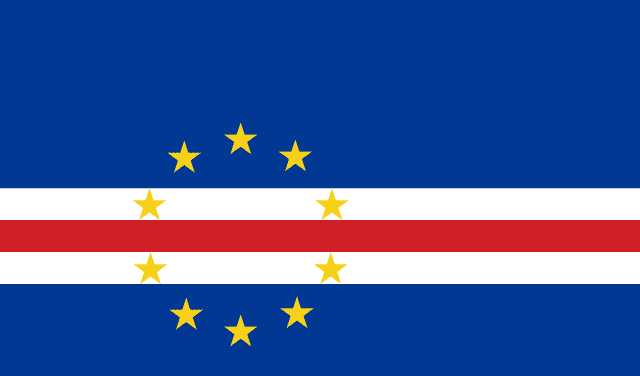
At a Glance
Alliances & Memberships
- UN
- AU
- ECOWAS
- CPLP
- AOSIS
Foreign Policy Overview
Stable democracy; strong EU/Portugal ties; SIDS climate advocate.
Key Positions on Major Issues
Climate finance; democracy; tourism diplomacy; counter-narcotics.
UN Voting Record Notes
Generally aligns with Western and AOSIS blocs.
Economy & Trade
Cabo Verde’s economy is service-oriented, with tourism and commerce accounting for approximately 75% of GDP. The nation relies heavily on foreign direct investment, remittances, and development aid to offset its structural trade deficit, as it imports over 80% of its food and all of its petroleum. Key exports include processed fish (tuna and mackerel) and clothing, primarily traded with the European Union, particularly Portugal and Spain. The currency is the Cape Verdean Escudo (CVE), which is pegged to the Euro via a credit facility with Portugal.
Military & Security
The Cabo Verde Armed Forces (FACV) are small, numbering approximately 1,200 active personnel, and are primarily focused on maritime security and counter-narcotics operations. Defense spending is consistently below 1% of GDP, reflecting a non-aggressive stance and reliance on international security partnerships. The country is a non-nuclear state and a signatory to the Treaty of Pelindaba, maintaining a doctrine of neutrality and multilateral cooperation. Strategic cooperation with the US and EU (particularly through the NATO-Cabo Verde partnership) focuses on protecting its vast Exclusive Economic Zone (EEZ) from illegal fishing and drug trafficking.
Recent History
Since transitioning to a multi-party democracy in 1991, Cabo Verde has become one of Africa's most stable and democratic nations. The 1990s and 2000s saw significant economic liberalization and a graduation from the UN's 'Least Developed Country' (LDC) status in 2007, a rare feat. Recent foreign policy has been defined by the 2007 Special Partnership with the European Union, the first of its kind for an African state. Historically, the country has navigated a path of non-alignment, maintaining strong ties with both the United States (hosting a Voice of America relay station) and China (significant infrastructure investment). In the last decade, Cabo Verde has positioned itself as a 'mid-Atlantic hub,' focusing on maritime security and telecommunications. Strategy is currently dominated by climate change adaptation and post-COVID-19 tourism recovery.
International Memberships
- European Union (Special Partner)since 2007
Special Partnership status since 2007; unique among non-European nations.
- ECOWASsince 1975
Founding member; active in regional stability and economic integration.
- CPLP (Community of Portuguese Language Countries)since 1996
Key member of the Lusophone world, promoting linguistic and cultural ties.
- African Unionsince 1975
Active participant in the African Union's regional initiatives and peace security.
MUN Negotiation Profile
Pro-Western Neutralist / Small Island Developing States (SIDS)
Consensus-building, pragmatic, and legalistic; often acts as a bridge between the Global South and the West.
- Any infringement on Exclusive Economic Zone (EEZ) rights or maritime sovereignty.
- Reduction of international climate financing mechanisms for SIDS.
- Forced intervention in African sovereign affairs without ECOWAS or AU mandates.
- "Urgent implementation of the Loss and Damage Fund for nations vulnerable to sea-level rise."
- "Strengthening international cooperation to combat maritime piracy and drug trafficking in the Mid-Atlantic."
- "Advocating for 'Debt-for-Climate' swaps to ease the fiscal burden on developing island economies."