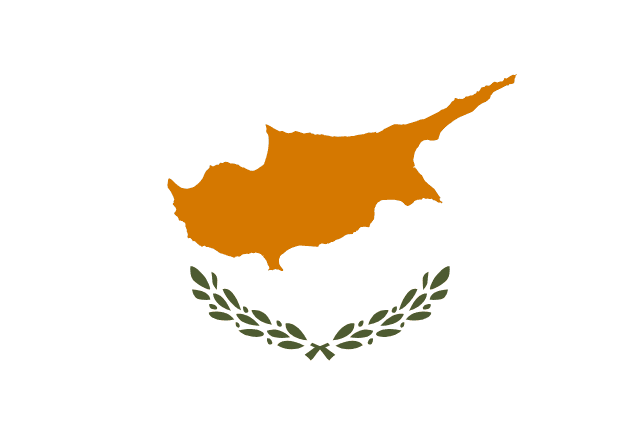
At a Glance
Alliances & Memberships
- UN
- EU
- Commonwealth
- OSCE
Foreign Policy Overview
Cyprus's foreign policy is heavily influenced by the 'Cyprus Problem' (the ongoing division of the island) and its membership in the European Union. Its core objectives include resolving the division, safeguarding its sovereignty and territorial integrity, and promoting regional stability in the Eastern Mediterranean. Cyprus maintains close ties with Greece, Israel, Egypt, and the US, viewing them as key partners for energy cooperation and security. It adheres to EU common foreign and security policy while also pursuing bilateral agreements, particularly in defense and energy. Its policy also emphasizes multilateralism through the UN and other international organizations.
Key Positions on Major Issues
Climate: Committed to EU climate targets, promoting renewable energy and regional cooperation on climate action. Security: Advocates for a demilitarized Cyprus and a comprehensive solution to the Cyprus Problem under UN auspices. Active participant in EU defense initiatives. Human Rights: Upholds international human rights conventions, committed to protecting the rights of all citizens, and addresses issues related to the division of the island. Trade: Supports free trade within the EU framework and seeks to expand trade relations with Middle Eastern and North African countries, particularly in energy and tourism sectors. Regional: Promotes trilateral and quadrilateral cooperation schemes in the Eastern Mediterranean with Greece, Israel, Egypt, and the US on energy, security, and economic matters.
UN Voting Record Notes
Cyprus generally aligns with EU consensus in UNGA voting.abstentions on resolutions critical of Russia's invasion of Ukraine, reflecting its delicate balancing act given historical ties and the need to avoid alienating major powers that could influence the Cyprus Problem. It typically votes in favor of resolutions supporting Palestinian rights, reflecting its Non-Aligned Movement legacy and its own experience with occupation. On human rights issues, Cyprus consistently supports resolutions promoting international human rights law.
Economy & Trade
Cyprus has a high-income economy driven by services, particularly tourism, financial services, and real estate. The tertiary sector accounts for over 80% of GDP. Key exports include refined petroleum (re-exports), pharmaceuticals, and agricultural products like citrus and potatoes. Major trade partners are Greece, the UK, Germany, and Israel. The currency is the Euro. The economy has shown resilience following the 2013 financial crisis, but challenges remain in reducing public debt and diversifying away from its reliance on tourism and real estate.
Military & Security
The Cypriot National Guard has approximately 15,000 active personnel and 60,000 reserves. Defense spending is around 1.8% of GDP (approx. ~$600 million). Cyprus is not a member of NATO but participates in EU defense initiatives like PESCO. It maintains a close defense relationship with Greece. Its primary security concern is the continued presence of Turkish forces in the northern part of the island and Turkish claims over its Exclusive Economic Zone (EEZ). Cyprus does not possess nuclear weapons or WMDs.
Recent History
Since the 1974 Turkish invasion, Cyprus has been de facto divided, with the Republic of Cyprus controlling the southern two-thirds. Accession to the European Union in 2004 brought new impetus for a solution, though the 'Annan Plan' for reunification failed in a referendum that year. Efforts to restart negotiations, such as the Crans-Montana talks in 2017, have not yielded a breakthrough. In recent years, the discovery of significant offshore natural gas reserves in Cyprus's EEZ has brought both economic opportunity and increased geopolitical tensions with Turkey, which disputes Cyprus's maritime boundaries. President Nikos Christodoulides, elected in 2023, has prioritized restarting reunification talks and strengthening regional alliances.
International Memberships
- UNsince 1960
Joined shortly after gaining independence, underscoring its commitment to international law and multilateralism, and seeking UN support for its sovereignty and territorial integrity.
- EUsince 2004
Accession aimed at securing political stability, economic prosperity, and leveraging the EU framework to address the Cyprus Problem. Required significant legal and economic reforms.
- Commonwealthsince 1961
Joined as a newly independent state with historical ties to the UK, promoting cooperation on shared values, democracy, and economic development with other member states.
- OSCEsince 1975
Participates in the OSCE to promote security and cooperation in Europe, using its platform to highlight the Cyprus Problem and advocate for peace and stability in the region.
MUN Negotiation Profile
Cyprus aligns primarily with the EU bloc, coordinating positions on most international issues. It also maintains strong ties with the Mediterranean and Middle Eastern states, often participating in trilateral cooperation schemes. While not formally part of the Non-Aligned Movement (NAM), it historically shares some of its principles, advocating for sovereignty and international law.
Cyprus typically adopts a principled and firm negotiation style, particularly on issues related to its sovereignty and territorial integrity. It relies heavily on international law and UN resolutions to bolster its positions. Within the EU, it acts as a loyal member but will assert its national interests. It often seeks to build coalitions with like-minded states, especially Greece, Israel, and Egypt, to amplify its voice on regional issues.
- No recognition of the 'Turkish Republic of Northern Cyprus.'
- Withdrawal of Turkish troops from the island.
- A unified Cypriot state with a single sovereignty, citizenship, and international personality.
- Non-negotiable sovereignty over its Exclusive Economic Zone (EEZ) and natural resources.
- "My delegation emphasizes the urgent need for a comprehensive and just solution to the Cyprus Problem, based on UN resolutions, which will reunite our island."
- "We firmly believe that adherence to international law and the principle of sovereign equality is paramount for stability in the Eastern Mediterranean."
- "Cyprus actively promotes regional cooperation in energy security, sustainable development, and combating illicit activities, fostering a zone of peace and prosperity."
- "My delegation calls upon all parties to respect the sovereign rights of member states, including their exclusive economic zones, in accordance with the United Nations Convention on the Law of the Sea."