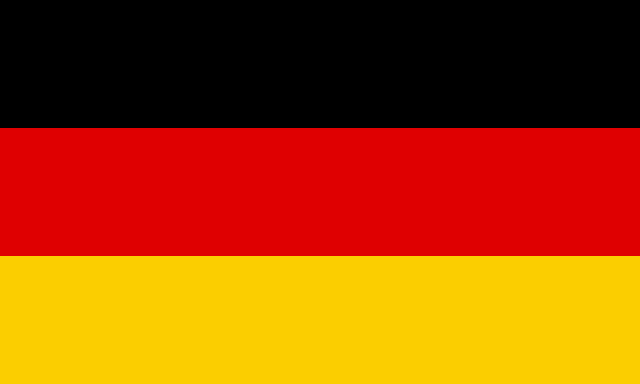
At a Glance
Alliances & Memberships
- UN
- EU
- NATO
- G7
- G20
- OECD
- WTO
Foreign Policy Overview
Germany's foreign policy is rooted in multilateralism, European integration, and a strong commitment to international law and human rights. A key focus is strengthening the European Union as a geopolitical actor and maintaining transatlantic relations with the United States. Germany actively supports conflict resolution efforts, promotes democracy and global cooperation, and is a significant contributor to humanitarian aid and development. Its policy also emphasizes climate action and sustainable development, and a rules-based international order. The Zeitenwende (turning point) speech by Chancellor Scholz in 2022 signaled a shift towards increased defense spending and a more assertive role in security policy, particularly in response to Russia's aggression in Ukraine.
Key Positions on Major Issues
Climate: Germany is committed to achieving climate neutrality by 2045, playing a leading role in the EU's Green Deal and advocating for ambitious global climate targets. Security: Germany emphasizes collective defense within NATO, increased defense spending, and supporting Ukraine's sovereignty and territorial integrity. Human Rights: Germany promotes human rights globally, often through multilateral forums, and condemns violations in various countries. Trade: Germany supports free and fair trade within a rules-based multilateral system, actively participating in EU trade agreements and advocating for open markets. Regional: Germany is a central actor in European integration, advocating for a stronger, more unified EU, and fostering stability in its immediate neighborhood, including the Western Balkans.
UN Voting Record Notes
Germany generally votes in line with EU consensus at the UNGA, often supporting resolutions on human rights, climate action, and disarmament. For example, Germany has consistently voted in favor of resolutions condemning Russia's invasion of Ukraine and calling for an immediate cessation of hostilities. On Israel-Palestine, Germany typically advocates for a two-state solution and humane treatment, often abstaining or voting for balanced resolutions that acknowledge both Israeli security concerns and Palestinian rights. Germany is a strong proponent of climate change action, regularly co-sponsoring and voting for ambitious climate-related resolutions. On human rights, Germany often supports resolutions addressing abuses globally, reflecting its commitment to international human rights law.
Economy & Trade
Germany possesses Europe's largest economy, characterized by a highly skilled labor force and a strong focus on exports. Its GDP composition is dominated by services (~69%), followed by industry (~30%) and agriculture (~1%). Key industries include automotive, mechanical engineering, chemicals, and electrical equipment. Top exports include motor vehicles and parts, machinery, chemical products, and electronic products, while major imports include data processing equipment, crude oil, and natural gas. Its primary trade partners are other EU member states (especially France and the Netherlands), the United States, and China. The currency is the Euro. Challenges include an aging population, reliance on energy imports, and adapting to global supply chain disruptions.
Military & Security
The Bundeswehr, Germany's armed forces, number approximately 181,000 active personnel. Defense spending in 2024 is projected to exceed 2% of GDP, reaching around €73.4 billion, reflecting the Zeitenwende policy shift. Germany is deeply integrated into NATO's command structure and participates in numerous NATO missions and exercises. Germany is a non-nuclear weapons state and is committed to nuclear non-proliferation. Key security concerns include Russian aggression in Ukraine, cybersecurity threats, international terrorism, and the impact of climate change on global stability. Germany's defense doctrine emphasizes collective defense within NATO and contributing to international peace and security operations.
Recent History
Following reunification in 1990, Germany focused on integrating East and West and asserting itself as a major European power. In the early 2000s, Chancellor Gerhard Schröder's Agenda 2010 reforms modernized the economy. Angela Merkel's chancellorship (2005-2021) saw Germany navigate the global financial crisis, the Eurozone crisis, and the refugee crisis of 2015, where Germany welcomed over a million asylum seekers. During this period, Germany increasingly advocated for multilateralism and European integration. The annexation of Crimea by Russia in 2014 and the subsequent war in Ukraine initiated a re-evaluation of Germany's security policy, culminating in Chancellor Olaf Scholz's 'Zeitenwende' speech in February 2022, committing to significantly increased defense spending and a more robust role in international security.
International Memberships
- UNsince 1973
Joined as both East and West Germany in 1973, prior to reunification, reflecting a broader international recognition and engagement in global governance.
- EUsince 1958
Founding member of the European Economic Community (EEC), the precursor to the EU, driven by post-war reconstruction and the desire for lasting peace and economic integration in Europe.
- NATOsince 1955
Joined during the Cold War as West Germany, motivated by the need for collective security against the Soviet threat and integration into the Western bloc.
- G7since 1975
Founding member, reflecting its status as a major industrialized economy and its commitment to international economic cooperation and governance.
- G20since 1999
Key member of the G20, participating in global economic governance and addressing international financial stability issues.
- OECDsince 1961
Founding member, committed to promoting policies that will improve the economic and social well-being of people around the world.
MUN Negotiation Profile
Germany is a central and influential member of the European Union and NATO, consistently working to strengthen cohesion and common policies within these blocs. It also participates actively in the G7 and G20, aligning with developed economies and advocating for multilateral solutions to global challenges.
Germany often adopts a pragmatic and consensus-oriented negotiation style, aiming to build bridges and find common ground, particularly within the EU. It is known for thorough preparation, adherence to legal frameworks, and a focus on long-term stability and sustainable solutions. While generally a mediator, Germany can be assertive in defending its core interests and values, especially regarding European integration and human rights. It seeks to form coalitions with like-minded countries to advance its agenda.
- Violation of international law and territorial integrity
- Undermining democratic principles
- Protectionist trade policies
- Non-compliance with climate agreements
- "My delegation believes in the indispensable role of multilateralism and a rules-based international order for global peace and prosperity."
- "We urge all parties to uphold human rights and international humanitarian law, and to engage in constructive dialogue for peaceful conflict resolution."
- "The urgency of climate change demands ambitious and collective action, and Germany is committed to leading efforts towards a sustainable future."
- "My delegation emphasizes the importance of strong transatlantic cooperation and a unified European voice in addressing global challenges."
- "We call for greater international cooperation in tackling global health crises and ensuring equitable access to resources."