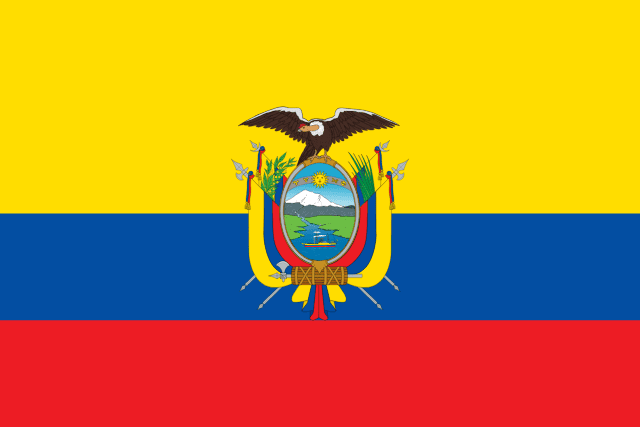
At a Glance
Alliances & Memberships
- UN
- OAS
- CAN
- CELAC
- USMCA partner
Foreign Policy Overview
Internal armed conflict declared 2024 (gangs); deepening US security cooperation; Mexico embassy raid (2024) caused diplomatic crisis.
Key Positions on Major Issues
Counter-narcotics; lost Galápagos protection vote of confidence; oil exit referendum (Yasuní).
UN Voting Record Notes
Western-aligned; recently more pro-Israel.
Economy & Trade
Ecuador possesses a dollarized economy heavily reliant on petroleum, which accounts for over 30% of export earnings. Key non-oil industries include agriculture (shrimp, bananas, flowers) and mining. Its primary trade partners are the United States, China, and Panama. The country faces fiscal challenges due to high external debt and vulnerability to global commodity price fluctuations, leading to recent IMF-backed structural adjustment programs.
Military & Security
The Ecuadorian Armed Forces (Fuerzas Armadas del Ecuador) focus primarily on internal security, border control, and counter-narcotics operations. Military spending is approximately 2% of GDP, with recent increases to combat rising transnational organized crime and gang violence. Ecuador is a signatory to the Treaty of Tlatelolco (nuclear-weapon-free zone) and maintains no WMD programs. Current doctrine emphasizes the "internal armed conflict" declaration to address domestic insecurity and narco-terrorism.
Recent History
Following the 10-year presidency of Rafael Correa (2007–2017), which focused on social spending and 'Citizens' Revolution' socialism, Ecuador shifted toward more market-friendly policies under Lenín Moreno and Guillermo Lasso. In 2023, President Lasso invoked 'muerte cruzada' to dissolve the National Assembly, leading to the election of Daniel Noboa. Noboa's presidency has been defined by a state of emergency declared in early 2024 to combat a surge in cartel-led violence. The country has increasingly sought security assistance from the United States and international bodies. Ecuador remains a critical transit point for cocaine destined for the US and Europe, shaping its current foreign policy as a security-centric agenda.
International Memberships
- United Nations (UN)since 1945
Founding member; current focus on regional integration and the Andean Market.
- Organization of American States (OAS)since 1948
Historical focus on regional security and diplomatic mediation.
- Andean Community (CAN)since 1969
Economic integration and trade facilitation among member nations.
- UN Security Council (UNSC)since 2023
Non-permanent member for the 2023-2024 term (ended Dec 2024); active on maritime security.
MUN Negotiation Profile
Pro-Western / Latin American Integrationist (Moderate)
Multilateralist and pragmatic; emphasizes international law and human rights while seeking foreign investment.
- Any violation of national sovereignty or territorial integrity.
- Removal of the U.S. Dollar as the official legal tender without domestic consensus.
- Interference in internal security matters concerning the management of organized crime.
- "Strengthening international cooperation to combat transnational organized crime and drug trafficking."
- "Promoting sustainable development and environmental protection, particularly concerning the Galapagos Islands."
- "Advocating for the rights of migrants and humane treatment of displaced populations in the South American corridor."