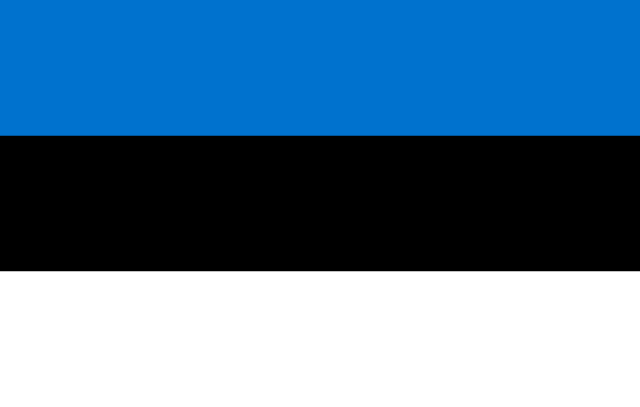
At a Glance
Alliances & Memberships
- EU
- NATO
- OECD
- UN
- WTO
Foreign Policy Overview
Estonia's foreign policy is deeply rooted in its commitment to international law, multilateralism, and Euro-Atlantic integration. A strong advocate for democratic values, human rights, and the rule of law, Estonia prioritizes close cooperation within the European Union and NATO, viewing these as essential pillars for its security and prosperity. Given its historical experience, cybersecurity and digital cooperation are also central tenets, with Estonia actively promoting digital governance and resilience globally. The country maintains a firm stance against Russian aggression, particularly in Ukraine, and consistently supports sanctions and international efforts to uphold territorial integrity and sovereignty. Additionally, Estonia is an active participant in development cooperation, focusing on digital transformation, education, and good governance in Eastern Partnership countries and Africa.
Key Positions on Major Issues
Climate: Estonia is committed to achieving climate neutrality by 2050 within the EU framework, focusing on renewable energy and sustainable forestry. Security: As a NATO member, Estonia prioritizes collective defense, particularly against Russian aggression, and invests heavily in cybersecurity and military readiness. Human Rights: Estonia is a strong proponent of human rights globally, advocating for democratic freedoms, gender equality, and the rights of minorities through multilateral platforms. Trade: Estonia supports a free and open global trading system, primarily through its membership in the EU, and seeks to diversify its export markets in technology and digital services. Regional: Estonia actively promotes regional cooperation in the Baltic Sea area and among Nordic and Baltic countries, focusing on energy security, digital infrastructure, and combating hybrid threats.
UN Voting Record Notes
Estonia consistently aligns its voting patterns with EU member states, generally supporting resolutions promoting democracy, human rights, and international law. In the UNGA, Estonia has strongly condemned Russia’s full-scale invasion of Ukraine, voting in favor of resolutions demanding Russian withdrawal and accountability. On the Israeli-Palestinian conflict, Estonia tends to support a two-state solution and adherence to international law. Estonia actively champions climate action and environmental protection in UN votes. On human rights issues, Estonia consistently votes in favor of resolutions condemning violations and promoting fundamental freedoms.
Economy & Trade
Estonia boasts a modern, open market economy characterized by its strong emphasis on technology and innovation. Its GDP composition is heavily skewed towards the services sector, particularly IT and digital services, and knowledge-intensive industries. Key exports include machinery and equipment, wood and paper products, mineral fuels, and electrical equipment. Major trading partners are Finland, Sweden, and Germany. The official currency is the Euro. Notable economic challenges include an aging population and maintaining competitiveness in a rapidly evolving global economy.
Military & Security
Estonia maintains a professional defense force with a strong reserve component, with active personnel numbering approximately 7,200 and a significant reserve of around 24,000. Defense spending consistently exceeds 2% of GDP, meeting NATO targets. Estonia is deeply integrated into NATO defense planning, hosting allied troops and participating in numerous exercises. Estonia does not possess nuclear weapons or WMDs. Key security concerns include deterring Russian aggression, hybrid warfare, and securing critical infrastructure, particularly in the cyber domain. Its defense doctrine emphasizes total defense, involving all sectors of society in national security.
Recent History
Following the collapse of the Soviet Union in 1991, Estonia rapidly re-established its independence and embarked on a path of democratic and economic reforms. A pivotal moment was its accession to NATO in March 2004 and the European Union in May 2004, solidifying its Western orientation and security guarantees. In 2007, Estonia faced an unprecedented series of cyberattacks, widely attributed to Russia, which significantly shaped its focus on cybersecurity and digital defense. The 2008 Russo-Georgian War further reinforced Estonia's concerns about regional security. The ongoing Russian aggression against Ukraine since 2014, and particularly the full-scale invasion in 2022, has profoundly influenced Estonia's foreign policy, leading to increased defense spending, strong advocacy for sanctions against Russia, and robust support for Ukraine. Estonia also chaired the UN Security Council as a non-permanent member for 2020-2021, further raising its international profile and commitment to multilateralism.
International Memberships
- NATOsince 2004
Estonia's accession to NATO was a cornerstone of its post-Soviet security strategy, providing collective defense guarantees and integrating its military into a powerful alliance against potential external threats, particularly from Russia.
- European Unionsince 2004
Joining the EU marked Estonia's full reintegration into the European economic and political space, fostering economic growth, democratic consolidation, and closer ties with Western European nations.
- United Nationssince 1991
Estonia rejoined the UN after regaining independence, utilizing the platform to advocate for international law, human rights, and multilateral cooperation, crucial for a small state's global engagement.
- OECDsince 2010
Membership in the OECD affirmed Estonia's commitment to market economy principles and democratic governance, facilitating economic policy coordination and peer learning among developed nations.
MUN Negotiation Profile
Estonia is firmly aligned with the European Union and NATO blocs, actively participating in decision-making and often leading on digital and security initiatives within these frameworks. It also works closely with the Nordic-Baltic Eight (NB8) group, focusing on regional cooperation.
Estonia typically adopts a principled and assertive negotiation style, grounded in international law and democratic values. It often acts as a bridge-builder between Eastern and Western perspectives within the EU and NATO, particularly on issues concerning Russia and digital policy. Estonia is known for its readiness to form coalitions with like-minded states to advance its policy priorities, especially in areas of cybersecurity and advocating for sanctions.
- Territorial integrity of all states
- NATO's Article 5 collective defense commitment
- Cyber sovereignty
- Rule of international law
- "My delegation consistently advocates for strong multilateral cooperation as the most effective means to address global challenges, from climate change to cybersecurity."
- "Estonia's experiences underscore the critical importance of robust cybersecurity measures for national resilience and the protection of democratic processes."
- "We believe that investments in digital infrastructure and e-governance are not merely technological advancements, but fundamental tools for enhancing transparency and economic development."
- "My delegation strongly condemns any violations of international law, and we must hold all actors accountable to ensure lasting peace and stability."
- "We must continue to support Ukraine's sovereignty and territorial integrity with all necessary means, as their security is inextricably linked to broader European security."