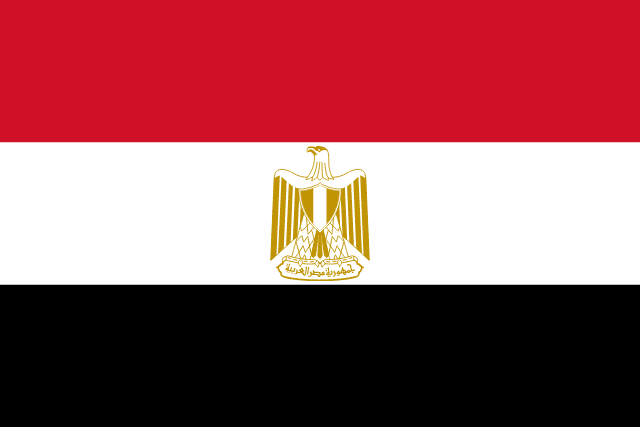
At a Glance
Alliances & Memberships
- UN
- AU
- Arab League (HQ)
- OIC
- BRICS (since 2024)
- Non-Aligned
Foreign Policy Overview
Major Gaza mediator (Rafah crossing); GERD dispute with Ethiopia; balanced ties with US, Russia, China, Gulf.
Key Positions on Major Issues
Pro-Palestine two-state; opposes Palestinian displacement to Sinai; Nile water security; counter-extremism.
UN Voting Record Notes
Arab/African consensus; pro-Palestine; abstains on Russia-Ukraine.
Economy & Trade
Egypt's economy is highly diversified, transitioning through structural reforms backed by the IMF, with a GDP driven by services (50%), industry (34%), and agriculture (11%). Key revenue streams include Suez Canal tolls, tourism, and surging natural gas exports from the Zohr field. The country faces high inflation and debt, leading to recent currency devaluations of the Egyptian Pound (EGP) to attract foreign investment, primarily from Gulf partners like the UAE. Major exports include refined petroleum, gold, and fertilizers, with China, the UAE, and the EU serving as top trading partners.
Military & Security
Egypt maintains one of the largest standing militaries in Africa and the Middle East, with over 430,000 active personnel and a doctrine focused on counter-terrorism and regional stability. It is a major recipient of US foreign military financing ($1.3bn annually) but has recently diversified its hardware with French Rafale jets and German submarines. While Egypt is not a nuclear power, it maintains a strict stance on the Middle East as a Weapons of Mass Destruction-Free Zone (WMDFZ). Strategically, the military focuses on securing the Sinai Peninsula and monitoring threats from the Libyan border and the Red Sea.
Recent History
Following the 2011 Arab Spring which ousted Hosni Mubarak, Egypt experienced a period of transition led by the Muslim Brotherhood under Mohamed Morsi. In 2013, following mass protests, the military intervened, leading to the presidency of Abdel Fattah el-Sisi in 2014. El-Sisi’s tenure has been characterized by massive infrastructure projects, including the New Administrative Capital and the Suez Canal expansion. Foreign policy has focused on stabilizing Libya to the west and navigating the diplomatic crisis regarding the Grand Ethiopian Renaissance Dam (GERD) with Ethiopia. Since 2023, Egypt has played a central role in mediating the Gaza-Israel conflict while managing an economic crisis exacerbated by the war in Ukraine. Egypt's entry into BRICS in 2024 marks a significant shift toward seeking non-Western economic alternatives.
International Memberships
- League of Arab Statessince 1945
Founding member; often serves as a mediator in Arab-Israeli and intra-Arab conflicts.
- African Union (AU)since 1963
Hosts the headquarters of the African Union's Center for Post-Conflict Reconstruction and Development.
- Major Non-NATO Ally (MNNA)since 1989
Strategic partner in the Mediterranean Dialogue; major recipient of US Excess Defense Articles.
- BRICS+since 2024
Official entry in 2024; reflects a pivot toward multipolarity and economic diversification.
MUN Negotiation Profile
Non-Aligned Movement (NAM) leader; balances Western strategic alliances with growing BRICS/Eastern economic ties.
Pragmatic, authoritative, and mediation-heavy; often acts as the "bridge" between African and Arab interests.
- Any compromise on Nile water quotas or upstream dam sovereignty (GERD) without a binding agreement.
- Infringement on Egyptian sovereignty over the Sinai Peninsula or forced displacement of Palestinians into Egyptian territory.
- International interference in domestic security measures or the legal status of the Suez Canal.
- "The Grand Ethiopian Renaissance Dam (GERD) poses an existential threat to Egypt’s water security."
- "A two-state solution based on 1967 borders with East Jerusalem as the Palestinian capital is non-negotiable."
- "Global financial institutions must provide more equitable debt relief for developing middle-income nations."