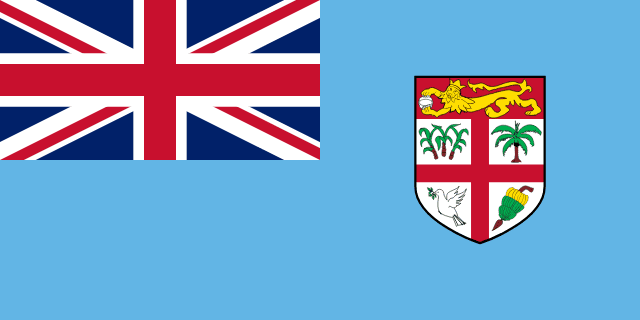
At a Glance
Alliances & Memberships
- Pacific Islands Forum
- Melanesian Spearhead Group
- Commonwealth of Nations
Foreign Policy Overview
Fiji's foreign policy is rooted in "Vuvale" (family) diplomacy, emphasizing peaceful coexistence, regional solidarity, and sustainable development. It seeks to balance engagement with traditional partners like Australia and New Zealand with growing ties to China and India. Fiji is a strong advocate for multilateralism, particularly within the UN, promoting climate action, ocean governance, and South-South cooperation. The nation actively participates in regional security initiatives and peacekeeping operations, aiming to enhance its international standing and protect its sovereign interests.
Key Positions on Major Issues
Climate: Fiji is a leading voice on climate change, advocating for ambitious emission reduction targets, increased climate finance, and special consideration for Small Island Developing States (SIDS). It champions nature-based solutions and climate resilience initiatives, actively participating in international climate negotiations and hosting the COP23 presidency. Security: Fiji strongly supports regional security cooperation through the Pacific Islands Forum and contributes significantly to UN peacekeeping missions globally. Its security doctrine emphasizes human security, disaster preparedness, and maritime surveillance to combat illegal fishing and transnational crime. Fiji opposes any militarization of the Pacific and advocates for a nuclear-free zone. Human Rights: While generally upholding human rights, Fiji has faced scrutiny regarding freedom of assembly and expression. The government is committed to improving its human rights record and engages with UN human rights mechanisms. It prioritizes gender equality, indigenous rights, and social inclusion. Trade: Fiji promotes open trade and regional economic integration through agreements like PACER Plus. Its trade policy aims to diversify exports, attract foreign investment, and reduce reliance on a few key commodities. It advocates for fair trade practices and addresses trade barriers faced by SIDS. Regional: Fiji plays a pivotal role in the Pacific, championing regionalism and collective action on shared challenges. It actively participates in the Pacific Islands Forum, advocating for a strong, unified regional voice on global issues such as climate change, ocean health, and sustainable development.
UN Voting Record Notes
Fiji consistently votes with the G77 and Small Island Developing States (SIDS) bloc, especially on issues of climate change, sustainable development, and ocean governance. On Russia-Ukraine, Fiji voted in favor of UNGA resolutions condemning Russian aggression (e.g., ES-11/1, ES-11/2, ES-11/4) and calling for humanitarian aid, reflecting its commitment to sovereignty and international law. On Israel-Palestine, Fiji has generally supported resolutions affirming Palestinian self-determination and calling for a two-state solution, aligning with the broader UN consensus. On human rights, Fiji tends to support resolutions promoting universal human rights, though its specific votes can be nuanced based on domestic considerations and regional solidarity.
Economy & Trade
GDP composition: Services (65%), Industry (17%), Agriculture (18%). Major industries: Tourism, sugar processing, textiles, garments, mining, bottling. Top exports: Mineral water, fish, gold, sugar, timber. Top imports: Machinery and transport equipment, petroleum products, food, chemicals. Currency: Fijian Dollar (FJD). Top trade partners: Australia, New Zealand, USA, China, Singapore.
Military & Security
Active personnel: Approximately 3,500. Defense spending: ~US$100 million (FY2023-2024). Alliances: Primarily through regional security frameworks like the Pacific Islands Forum. Fiji has a long history of contributing to UN peacekeeping missions. Nuclear/WMD status: Non-nuclear weapon state, signatory to the Treaty on the Non-Proliferation of Nuclear Weapons and the Treaty of Rarotonga (South Pacific Nuclear Free Zone Treaty). Doctrine: Focuses on maritime surveillance, disaster response, internal security, and international peacekeeping support, with an emphasis on soft power projection and regional stability.
Recent History
Since the late 1980s, Fiji's political landscape has been marked by several coups, notably in 1987, 2000, and 2006, often driven by ethnic tensions and power struggles. The 2006 coup led by Frank Bainimarama ushered in a period of military-backed rule, eventually transitioning to a parliamentary democracy with the 2014 elections. Bainimarama remained Prime Minister until 2022. During this period, Fiji re-engaged with the international community after sanctions, actively championing climate action and ocean conservation. The 2022 election saw a change in government, with Sitiveni Rabuka becoming Prime Minister, signaling a consolidation of democratic institutions and a renewed focus on economic recovery and social cohesion.
International Memberships
- United Nations (UN)since 1970
Joined upon independence, actively participates in peacekeeping, sustainable development, and climate change initiatives.
- Pacific Islands Forum (PIF)since 1971
Founding member, key regional platform for political, economic, and security cooperation.
- Commonwealth of Nationssince 1970 (rejoined 2014)
Initially joined upon independence, suspended after coups, readmitted after democratic elections.
- Melanesian Spearhead Group (MSG)since 1988
Promotes economic growth, cultural preservation, and political cooperation among Melanesian states.
- World Trade Organization (WTO)since 1996
Committed to multilateral trading system, seeking improved market access and special provisions for SIDS.
MUN Negotiation Profile
G77 and China, Small Island Developing States (SIDS), Pacific Islands Forum
Principled, cooperative, empathetic towards vulnerable nations, firm on climate action and SIDS concerns.
- Any inaction or significant weakening of commitments on climate change mitigation and adaptation.
- Challenges to Fiji's sovereignty or territorial integrity, particularly its Exclusive Economic Zone (EEZ).
- Disregard for the unique vulnerabilities and special circumstances of Small Island Developing States (SIDS).
- Nuclear proliferation or the presence of nuclear weapons in the Pacific region.
- Undermining of multilateralism and international law.
- ""As a small island developing state, Fiji stands on the frontlines of climate change. Our future, and indeed the future of all humanity, hinges on urgent and decisive global climate action.""
- ""We must not forget the 'blue economy' – the health of our oceans is intrinsically linked to our livelihoods, our culture, and our very survival. Ocean governance must be a global priority.""
- ""Fiji firmly believes in the power of multilateralism and collective action. Only together can we address the complex challenges that transcend national borders.""
- ""The 'Vuvale' spirit of family and shared destiny guides our engagement with the international community. We seek partnerships built on respect, equity, and mutual benefit.""
- ""Investing in resilience, particularly for vulnerable nations, is not merely an act of charity, but a strategic imperative for global stability and sustainable development.""