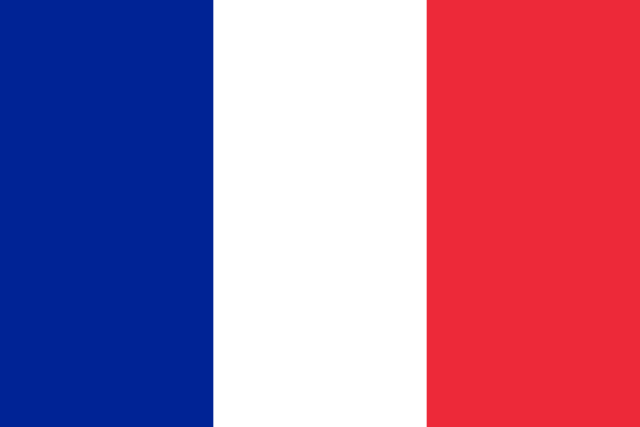
At a Glance
Alliances & Memberships
- UN
- EU
- NATO
- G7
- G20
- OECD
- WTO
Foreign Policy Overview
France's foreign policy is rooted in multilateralism, European integration, and the promotion of human rights and democracy. It seeks to maintain its status as a permanent member of the UN Security Council and a nuclear power, advocating for a strong, unified Europe capable of independent action on the global stage. Key bilateral relationships include Germany, the United States, and countries across Africa. France actively engages in crisis resolution, particularly in the Sahel region, and champions international law.
Key Positions on Major Issues
Climate: France is a strong advocate for ambitious climate action, pushing for the implementation of the Paris Agreement and increased renewable energy investments. Security: France emphasizes collective security through NATO and EU cooperation, while maintaining an independent defense capability and leading interventions in regions like the Sahel. Human Rights: France consistently promotes human rights globally, often raising concerns about abuses in international forums and supporting humanitarian initiatives. Trade: France supports open and fair trade within the EU framework and advocates for multilateral trade agreements, while also protecting strategic industries. Regional: Within Europe, France champions deeper integration and a stronger common foreign and security policy. In Africa, it maintains significant engagement through development aid, security partnerships, and cultural ties.
UN Voting Record Notes
France, as a permanent member of the UNSC, often exercises its veto power, though it has committed to refraining from doing so in cases of mass atrocities. In the UNGA, France generally aligns with EU positions. For example, on the Russia-Ukraine conflict, France has consistently condemned Russian aggression and voted in favor of resolutions demanding withdrawal and upholding Ukrainian sovereignty. On Israel-Palestine, France often supports a two-state solution and has voted for resolutions critical of Israeli settlement expansion, while also condemning Hamas. On climate change, France is a leading voice for ambitious action, backing resolutions calling for deep emissions cuts and financial support for developing nations. On human rights, France actively supports resolutions addressing a wide range of issues globally.
Economy & Trade
France has a diversified economy, with a significant services sector (around 70% of GDP), a robust industrial base (particularly aerospace, automotive, and luxury goods), and a highly productive agricultural sector. Key exports include machinery and transportation equipment, aircraft, plastics, chemicals, pharmaceuticals, and luxury goods. Major imports include machinery and equipment, vehicles, crude oil, and consumer goods. Its primary trade partners are Germany, the United States, Italy, and Spain. France uses the Euro as its currency and faces challenges related to public debt and unemployment.
Military & Security
France maintains one of the most capable and well-equipped militaries in Europe, with approximately 203,250 active personnel. Its defense spending is around 2.0-2.2% of GDP (approx. $60 billion annually). France is a founding member of NATO and a key contributor to EU defense initiatives. It possesses an independent nuclear deterrent, consisting of submarine-launched ballistic missiles and air-launched cruise missiles. Key security concerns include terrorism, regional instability in the Sahel, cyber warfare, and maintaining freedom of navigation. French military doctrine emphasizes strategic autonomy, deterrence, and expeditionary capabilities.
Recent History
In 1992, France ratified the Maastricht Treaty, marking a crucial step in European integration and the eventual creation of the Euro. During the late 1990s and early 2000s, France actively participated in peacekeeping operations in the Balkans. In 2003, France notably opposed the US-led invasion of Iraq, highlighting its independent foreign policy stance. The 2007 Lisbon Treaty further deepened EU political integration, a key French foreign policy goal. In 2013, France intervened militarily in Mali (Operation Serval, later Barkhane) to counter Islamist extremism, demonstrating its commitment to security in the Sahel. More recently, France has been a vocal proponent of strengthening European defense capabilities in response to renewed geopolitical tensions, particularly following Russia's full-scale invasion of Ukraine in 2022. It has also faced significant domestic challenges, including a series of terrorist attacks.
International Memberships
- European Unionsince 1957
Founding member, motivated by post-World War II desire for peace, economic reconstruction, and political stability through integration with European neighbors.
- United Nationssince 1945
As a victorious power in WWII, France became a founding member and permanent member of the Security Council, aiming to ensure international peace and security and uphold multilateralism.
- North Atlantic Treaty Organization (NATO)since 1949
Founding member, driven by the need for collective defense against the Soviet threat during the Cold War. France temporarily withdrew from NATO's integrated military command in 1966, rejoining fully in 2009, reflecting its commitment to transatlantic security while maintaining strategic autonomy.
- G7since 1975
Founding member, joining as a major industrialized economy to coordinate economic policy among leading democracies in response to global economic challenges.
- G20since 1999
Founding member, to address global economic and financial issues with a broader group of systemically important industrialized and emerging economies.
MUN Negotiation Profile
France is a leading member of the EU and a key player within NATO, often aligning with Western democracies on multilateral issues. It also engages with the G77 and Non-Aligned Movement (NAM) on specific development and climate issues, seeking common ground where possible, but consistently upholding its distinct voice as a P5 member.
France typically adopts an assertive and principled negotiation style, often playing a bridge-builder role within the EU and advocating for strong, legally binding international agreements. It seeks to form coalitions with like-minded states, particularly within Europe, to advance its agenda. French diplomats are known for their strong rhetorical skills and firm adherence to national interests, but also for their pragmatic approach to finding compromises that uphold multilateral frameworks.
- National sovereignty and territorial integrity
- Independent nuclear deterrence
- European strategic autonomy
- Protection of French language and culture
- Commitment to multilateralism and international law
- "My delegation believes that a strong and united Europe is essential for global stability and effective multilateral action."
- "We urge all parties to adhere strictly to international law and humanitarian principles in conflict zones."
- "France is committed to accelerating the transition to a carbon-neutral economy and calls upon all nations to enhance their climate ambitions."
- "My delegation emphasizes the critical importance of collaborative security efforts to combat terrorism and address regional instabilities, particularly in the Sahel."
- "We stand firm in our commitment to human rights and democratic values, and will continue to advocate for their protection worldwide."