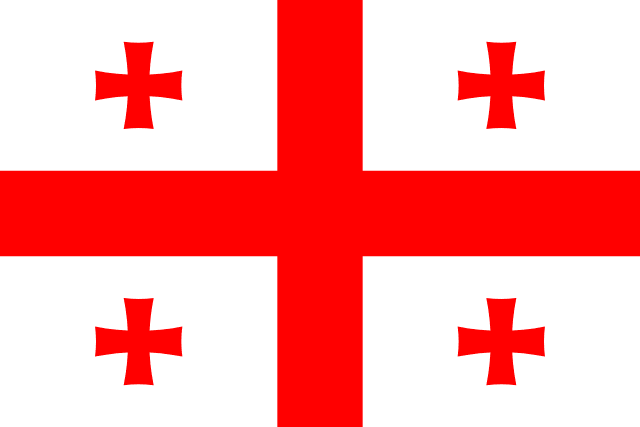
At a Glance
Alliances & Memberships
- European Union Candidate Status (2023)
- NATO Aspirant Country
- Black Sea Economic Cooperation (BSEC)
- GUAM Organization for Democracy and Economic Development
- Council of Europe
- Euro-Atlantic Partnership Council (EAPC)
Foreign Policy Overview
Georgia's foreign policy is defined by its 'unwavering' commitment to Euro-Atlantic integration, seeking full membership in both NATO and the EU. This doctrine is driven by the existential need to counter Russian occupation of 20 percent of its territory (Abkhazia and the Tskhinvali region/South Ossetia). While maintaining a pragmatic 'de-escalation' policy with Moscow to avoid renewed conflict, Tbilisi remains a staunch ally of Ukraine and the West. Georgia positions itself as a strategic bridge for East-West energy and trade via the Middle Corridor. The government balances domestic traditional values with Western legal alignment, though recent domestic laws have caused tension with Brussels. Regional cooperation with Turkey and Azerbaijan is prioritized for economic security.
Key Positions on Major Issues
Security: Full restoration of territorial integrity and withdrawal of Russian forces; activation of the 2008 Bucharest Summit pledge for NATO entry. Climate: Implementation of the NDC under the Paris Agreement to reduce GHG emissions by 35% by 2030; focus on hydropower and renewable energy transition. Human Rights: Continued legal reforms to align with the EU Acquis; protection of Internally Displaced Persons (IDPs) rights to return. Trade: Utilization of the Deep and Comprehensive Free Trade Area (DCFTA) with the EU; expansion of the Middle Corridor (TITR) logistics. Regional: Non-recognition policy regarding occupied territories as a global diplomatic priority.
UN Voting Record Notes
Georgia consistently votes in favor of UNGA resolutions condemning Russian aggression in Ukraine (A/RES/ES-11/1). It sponsors an annual resolution on the status of IDPs and refugees from Abkhazia and South Ossetia, which has seen increasing support over the years. Georgia aligns with nearly 90% of EU Common Foreign and Security Policy (CFSP) declarations, though it occasionally abstains on specific sanctions or sensitive regional issues involving neighboring powers.
Economy & Trade
GDP Composition: Services (60%), Industry (21%), Agriculture (7%). Currency: Georgian Lari (GEL). Major Industries: Mining (manganese, copper), wine, tourism, chemicals. Exports: Ferrous alloys, motor vehicles (re-export), wine, mineral waters, fertilizers. Key Partners: Turkey, Russia, China, Azerbaijan, USA, Armenia. Georgia acts as a transit corridor for Caspian energy (Baku-Tbilisi-Ceyhan pipeline).
Military & Security
Forces: ~37,000 active duty personnel. Spending: Approximately 1.7-2% of GDP. Doctrine: Total Defense, shifting toward NATO interoperability. Non-nuclear state. Hosts the Joint Training and Evaluation Centre (JTEC) with NATO. The primary threat is the presence of Russian bases in Abkhazia and South Ossetia.
Recent History
Following the 2003 Rose Revolution, Georgia underwent rapid liberalization. In 2008, the Five-Day War with Russia resulted in the occupation of Abkhazia and South Ossetia. The 2012 democratic transition saw the Georgian Dream party take power, maintaining the pro-Western course while attempting to manage tensions with Russia. In 2014, Georgia signed the Association Agreement with the EU. Following the 2022 invasion of Ukraine, Georgia applied for EU membership, achieving candidate status in 2023. Internal politics have recently been marked by debates over the 'Transparency of Foreign Influence' law (2024), which has complicated relations with Western partners but hasn't shifted the core pro-EU/NATO objective.
International Memberships
- United Nations (UN)since 1992
Major partner for regional security and trade.
- Council of Europe (CoE)since 1999
Central pillar of legal and human rights reforms.
- European Union (Candidate)since 2023
Designated candidate status in December 2023.
- NATO (Aspirant)since 1994 (PfP)
Deeply integrated through Substantial NATO-Georgia Package (SNGP).
- GUAM Development Orgsince 1997
Founding member of this regional democratic bloc.
MUN Negotiation Profile
Western / Euro-Atlantic (with nuances on regional pragmatism)
Legalistic and principled on sovereignty; flexible on trade; persistent in multilateral forums regarding international law.
- Recognition of the independence of Abkhazia or South Ossetia in any document.
- Any language suggesting the 'normalization' of Russian military presence on Georgian soil.
- Exclusion of Georgia from future NATO or EU enlargement discussions.
- Compromise on the right of return for over 300,000 IDPs.
- "The international community must hold the occupying power accountable for the creeping annexation and 'borderization' of Georgian lands."
- "Georgia remains a committed partner in the Middle Corridor, ensuring global energy security through reliable transit."
- "My delegation maintains that territorial integrity is the bedrock of international order and cannot be bargained away."
- "We call upon the UN to strengthen the mandate of humanitarian monitors in the occupied regions where human rights are systematically violated."
- "Georgia's path toward the European family is the choice of our people and is enshrined in our constitution."