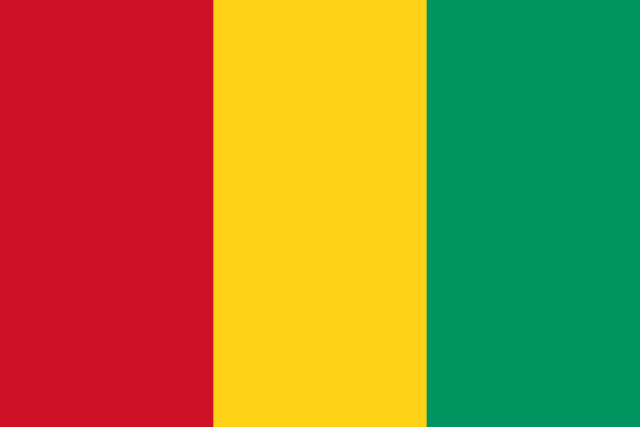
At a Glance
Alliances & Memberships
- UN
- AU (suspended)
- ECOWAS (suspended)
- OIC
Foreign Policy Overview
Bauxite (largest reserves) diplomacy with China and Russia; transition delayed.
Key Positions on Major Issues
Sovereignty; mining nationalism; transition timeline disputes.
UN Voting Record Notes
Often abstains; African consensus.
Economy & Trade
Guinea possesses the world's largest reserves of bauxite (aluminum ore), which dominates its export sector along with gold and diamonds. While mining drives GDP growth, the majority of the population remains engaged in subsistence agriculture, producing rice, coffee, and palm oil. The economy is heavily reliant on foreign direct investment from China and the UAE, utilizing the Guinean Franc (GNF). Key trade partners include China, India, and the United Arab Emirates, though economic stability is frequently threatened by political volatility and fluctuating global commodity prices.
Military & Security
The Republic of Guinea Armed Forces (Groupement des Forces Spéciales) currently holds political power following the 2021 coup led by Colonel Mamady Doumbouya. Defense spending is opaque but has increased to consolidate internal security and counter potential spillover from Sahelian militancy. Guinea maintains a non-nuclear status and is a signatory to the Pelindaba Treaty. Historically, the military has shifted its alignment toward diversified partners, including France, Russia, and more recently, Turkey, for equipment and training.
Recent History
Following decades of autocratic rule, Guinea held its first democratic elections in 2010, won by Alpha Condé. However, Condé’s 2020 constitutional change to allow for a third term sparked massive civil unrest and accusations of electoral fraud. In September 2021, the elite Special Forces unit led by Mamady Doumbouya overthrew Condé, establishing the National Committee of Reconciliation and Development (CNRD). The junta cited systemic corruption and poverty as justifications for the coup. Since then, Guinea has navigated a precarious transition period marked by international sanctions from ECOWAS and a commitment—though frequently delayed—to hold democratic elections by late 2025. This era has been defined by a focus on 'refounding the state' and renegotiating mining contracts to increase national revenue.
International Memberships
- African Union (AU)since 1963
Suspended following the 2021 coup d'état; currently undergoing a transition back to civilian rule.
- ECOWASsince 1975
Suspended since the September 2021 coup; subject to sanctions and transit monitoring.
- Organization of Islamic Cooperation (OIC)since 1969
Permanent member and active participant in regional Islamic development initiatives.
- Mano River Union (MRU)since 1980
Active member; the port of Conakry is a vital strategic hub for the organization.
MUN Negotiation Profile
Non-Aligned Movement (NAM) / Francophone Africa. Currently aligned with the 'Transit States' (Mali, Burkina Faso) regarding sovereignty, though more cautious in its rhetoric toward the West.
Pragmatic and sovereignty-focused. Guinea often prioritizes regional non-interference and economic autonomy, particularly concerning its mining contracts.
- Any foreign interference in the domestic transition timeline established by the CNRD.
- Sanctions that target the bauxite mining sector or its export infrastructure.
- External mandates for military restructuring that bypass the current interim leadership.
- "The international community must support 'African solutions to African problems' regarding political transitions."
- "Debt relief and technical assistance are essential for Guinea to meet the UN Sustainable Development Goals (SDGs) by 2030."
- "Equitable benefit-sharing in the extractive industries is a prerequisite for long-term regional stability."