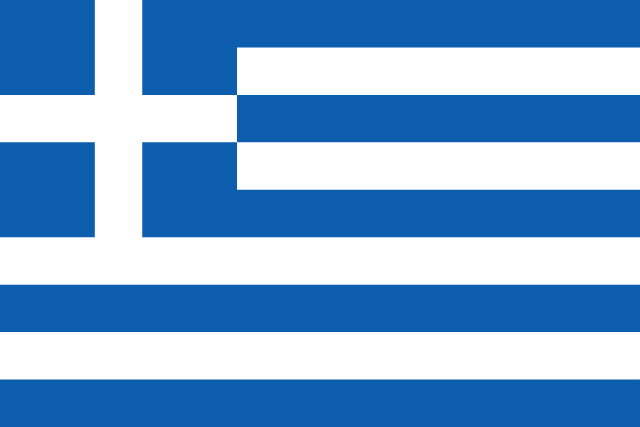
At a Glance
Alliances & Memberships
- EU
- NATO
- UN
- OECD
Foreign Policy Overview
Greece's foreign policy is anchored in its membership within the European Union and NATO, prioritizing regional stability in the Eastern Mediterranean, Aegean, and Balkans. Key relationships include strategic partnerships with the United States and France, alongside complex relations with Turkey, often marked by historical disputes over maritime zones, airspace, and Cyprus. Greece actively promotes multilateralism and international law, advocating for peaceful resolution of disputes and opposing revisionism. It also seeks to strengthen ties with Israel, Egypt, and other Arab states through regional cooperation frameworks like the East Med Gas Forum.
Key Positions on Major Issues
Climate: Greece is committed to the Paris Agreement, aiming for carbon neutrality by 2050 and investing in renewable energy, particularly solar and wind power. Security: As a NATO member, Greece prioritizes collective defense, maritime security in the Aegean, and counter-terrorism efforts, while modernizing its armed forces. Human Rights: Greece upholds international human rights conventions, though it faces scrutiny regarding migrant and refugee treatment at its borders. Trade: Committed to free trade within the EU framework, Greece seeks to expand economic partnerships, particularly in the Balkans and Eastern Mediterranean, focusing on shipping, tourism, and energy. Regional: Greece plays a proactive role in Balkan stability, supporting EU integration for Western Balkan countries and engaging in trilateral cooperation schemes with Cyprus and Israel.
UN Voting Record Notes
Greece generally aligns with EU consensus in UNGA votes. It has consistently condemned Russia's invasion of Ukraine, voting in favor of resolutions demanding Russian withdrawal and upholding Ukrainian sovereignty. On the Israel-Palestine conflict, Greece typically supports a two-state solution based on international law, advocating for de-escalation and humanitarian aid, though its position can reflect efforts to balance relations with both parties. Greece has been a strong proponent of climate action resolutions and has supported various human rights initiatives, often co-sponsoring EU-backed resolutions.
Economy & Trade
Greece's economy, heavily reliant on services (around 80% of GDP), particularly tourism and shipping, has been recovering from the sovereign debt crisis. Key industries include tourism, shipping, food processing, and petroleum products. Major exports include refined petroleum, pharmaceuticals, fresh fruits, and olive oil, while imports consist mainly of crude petroleum, machinery, and transport equipment. Germany, Italy, and Turkey are significant trade partners. The currency is the Euro (EUR). Challenges include high public debt, structural reforms, and boosting investment.
Military & Security
Greece maintains a conscript-based armed force of approximately 177,000 active personnel with a defense budget of around 2.7% of GDP (~$6.5 billion in 2024), exceeding NATO's 2% target. It is a staunch NATO member, actively participating in alliance operations and exercises. Greece is a non-nuclear weapon state and signatory to the NPT. Key security concerns include territorial integrity disputes with Turkey in the Aegean Sea, guarding its extensive maritime borders, and managing migration flows. Its military doctrine emphasizes deterrence and the defense of national sovereignty.
Recent History
Following its entry into the European Economic Community in 1981, Greece experienced significant economic growth and modernization. The 2008 global financial crisis triggered a severe sovereign debt crisis in Greece, leading to multiple international bailouts and strict austerity measures from 2010 to 2018, profoundly impacting its society and economy. In 2015, the Syriza government under Alexis Tsipras challenged austerity, but ultimately accepted a new bailout package. Relations with Turkey have remained tense over Aegean disputes and hydrocarbon exploration rights, particularly in the 2020s. Domestically, Greece has seen a return to economic growth and conservative governments under Kyriakos Mitsotakis since 2019, focusing on investment and reforms. The country has also grappled with the challenges of large-scale migration, especially during the European migrant crisis of 2015-2016.
International Memberships
- European Union (EU)since 1981
Greece's accession supported its democratic consolidation post-junta and fueled economic development through structural funds and integration into the common market.
- North Atlantic Treaty Organization (NATO)since 1952
Joined during the Cold War to enhance national security against communist threats and integrate into the Western defense architecture.
- United Nations (UN)since 1945
A founding member, Greece's participation was driven by its commitment to international peace, security, and cooperation in the post-WWII order.
- Organisation for Economic Co-operation and Development (OECD)since 1961
Joined to foster economic growth, social well-being, and collaborate on policy-making with other developed market economies.
MUN Negotiation Profile
Greece is firmly aligned with the European Union and NATO, consistently advocating for a strong, integrated Europe and transatlantic security. Within these blocs, it often acts as a bridge-builder between Western European and Balkan countries, while also cultivating specific regional partnerships in the Eastern Mediterranean.
Greece tends to be a principled and assertive negotiator, particularly on issues concerning national sovereignty and territorial integrity. It often seeks to build coalitions with like-minded EU and NATO members, relying heavily on international law and established norms. While generally preferring diplomatic solutions, Greece is prepared to take firm stances to protect its interests, sometimes employing a 'spoiler' tactic if its core red lines are breached.
- Sovereignty over Aegean islands and maritime zones
- Non-negotiable adherence to international law (UNCLOS) for territorial disputes
- Protection of national minorities in neighboring countries
- Rejection of any threats to Cypriot sovereignty
- "My delegation emphasizes the critical importance of adhering to international law and the UN Convention on the Law of the Sea to ensure stability in the Eastern Mediterranean."
- "Greece is committed to fostering robust regional cooperation, particularly with our partners in the Eastern Mediterranean, to address common challenges like energy security and climate change."
- "We firmly believe that a strong and united European Union, buttressed by NATO, is the most effective guarantor of peace and prosperity in our interdependent world."
- "My delegation calls for renewed efforts to address the root causes of irregular migration, coupled with shared responsibility and burden-sharing among all nations."
- "Greece stands in unwavering solidarity with Ukraine, condemning the unprovoked aggression and advocating for a just and lasting peace based on its territorial integrity."