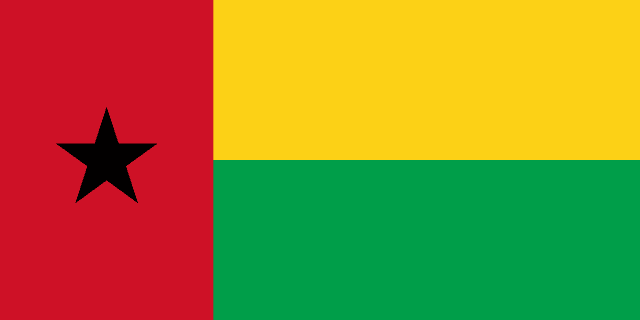
At a Glance
Alliances & Memberships
- UN
- AU
- ECOWAS
- CPLP
- OIC
Foreign Policy Overview
Cashew exports; political instability; ECOWAS engagement; narco-trafficking concerns.
Key Positions on Major Issues
ECOWAS solidarity; democratic stability.
UN Voting Record Notes
African consensus.
Economy & Trade
Guinea-Bissau's economy is heavily reliant on agriculture, with cashew nuts accounting for approximately 90% of export revenues, making it the world's fifth-largest producer. The national currency is the West African CFA franc (XOF), pegged to the Euro, providing relative price stability despite frequent political volatility. Key imports include foodstuffs, refined petroleum, and machinery, primarily from partners like Portugal, Senegal, and China. Diversification efforts are underway via the 'Hora Tchau' development plan, focusing on potential offshore oil deposits and increased phosphate mining.
Military & Security
The Revolutionary Armed Forces of the People (FARP) consist of approximately 4,500 active personnel with a history of significant political intervention. Defense spending remains modest at around 1.5% of GDP, with the military currently undergoing SSR (Security Sector Reform) under ECOWAS guidance. The country is not a nuclear state and maintains a doctrine focused on internal stability and border security against maritime piracy and transnational drug trafficking. Following a 2022 coup attempt, ECOMIB (the ECOWAS stabilization mission) was redeployed to provide security for state institutions.
Recent History
Since the mid-1990s, Guinea-Bissau has faced chronic political instability, marked by multiple successful and attempted coups, most notably the 1998 civil war and the 2012 'cocaine coup.' The decade following 2014 saw a slow transition toward constitutional order, though tensions between the President and Parliament remain frequent. In 2020, Umaro Sissoco Embaló assumed the presidency following a contested election, subsequently surviving an assassination and coup attempt in February 2022. Recent years have seen a foreign policy shift toward closer integration with the Francophone world and Turkey. The UN Integrated Peacebuilding Office (UNIOGBIS) closed in 2020, signaling a move toward sovereign governance, though ECOWAS forces remain a stabilizing factor. Finance and governance reforms under IMF supervision have been a primary focus since 2023.
International Memberships
- ECOWAS (Economic Community of West African States)since 1975
Founding member; central to regional security and economic integration.
- WAEMU (West African Economic and Monetary Union)since 1997
Member state; Guinea-Bissau shares a common currency and central bank.
- CPLP (Community of Portuguese Language Countries)since 1996
Member of the Lusophone community, maintaining strong ties with Portugal and Brazil.
- African Union (AU)since 1973
Key partner for infrastructure financing and diplomatic support.
MUN Negotiation Profile
African Group / G77 + China / Lusophone (CPLP)
Pragmatic, regionalist, and highly collaborative with West African neighbors. Guinea-Bissau often aligns its voting with the ECOWAS consensus and relies on multilateralism to address internal security deficits.
- Direct external interference in internal constitutional transitions outside of ECOWAS frameworks.
- Conditions on developmental aid that ignore the immediate needs of climate-vulnerable coastal states.
- Any violation of maritime sovereignty or unauthorized foreign fishing in the Exclusive Economic Zone (EEZ).
- "Advocating for global support in the 'War on Drugs' as Guinea-Bissau is a transit point for transatlantic trafficking."
- "Seeking climate financing for mangrove restoration and protection against rising sea levels in the Bijagós Archipelago."
- "Urging international debt relief to support the implementation of the National Development Plan (2020-2023 extension)."