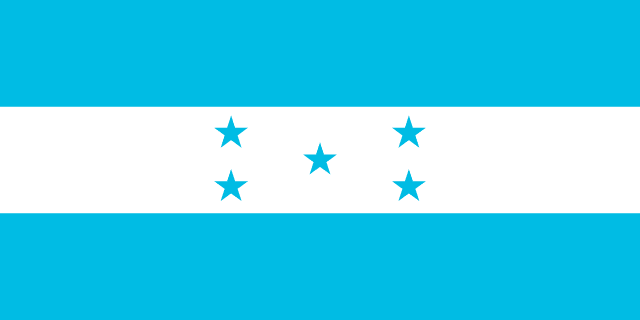
At a Glance
Alliances & Memberships
- UN
- OAS
- SICA
- CELAC
- CAFTA-DR
Foreign Policy Overview
Cut Taiwan ties for PRC (2023); leftist Castro government; tense moments with US (extradition treaty threats).
Key Positions on Major Issues
Migration; anti-narcotics; sovereignty; pro-Palestine; pro-Cuba/Venezuela.
UN Voting Record Notes
Shifted left under Castro; mixed bloc.
Economy & Trade
Honduras is a lower-middle-income economy heavily reliant on agriculture (bananas, coffee) and the maquila (apparel assembly) sector, though services account for over half of GDP. The economy is deeply integrated with the United States through CAFTA-DR, with the U.S. serving as the top trading partner and remittances from abroad accounting for nearly 25-30% of national GDP. The national currency is the Lempira (HNL), and the country faces significant challenges including high poverty rates, vulnerability to climate-related disasters, and informal labor markets. Key exports include coffee, palm oil, shrimp, and textiles, while imports are dominated by refined petroleum, manufactured goods, and machinery.
Military & Security
The Honduran Armed Forces consist of approximately 16,000 active personnel, focusing primarily on internal security, counter-narcotics operations, and disaster relief. Defense spending remains modest at roughly 1% of GDP, with significant security assistance historically provided by the United States through Joint Task Force-Bravo. Honduras does not possess weapons of mass destruction and is a signatory to the Treaty of Tlatelolco, maintaining a non-nuclear status. The current military doctrine emphasizes border integrity and supporting the National Police in combating 'maras' (gangs) and transnational organized crime.
Recent History
Following the 2009 military coup that ousted President Manuel Zelaya, Honduras experienced a decade of political polarization and allegations of state-sponsored corruption under the National Party. The 2021 election of Xiomara Castro, the country's first female president, marked a significant ideological shift toward the left and social democratic reforms. A major foreign policy pivot occurred in March 2023 when Honduras officially recognized the People's Republic of China, ending decades of diplomatic relations with Taiwan to seek increased trade and infrastructure funding. Domestically, the government has struggled to address endemic gang violence, leading to the implementation of regional 'states of exception' similar to its neighbors. Internationally, the country is currently focusing on renegotiating trade terms and seeking international aid to combat the 'Dry Corridor's' agricultural crises. Honduras has also been active in seeking a UN-backed anti-corruption commission (CICIH) to restore institutional rule of law.
International Memberships
- United Nations (UN)since 1945
Founding member; active in regional legal and human rights frameworks.
- Organization of American States (OAS)since 1948
Suspended in 2009 following a coup; reinstated in 2011; key for regional security.
- CAFTA-DRsince 2006
Central trade agreement facilitating export-led growth to the US market.
- Central American Integration System (SICA)since 1991
Integration body; Honduras often collaborates on migration and security policy.
- Belt and Road Initiative (BRI) / China Diplomacysince 2023
Strategic pivot in 2023, severing ties with Taiwan to pursue infrastructure investment.
MUN Negotiation Profile
Global South / G77 / Latin American and Caribbean Group (GRULAC)
Collaborative yet firm on national sovereignty; increasingly pragmatic under the Xiomara Castro administration, balancing traditional US security ties with new Chinese economic partnerships.
- Direct interference in domestic judicial and electoral processes by international bodies.
- Any climate change mitigation strategies that do not include financial compensation for vulnerable 'dry corridor' nations.
- Mandatory migration quotas that do not address the root causes of regional instability.
- "Demand for 'Common but Differentiated Responsibilities' in climate financing due to Central America's extreme weather vulnerability."
- "Promotion of regional integration as a tool to mitigate the socioeconomic drivers of migration."
- "Advocating for debt-for-nature swaps to handle high external debt while protecting tropical biodiversity."