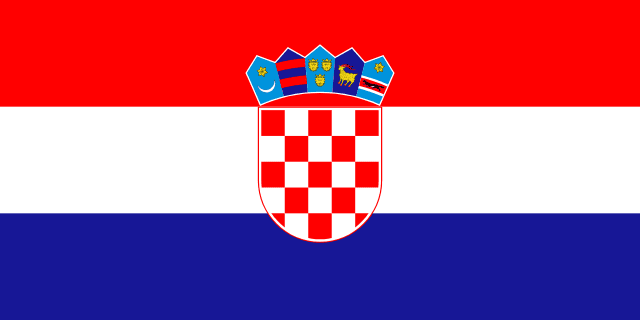
At a Glance
Alliances & Memberships
- EU
- NATO
- UN
- WTO
Foreign Policy Overview
Croatia's foreign policy is deeply rooted in its Euro-Atlantic integration, prioritizing membership in the European Union and NATO. It actively promotes regional stability in Southeast Europe, particularly through supporting the Euro-Atlantic aspirations of its Western Balkan neighbors. Croatia also maintains strong bilateral ties with Germany, Italy, and the United States, and plays a role in multilateral cooperation through organizations like the UN and OSCE. Key foreign policy goals include promoting human rights, economic development, and international security, often aligning its positions with the broader EU consensus.
Key Positions on Major Issues
Climate: Croatia is committed to the EU's climate neutrality goals by 2050, focusing on renewable energy investments and sustainable development. Security: As a NATO member, Croatia actively participates in collective defense, contributes to international peacebuilding missions, and prioritizes cybersecurity. Human Rights: Croatia upholds international human rights standards and promotes democratic values, both domestically and through its engagement in international forums. Trade: Croatia advocates for free and fair trade within the EU single market and seeks to expand economic partnerships globally, especially in the Western Balkans. Regional: Croatia emphasizes fostering good neighborly relations, supporting stability in Southeast Europe, and assisting countries in the region with their EU integration processes.
UN Voting Record Notes
Croatia generally aligns its UNGA voting with the European Union consensus, often supporting resolutions on human rights, international law, and sustainable development. For instance, it consistently voted in favor of resolutions condemning Russia's aggression against Ukraine and calling for humanitarian access. On the Israel-Palestine conflict, Croatia typically supports a two-state solution, reflecting a nuanced approach within the EU. It also actively participates in votes relating to climate change and environmental protection, consistent with its EU commitments.
Economy & Trade
Croatia has a developing, service-based economy heavily reliant on tourism, which accounts for approximately 20% of its GDP. Key industries include tourism, shipbuilding, food processing, and pharmaceuticals. Its main exports are machinery, transport equipment, chemicals, and food products, while it imports machinery, transport equipment, and fuel. Germany, Italy, Slovenia, and Austria are its primary trade partners. Croatia adopted the Euro as its currency in January 2023. Challenges include high public debt to GDP ratio and emigration of skilled labor.
Military & Security
Croatia's armed forces number around 15,000 active personnel and 6,000 reserves. Defense spending is approximately 1.8% of GDP, with a commitment to reach 2% as a NATO member. Croatia is deeply integrated into NATO structures, participating in multinational exercises and deployments. It possesses no nuclear or WMDs, adhering to international non-proliferation treaties. Key security concerns include regional stability in the Western Balkans, hybrid threats, and cybersecurity. Its defense doctrine emphasizes collective defense within NATO and contributing to international peace and security operations.
Recent History
Following its independence from Yugoslavia in 1991, Croatia endured the Homeland War (1991-1995), solidifying its sovereignty. The post-war era focused on reconstruction, democratic reforms, and Euro-Atlantic integration. In 2009, Croatia joined NATO, significantly enhancing its security framework. Its most significant foreign policy achievement was joining the European Union on July 1, 2013, a process that involved extensive reforms. In 2020, Croatia held the rotating presidency of the Council of the European Union. On January 1, 2023, Croatia adopted the Euro and simultaneously joined the Schengen Area, further deepening its integration into the EU.
International Memberships
- NATOsince 2009
Accession to NATO provided Croatia with collective security guarantees and integrated its military into a powerful alliance, enhancing its strategic position in Southeast Europe.
- European Union (EU)since 2013
Membership in the EU facilitated economic integration, access to the single market, and reinforced democratic institutions, aligning Croatia with major European political and economic trends.
- United Nations (UN)since 1992
Croatia joined the UN shortly after gaining independence, marking its recognition as a sovereign state on the international stage and providing a platform for multilateral engagement.
- World Trade Organization (WTO)since 2000
WTO membership integrated Croatia into the global trading system, promoting economic liberalization and adherence to international trade rules.
MUN Negotiation Profile
Croatia primarily aligns with the European Union and NATO blocs, actively participating in policy coordination and joint initiatives within these frameworks. It also maintains engagement with regional initiatives in Southeast Europe.
Croatia generally adopts a constructive and pragmatic negotiation style, often acting as a bridge-builder between different regional interests, particularly within the EU. Its approach is characterized by adherence to international law and multilateralism, seeking consensus while firmly upholding its national and Euro-Atlantic interests. Croatia is known for its diplomatic engagement in promoting stability in the Western Balkans.
- Territorial integrity and sovereignty
- Non-interference in internal affairs
- Protection of Croatian minorities abroad
- NATO collective defense principle
- "My delegation believes that sustained regional cooperation is paramount for the lasting peace and prosperity of Southeast Europe, especially concerning EU integration of aspiring members."
- "Croatia strongly advocates for the full implementation of international human rights conventions, as these are foundational to democratic governance and societal stability."
- "We must collectively address the multifaceted challenges of climate change through concerted efforts, technological innovation, and adherence to the Paris Agreement commitments."
- "My delegation underscores the importance of a unified and robust European Union response to geopolitical challenges, ensuring stability and promoting shared democratic values globally."