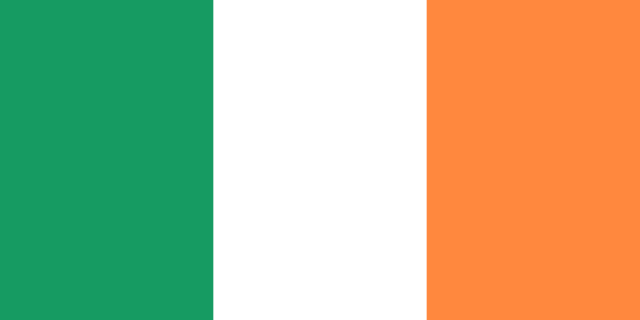
At a Glance
Alliances & Memberships
- EU
- UN
- OSCE
- CoE
Foreign Policy Overview
Ireland pursues a policy of active neutrality, emphasizing multilateralism, international law, human rights, and peacekeeping. It has historically strong ties with the European Union and the United States, and actively participates in UN peacekeeping missions. Key bilateral relationships include its closest neighbor, the United Kingdom, and fellow EU member states. Ireland plays a significant role in advocating for nuclear disarmament and conflict resolution, particularly through its work in the UN.
Key Positions on Major Issues
Climate: Committed to aggressive climate action, aiming for net-zero emissions by 2050 and significant reductions by 2030, advocating for international cooperation and climate finance. Security: Upholds its military neutrality, focusing on peacekeeping, crisis management, and humanitarian assistance through UN and EU missions, while maintaining a small, modern defense force. Human Rights: Strong advocate for human rights globally, often raising concerns about civil liberties, gender equality, and the rights of minorities in various international forums. Trade: Committed to free and fair trade within the EU single market and globally, actively promoting open markets and investment. Regional: Deeply integrated into the European Union, prioritizing EU cohesion, economic stability, and collaborative solutions to regional challenges.
UN Voting Record Notes
Ireland's voting patterns at the UNGA and UNSC (when a non-permanent member) reflect its commitment to multilateralism, human rights, and international law. For instance, Ireland consistently voted in favor of resolutions condemning Russia's aggression against Ukraine and upholding Ukrainian sovereignty. On the Israel-Palestine conflict, Ireland has consistently supported resolutions advocating for a two-state solution and the protection of Palestinian rights. In climate-related votes, Ireland aligns with EU positions, advocating for ambitious emissions targets and climate finance. Ireland also frequently supports resolutions related to human rights, often co-sponsoring or voting in favor of resolutions addressing gender equality and the protection of vulnerable groups.
Economy & Trade
Ireland boasts a highly open, knowledge-based economy with a strong focus on high-tech industries, life sciences, and financial services. GDP composition is heavily influenced by multinational corporations, particularly in pharmaceuticals and IT. Key exports include pharmaceuticals, chemicals, computer services, and medical devices, while imports predominantly comprise data processing equipment, pharmaceuticals, and chemicals. Its main trade partners are the United States, the United Kingdom, and other EU member states. The currency is the Euro. Notable economic challenges include housing shortages and the potential impacts of global corporation tax changes.
Military & Security
Ireland maintains a relatively small, professional defense force of approximately 8,500 personnel. Defense spending is modest, typically less than 0.3% of GDP, focusing on capabilities for peacekeeping and domestic security. Ireland maintains military neutrality and is not a member of any military alliances like NATO. It actively contributes to UN and EU peacekeeping missions, demonstrating its commitment to international peace and security. Key security concerns include cyber threats, maritime security, and international terrorism. The defense doctrine is primarily focused on protecting national interests, contributing to international peace, and supporting civil authorities.
Recent History
In 1998, the Good Friday Agreement was signed, largely ending the Troubles in Northern Ireland and significantly improving Anglo-Irish relations. Ireland experienced rapid economic growth from the mid-1990s, becoming known as the "Celtic Tiger," driven by foreign direct investment and EU membership. The country faced a severe financial crisis following the 2008 global recession, leading to a bailout from the EU and IMF, and subsequent austerity measures. In 2015, Ireland became the first country in the world to legalize same-sex marriage by popular vote. In 2016, the Brexit referendum in the UK created significant challenges for Ireland, particularly concerning the Irish border and its economic implications. More recently, Ireland has seen increasing population growth and diversity, alongside ongoing debates about housing and healthcare.
International Memberships
- UNsince 1955
Accession after World War II, marking its commitment to multilateralism and international peace, following a period of neutrality.
- EUsince 1973
Joined the European Economic Community (EEC), facilitating economic integration, access to a wider market, and political cooperation with European partners, contributing to its economic transformation.
- OSCEsince 1973
Became a participating State, engaging in dialogue on security, human rights, and economic cooperation across the Euro-Atlantic and Eurasian regions.
- Council of Europesince 1949
Founding member, reflecting its commitment to human rights, democracy, and the rule of law in Europe, predating its EEC membership.
MUN Negotiation Profile
Ireland aligns primarily with the European Union bloc, coordinating positions on various global issues. It also frequently aligns with like-minded small open economies and states that prioritize multilateralism and human rights within the UN context.
Ireland typically adopts a bridge-building and consensus-oriented negotiation style. While assertive in its principles, particularly on human rights and international law, it seeks to find common ground and facilitate dialogue. Ireland often forms coalitions with other EU members and states that share its commitment to international norms and multilateral solutions, aiming to achieve progressive outcomes through diplomacy and persuasion.
- Violations of international law
- Erosion of human rights
- Threats to multilateralism
- Undermining peace agreements
- "My delegation reaffirms its unwavering commitment to the principles of the United Nations Charter and international law as the cornerstone of global stability."
- "Ireland believes that a robust multilateral system is essential to addressing complex global challenges, from climate change to conflict prevention."
- "We must prioritize the protection of human rights and ensure accountability for all violations, particularly those affecting vulnerable populations."
- "My delegation calls for concrete action and genuine cooperation to achieve sustainable peace and development for all nations."