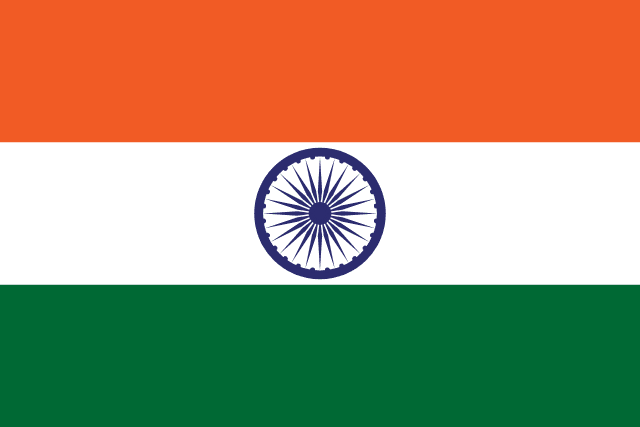
At a Glance
Alliances & Memberships
- G20 (2023 Presidency)
- Quad (Quadrilateral Security Dialogue)
- BRICS (Founding Member)
- SCO (Shanghai Cooperation Organisation)
- I2U2 Group
- G4 Nations (UNSC Reform)
- Commonwealth of Nations
- SAARC (South Asian Association for Regional Cooperation)
Foreign Policy Overview
India follows a doctrine of 'Strategic Autonomy' and 'Multi-alignment,' seeking to maintain independent decision-making while engaging with multiple global power centers. Under the 'Act East' policy, India prioritizes ties with ASEAN and Indo-Pacific partners to balance regional dynamics. The 'Neighborhood First' policy aims for stability in South Asia, though relations with Pakistan and China remain strained by border disputes. India positions itself as the 'Vishwa Mitra' (Friend of the World) and the leading voice of the Global South. A primary objective remains securing a permanent seat on the UN Security Council. New Delhi emphasizes the respect for territorial integrity and international law, while resisting external interference in internal matters.
Key Positions on Major Issues
CLIMATE: Committed to 'Panchamrit' targets (Net Zero by 2070); demands 'Climate Justice' and $1 trillion in climate finance from developed nations. SECURITY: Zero-tolerance policy on cross-border terrorism; advocates for the Comprehensive Convention on International Terrorism (CCIT). HUMAN RIGHTS: Views rights through the lens of development; maintains that sovereignty must be respected and rejects 'naming and shaming' in UN forums. TRADE: Protects domestic farmers while seeking Free Trade Agreements (FTAs) with UK, EU, and Australia; opposes WTO restrictions on food stockpiling. REGIONAL: Strong opposition to China's Belt and Road Initiative (BRI) due to CPEC violating sovereignty in Kashmir.
UN Voting Record Notes
India frequently abstains on resolutions criticizing specific countries (e.g., Russia-Ukraine) to maintain strategic autonomy, but votes 'Yes' on decolonization, Palestinian statehood, and anti-terrorism. In the UNSC (2021-22 term), India chaired the Counter-Terrorism Committee. Voted against the NPT and CTBT citing they are discriminatory. Strong supporter of UN Peacekeeping, being one of the largest troop contributors.
Economy & Trade
GDP Composition: Services (48%), Industry (26%), Agriculture (15%). Major Industries: IT Services, Pharmaceuticals, Textiles, Petroleum Products, Chemicals. Exports: Refined petroleum, diamonds, packaged medicaments, jewelry. Partners: USA, UAE, China, Saudi Arabia. Currency: Indian Rupee (INR). Ranked as the world's 5th largest economy by nominal GDP.
Military & Security
Active personnel: 1.4 million (2nd largest). Nuclear weapons state (Non-NPT signatory) with 'No First Use' doctrine. Spending: ~$81 billion (4th highest globally). Doctrine focused on two-front deterrence (China/Pakistan) and Indo-Pacific maritime security. Sustaining 'Atmanirbhar Bharat' (Self-reliant India) to reduce dependence on Russian/Western arms imports through domestic manufacturing.
Recent History
Following the 1991 economic liberalization, India entered a period of rapid growth. The 1998 Pokhran-II nuclear tests established its status as a nuclear power. The 2008 Civil Nuclear Deal with the US signaled a shift toward closer ties with Washington. Recent years have been defined by the 'Make in India' initiative, the 2019 reorganization of Jammu and Kashmir, and intense border standoffs with China in Ladakh (2020). The 2023 G20 Presidency solidified India's role as a mediator between Western powers and the Global South, particularly regarding the Ukraine conflict and African Union membership in the G20.
International Memberships
- United Nations (UN)since 1945
Founding member; central to India's identity as a leader of developing nations.
- NAMsince 1961
Founding member of the Non-Aligned Movement during the Cold War.
- BRICSsince 2009
Key platform for emerging economies and alternative global governance.
- Shanghai Cooperation Organisation (SCO)since 2017
Joined to balance regional security and counter-terrorism efforts in Eurasia.
- G20since 1999
Critical regional forum for economic cooperation and security.
MUN Negotiation Profile
Leader of the Global South / Strategic Autonomy (Non-Aligned)
Firm but pragmatic; emphasizes consensus-building and historical responsibility. Known for 'Red Line' protection on sovereignty while being a bridge-builder between the North and South.
- No third-party mediation on the Kashmir issue (strictly bilateral under Simla Agreement).
- No mandatory carbon emission cuts that hinder industrial development without commensurate financing.
- Zero tolerance for language that equates legitimate sovereignty with human rights violations in internal regions like J&K or Manipur.
- Opposition to any UNSC reform that does not include permanent seats for India and Africa.
- "India, as the Voice of the Global South, insists that development goals must lead the international agenda."
- "We remind this committee that climate change was not caused by those now paying the highest price, and the principle of Common But Differentiated Responsibilities must be upheld."
- "My delegation maintains a policy of zero tolerance toward terrorism in all its forms, and we call for the immediate adoption of the CCIT."
- "India stands ready to share its Digital Public Infrastructure as a global good to bridge the digital divide."
- "Territorial integrity and sovereignty are the bedrock of the UN Charter and cannot be compromised for geopolitical expediency."