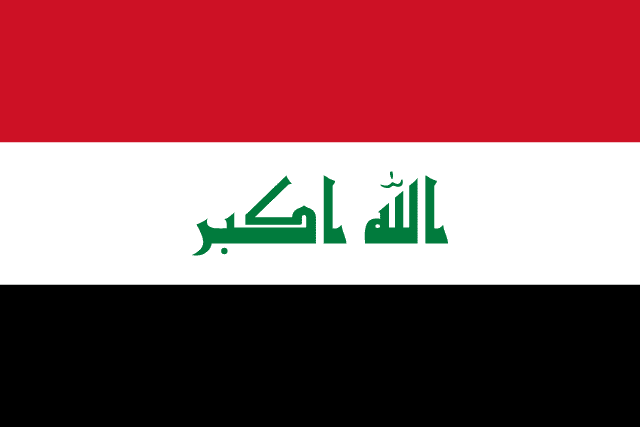
At a Glance
Alliances & Memberships
- Arab League
- OPEC (Founder)
- Organization of Islamic Cooperation (OIC)
- Global Coalition to Defeat ISIS
- G77+China
- Non-Aligned Movement (NAM)
Foreign Policy Overview
Iraq pursues a 'positive neutrality' doctrine, positioning itself as a regional mediator between Tehran and Riyadh to avoid becoming a battlefield for proxy conflicts. The primary objective is the preservation of national sovereignty and the final removal of foreign combat troops while maintaining security cooperation through the Strategic Framework Agreement with the US. Bagdad maintains a 'One China' policy and is deepening ties with Beijing through the 'Oil for Reconstruction' agreement. Regionally, Iraq seeks reintegration into the Arab fold (exemplified by the 'New Levant' project with Egypt and Jordan) while balancing its deep cultural and security ties with Iran. Support for Palestinian statehood remains a cornerstone of its diplomatic identity.
Key Positions on Major Issues
CLIMATE: High vulnerability to desertification and water scarcity; advocates for equitable transboundary water-sharing agreements with Turkey and Iran regarding the Tigris and Euphrates. SECURITY: Absolute opposition to any foreign military presence on Iraqi soil without explicit government consent; focus on border security against Tahrir al-Sham and remnants of ISIS. HUMAN RIGHTS: Emphasis on the repatriation of citizens from the Al-Hol camp; commitment to the Yazidi Survivors Law while resisting Western pressure on LGBTQ+ rights citing traditional values. TRADE: Seeking accession to the WTO; prioritizing regional infrastructure projects like the 'Development Road' (Grand Faw Port to Turkey). REGIONAL: Strong advocate for the return of Syria to the Arab League and vocal critic of Israeli military actions in Gaza and Lebanon.
UN Voting Record Notes
Iraq consistently votes in favor of Palestinian sovereignty and UNGA resolutions calling for the end of the US embargo on Cuba. It typically abstains or votes against resolutions criticizing the internal human rights situations in Iran or Syria. Iraq has recently supported UNGA resolutions calling for 'just and lasting peace' in Ukraine but maintains a neutral stance, avoiding sanctions against Russia.
Economy & Trade
Economy is heavily dominated by the oil sector, which provides roughly 92% of foreign exchange earnings. GDP (PPP): ~430 billion USD. Currency: Iraqi Dinar (IQD). Primary exports: Crude petroleum (95%+), refined petroleum, gold. Trade Partners: China (26%), India (24%), Turkey (9%), UAE, USA. Governance remains challenged by corruption and the 'Muhasasa' sectarian quota system. Efforts to diversify via the 'White Paper' for Economic Reform remain slow.
Military & Security
The Iraqi Security Forces (ISF) comprise the Army, Air Force, Navy, and the semi-autonomous Popular Mobilization Forces (PMF) which are legally integrated into the state apparatus. Current military doctrine focuses on internal counter-terrorism and border integrity. Nuclear status: NPT signatory, no WMD program. Security is heavily impacted by the presence of roughly 2,500 US troops in an advisory capacity and frequent Turkish incursions against PKK targets in the north.
Recent History
Following the 2003 US-led invasion and the subsequent fall of Saddam Hussein, Iraq experienced years of sectarian violence and the 2014-2017 war against ISIS, which resulted in massive internal displacement and infrastructure destruction. The 2019 'Tishreen' protests led to electoral reforms and the eventual appointment of the Al-Sudani government in 2022. Iraq has recently focused on post-war reconstruction, re-establishing regional diplomatic leadership via the Baghdad Conference for Cooperation and Partnership, and attempting to manage the complex relationship between the federal government in Baghdad and the Kurdistan Regional Government (KRG) in Erbil.
International Memberships
- OPECsince 1960
Original founding member; core of economic policy.
- WTO (Observer Status)since 2004
Strategic focus on the Development Road project.
- Arab Leaguesince 1945 (Founder)
Primary forum for regional political alignment.
- United Nationssince 1945 (Founder)
Active in UNAMI (UN Assistance Mission for Iraq) consultations.
MUN Negotiation Profile
Arab Bloc / Non-Aligned Movement
Pragmatic but highly sensitive to sovereignty; uses regional stability as leverage.
- Any violation of Iraqi airspace or sovereignty by foreign drone or missile strikes.
- International interference in the legal status or command of the Popular Mobilization Forces (PMF).
- Any treaty regarding the Tigris/Euphrates that does not include binding water-release quotas from upstream neighbors.
- Normalization of relations with the State of Israel.
- "Iraq is no longer a theater for regional rivalries; we demand the world respects our sovereignty as a bridge for peace, not a battleground for proxies."
- "The international community has a moral obligation to assist Iraq in its climate crisis, as we suffer for a carbon debt we did not create."
- "My delegation maintains that the full withdrawal of foreign combat forces is the only path to long-term stability in Mesopotamia."
- "We call upon our neighbors to recognize that water is a human right, and the restricted flow of the Tigris and Euphrates is a direct threat to our national security."