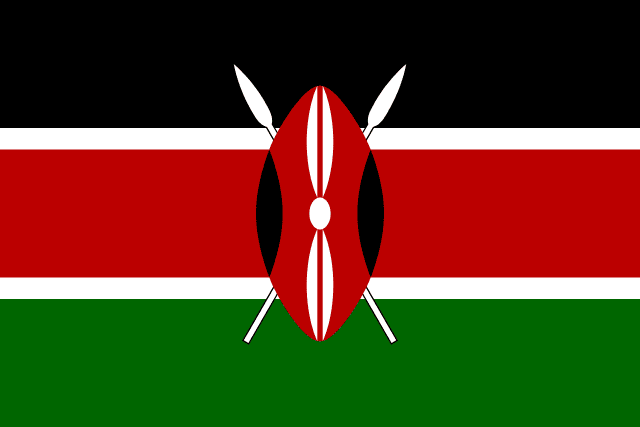
At a Glance
Alliances & Memberships
- UN
- AU
- EAC
- COMESA
- IGAD
- Commonwealth
Foreign Policy Overview
Leading Haiti security mission; African voice on global finance reform; balanced major power ties.
Key Positions on Major Issues
Haiti deployment; debt restructuring; climate finance (hosted Africa Climate Summit 2023); pro-Ukraine sovereignty stance.
UN Voting Record Notes
Among few African states condemning Russian aggression (2022 UNSC speech).
Economy & Trade
Kenya maintains the largest economy in East Africa, characterized by a market-based system and a growing services sector that contributes over 50% of its GDP. Key industries include agriculture (primarily tea, coffee, and horticulture), tourism, manufacturing, and financial services. The country utilizes the Kenyan Shilling (KES) and counts China, India, the UAE, and the European Union as its primary trading partners. As a leading member of the East African Community (EAC), Kenya is a regional hub for logistics and mobile money innovation via platforms like M-Pesa.
Military & Security
Kenya maintains a professional military force of approximately 24,000 active personnel, prioritizing regional stability and counter-terrorism against Al-Shabaab. In 2024, Kenya was designated a Major Non-NATO Ally by the United States, reflecting deep bilateral security cooperation. Defense spending remains around 1.1% of GDP, focusing on modernization and border security. Kenya is a non-nuclear state and a significant contributor to international peacekeeping missions, including the recent Multinational Security Support Mission in Haiti.
Recent History
Following the 1992 transition to multi-party democracy, Kenya has navigated periods of political turbulence, most notably the 2007-2008 post-election violence which led to major constitutional reforms in 2010. The 2010 Constitution decentralized power to 47 counties, fundamentally altering the country's governance structure. Kenya has faced significant security challenges from the Al-Shabaab insurgency, leading to its intervention in Somalia under AMISOM/ATMIS. Since the 2022 election of President William Ruto, foreign policy has leaned heavily into "climate diplomacy" and economic liberalisation. Kenya remains a pivotal mediator in regional conflicts, particularly in Sudan, South Sudan, and the DRC through the Nairobi Process. In 2024, the government faced significant domestic pressure through "Gen Z" protests over tax hikes, forcing a recalibration of domestic fiscal policy.
International Memberships
- East African Community (EAC)since 1999
Founding member and key economic driver.
- African Union (AU)since 1963
Active member frequently serving on the Peace and Security Council.
- United Nations (UN)since 1963
Host to the UN Environment Programme (UNEP) and UN-Habitat.
- COMESAsince 1981
Focus on regional trade and economic integration across Eastern/Southern Africa.
MUN Negotiation Profile
Pro-Western/African Union Bloc; Non-Aligned Movement (NAM) member.
Pragmatic and mediation-oriented; often acts as a bridge between Western interests and Global South priorities.
- Violation of the principle of non-interference in state sovereignty.
- Undermining of the territorial integrity of African states.
- Reductions in climate financing for developing nations (Green Climate Fund commitments).
- "Advocating for the reform of the UN Security Council to include permanent African representation."
- "Scaling up international cooperation for counter-terrorism in the Horn of Africa and the Sahel."
- "Pushing for global debt relief mechanisms for middle-income developing countries."