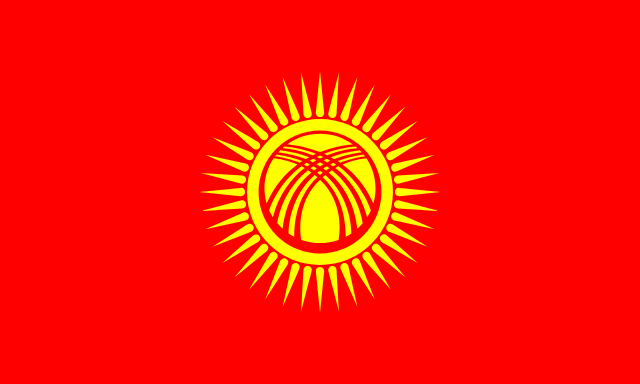
At a Glance
Alliances & Memberships
- CSTO (Collective Security Treaty Organization)
- EAEU (Eurasian Economic Union)
- SCO (Shanghai Cooperation Organization)
- Organization of Turkic States (OTS)
- Commonwealth of Independent States (CIS)
- OSCE
Foreign Policy Overview
Kyrgyzstan pursues a multi-vector foreign policy characterized by pragmatism and a prioritization of regional stability. Russia remains the primary strategic security partner, hosting the Kant Air Base, while China is the most significant economic benefactor and infrastructure lender. Kyrgyzstan actively seeks to mitigate the 'Great Game' rivalry by maintaining constructive ties with the West while deepening integration within the EAEU. Foreign policy doctrine is currently dominated by border security tensions with Tajikistan and water diplomacy across the Fergana Valley. Bishkek advocates for 'Alpine-style' sustainability and international recognition of mountainous nations' unique vulnerabilities. The state maintains a cautious neutrality regarding the Ukraine conflict to avoid Western secondary sanctions while preserving the vital Russian labor market.
Key Positions on Major Issues
CLIMATE: Proponent of the 'Five Years of Action for the Development of Mountain Regions' (UNGA Res 77/172). Focuses on glacier preservation and debt-for-green-swap initiatives. SECURITY: Prioritizes settling the undemarcated border with Tajikistan (Batken region). Strong supporter of the CSTO but critical of the lack of intervention during 2022 border clashes. HUMAN RIGHTS: Recently passed restrictive 'Foreign Representatives' law (similar to Russia's agent law), drawing international criticism, though the state maintains it is for transparency. TRADE: Seeks to diversify transit corridors via the China-Kyrgyzstan-Uzbekistan (CKU) railway project. REGIONAL: Strong advocate for the 'Central Asian Five' summit format to resolve transboundary water sharing in the Syr Darya basin.
UN Voting Record Notes
Kyrgyzstan typically aligns with Russia and the SCO bloc. On UNGA resolutions regarding the Ukraine conflict (e.g., ES-11/1), Kyrgyzstan consistently abstains or is absent to maintain its neutral multi-vector stance. It votes in favor of resolutions promoting 'International Year of Glaciers' Preservation' (2025) and supports China on issues regarding domestic sovereignty/Xinjiang. It recently served on the UN Human Rights Council (2023-2025), generally voting against country-specific mandates unless they involve Palestine.
Economy & Trade
GDP Composition: Services (53%), Industry (14%), Agriculture (12%). Currency: Kyrgyz Som (KGS). Major Industries: Gold mining (Kumtor mine), hydroelectric power, textiles, remittances (approx. 33% of GDP). Trade Partners: China (28%), Russia (27%), Kazakhstan (14%), Uzbekistan (6%). Exports: Gold, precious metals, cotton, wool, garments.
Military & Security
Active personnel: ~11,000. Defense spending: ~2.5% of GDP. Doctrine: Defensive, focused on counter-insurgency and border protection. Security is anchored by the Russian 999th Air Base in Kant. No WMD capacity; party to the Treaty of Semipalatinsk (Central Asian Nuclear-Weapon-Free Zone). Significant recent acquisition of Turkish Bayraktar TB2 drones to counter regional border threats.
Recent History
The last 30 years have been marked by three major revolutions (2005 Tulip, 2010, and 2020) driven by corruption and electoral disputes. The 2010 revolution led to a brief parliamentary system and ethnic violence in Osh. The 2020 protests saw Sadyr Japarov rise from prison to the presidency. Economically, the 2021 nationalization of the Kumtor Gold Mine from Canada's Centerra Gold was a pivotal event. Recently, Kyrgyzstan has faced deadly border skirmishes with Tajikistan (2021, 2022) resulting in hundreds of casualties and mass displacements in the Batken region, the most severe since independence.
International Memberships
- CSTOsince 1992
Primary security framework; hosts Russian military presence.
- SCOsince 2001
Founding member; vital for regional counter-terrorism and trade.
- EAEUsince 2015
Integration into the Russian-led single market for goods/labor.
- Organization of Turkic Statessince 2009 (Nakhchivan Agreement)
Focus on cultural and economic ties with Turkic-speaking nations.
- United Nationssince 1992
Key forum for mountain development and glacier protection advocacy.
MUN Negotiation Profile
SCO/CSTO/Central Asian Bloc. Neutral/Pragmatic on West-Russia tensions.
Pragmatic, bilateral-focused, and highly sensitive to sovereignty. Kyrgyz delegates usually prioritize regional consensus in Central Asia.
- Any external interference in the management of the Kumtor Gold Mine or nationalization of resources.
- Mandatory water-sharing quotas that do not compensate upstream nations for maintenance costs.
- Infringement upon the legal status of the Russian language (official) or security ties with Moscow.
- Third-party arbitration of border disputes with Tajikistan without Bishkek's consent.
- "My delegation emphasizes that international financial institutions must support 'debt-for-nature' swaps to help mountain nations protect the world's vital glaciers."
- "The Kyrgyz Republic calls for a unified regional approach to the water-energy nexus, recognizing the right of upstream nations to develop hydroelectric potential."
- "We remind the committee that security in Central Asia is indivisible; instability in Afghanistan requires a collective response through the SCO and CSTO."
- "Bishkek remains committed to the Five Years of Action for Mountain Development and invites all members to support the 2024 Bishkek Global Mountain Summit."
- "While we value international cooperation, my government maintains its sovereign right to regulate non-governmental organizations to ensure national transparency and stability."