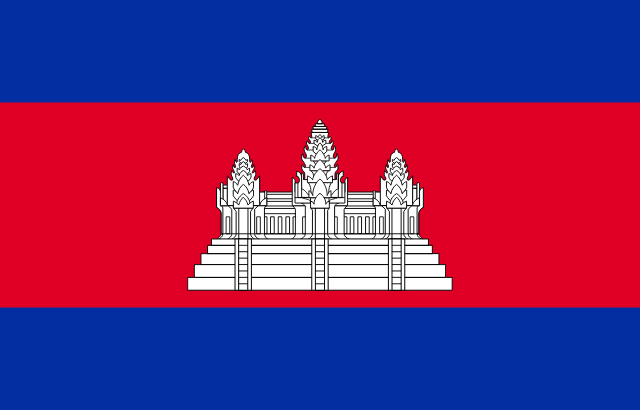
At a Glance
Alliances & Memberships
- ASEAN (Association of Southeast Asian Nations)
- RCEP (Regional Comprehensive Economic Partnership)
- CLV-DTA (Cambodia-Laos-Vietnam Development Triangle Area) - Recently withdrawn Sept 2024
- Belt and Road Initiative (BRI)
- Mekong-Lancang Cooperation (MLC)
- Non-Aligned Movement (NAM)
Foreign Policy Overview
Cambodia maintains a policy of permanent neutrality and non-alignment as per its 1993 Constitution, yet it has increasingly pivoted toward a "strategic alignment" with the People's Republic of China. Phnom Penh prioritizes economic sovereignty and non-interference in domestic affairs, frequently clashing with Western nations over human rights and democratic standards. As a member of ASEAN, Cambodia advocates for regional stability but often acts as a gatekeeper against unified ASEAN stances that might antagonize Beijing, particularly regarding the South China Sea. The government pursues a multi-vector diplomacy aimed at diversifying trade while maintaining the core "Ironclad Friendship" with China. Recent efforts include repairing ties with the US and EU following the suspension of "Everything But Arms" (EBA) trade preferences.
Key Positions on Major Issues
CLIMATE: Cambodia is highly vulnerable to floods and droughts. It seeks "loss and damage" funding from developed nations and prioritizes the 2020 Long-term Strategy for Carbon Neutrality (LTS4C) aiming for net-zero by 2050. SECURITY: Firmly opposes foreign interference in internal security. Rejects allegations regarding the Ream Naval Base serving as a Chinese military installation, citing Article 53 of the Constitution which bans foreign bases. HUMAN RIGHTS: Views Western human rights critiques as violations of national sovereignty. Prioritizes "the right to development" and "social stability" over liberal democratic norms. TRADE: Supports the multilateral trading system under the WTO and RCEP. Focuses on digital economy transition and infrastructure development via the BRI. REGIONAL: Supports the "ASEAN Way" of consensus. Advocates for the COC (Code of Conduct) in the South China Sea but prefers bilateral negotiations for territorial disputes.
UN Voting Record Notes
Cambodia typically aligns with the G77 and China. In 2022, notably voted to deplore the invasion of Ukraine in UNGA Res ES-11/1, diverging from some regional neighbors to uphold the principle of territorial integrity. However, routinely votes against or abstains from country-specific human rights resolutions (e.g., regarding Myanmar or Iran) favoring non-interference.
Economy & Trade
GDP: approx. $32 billion (2023). Currency: Cambodian Riel (KHR), though heavily dollarized. Industries: Garments, footwear, construction, rice milling, tourism. Exports: Garments ($9B+), gold, rubber, footwear. Trade Partners: China (largest importer), USA (largest export market), EU, Thailand, Vietnam. Status: Scheduled to graduate from Least Developed Country (LDC) status by 2029.
Military & Security
Royal Cambodian Armed Forces (RCAF) personnel: approx. 125,000. Defense spending: ~2.5% of GDP. Doctrine: Territorial integrity and internal security. Nuclear Status: State party to the Treaty of Rarotonga (Nuclear-Free Zone) and TPNW. Key security partner: China (Golden Dragon exercises). Concerns: Border security with Thailand/Vietnam and maritime surveillance.
Recent History
Following the 1991 Paris Peace Accords, Cambodia transitioned to a market economy. The long-term rule of Hun Sen (1985–2023) saw significant GDP growth but also the dissolution of the main opposition party (CNRP) in 2017. This led to trade sanctions from the EU and US. In August 2023, a historic power transfer occurred as Hun Manet succeeded his father, bringing a younger, Western-educated cabinet to power. 2024 has been marked by the promotion of the Funan Techo Canal project, a $1.7 billion infrastructure plan to link the Mekong to the sea, causing some tension with Vietnam over water usage.
International Memberships
- ASEANsince 1999
Founding member status in the regional bloc; Chaired in 2022.
- World Trade Organization (WTO)since 2004
Accession marked post-conflict integration into global economy.
- United Nations Peacekeeping Operationssince 2006
Cambodia is a major contributor of personnel to MINUSCA and UNISFA.
- RCEPsince 2022
Key signatory to the world's largest FTA.
MUN Negotiation Profile
ASEAN / China-Aligned G77
Pragmatic, cautious, and staunchly defensive of sovereignty. Cambodia rarely leads controversial resolutions but is a critical 'swing' or 'spoiler' vote in regional consensus. Expect high levels of cooperation on infrastructure and health, but total rigidity on governance and political rights.
- Direct criticism of the Cambodian monarchy or the Hun family leadership.
- Sanctions or resolutions targeting Cambodian domestic judicial processes.
- Calls for international intervention regarding the Ream Naval Base.
- Legally binding environmental mandates that bypass 'Common But Differentiated Responsibilities' (CBDR).
- "The Kingdom of Cambodia emphasizes that human rights cannot be used as a pretext for interfering in the internal affairs of sovereign states."
- "We call upon developed nations to fulfill their $100 billion climate finance commitment to support vulnerable nations like Cambodia in their green transition."
- "Development is the foundational human right; without stability and economic growth, political rights remain hollow."
- "Cambodia remains committed to the ASEAN Outlook on the Indo-Pacific, prioritizing cooperation over confrontation in our maritime waters."
- "We reject any attempt to turn the Mekong sub-region into a sphere of geopolitical competition that undermines local livelihoods."