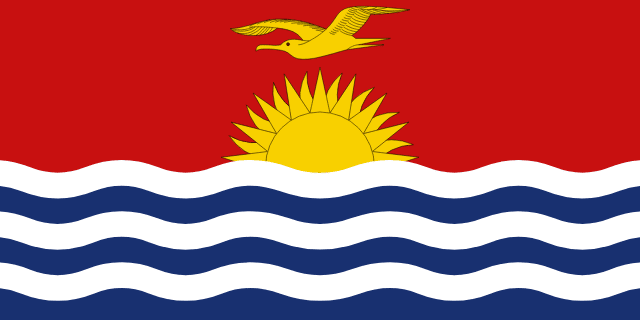
At a Glance
Alliances & Memberships
- Pacific Islands Forum
- Commonwealth of Nations
- African, Caribbean and Pacific Group of States
Foreign Policy Overview
Kiribati's foreign policy is driven by its acute vulnerability to climate change and rising sea levels, making environmental diplomacy a paramount concern. The nation actively seeks international cooperation and financial assistance to adapt and mitigate the impacts of climate change, often advocating for stronger global commitments from major emitters. While maintaining traditional ties with Western partners like Australia and New Zealand, Kiribati has recently strengthened its relationship with China, which has led to a re-evaluation of its diplomatic recognition of Taiwan. This pivot reflects a pragmatic approach to secure development aid and investment. Kiribati also prioritizes regional solidarity through the Pacific Islands Forum, aiming to address collective challenges such as sustainable development, maritime security, and resource management.
Key Positions on Major Issues
Climate: Kiribati is at the forefront of nations facing existential threats from climate change. Its key position is one of urgent action, advocating for deep emission cuts from industrialized nations, increased climate finance for adaptation and loss and damage, and international support for relocation efforts for its population. Kiribati chairs the Pacific Islands Forum and emphasizes that developed nations are historically responsible for GHG emissions. The Kiribati Adaptation Program provides a framework. Security: Kiribati views security primarily through the lens of environmental security and food security, given its low-lying geography. Traditional military security is not a major domestic concern, as the nation maintains a small police force and no standing army. Regional security is pursued through cooperation with partners like Australia and New Zealand under agreements like the Pacific Patrol Boat Program, focusing on maritime surveillance, illegal fishing, and disaster response. The nation seeks to uphold its sovereignty and protect its exclusive economic zone from external exploitation. Human Rights: As a signatory to various international human rights instruments, Kiribati generally upholds fundamental human rights. Key positions include ensuring access to education and healthcare, promoting gender equality, and protecting the rights of its citizens in the face of environmental displacement. The government is focused on maintaining cultural identity and traditional practices as climate change impacts lifestyles and potential migration. Special attention is given to the human rights implications of climate-induced migration and ensuring dignified resettlement options if necessary. Trade: Kiribati's trade policy is aimed at fostering sustainable economic development and reducing its reliance on foreign aid. Given its limited export base, the nation seeks preferential trade agreements and market access for its marine resources and agricultural products. It is a proponent of fair trade practices and regional economic integration through forums like the Pacific Agreement on Closer Economic Relations (PACER Plus). Kiribati also seeks investment in sustainable industries, particularly in fisheries and ecotourism. Regional: Kiribati is a staunch advocate for regional solidarity and cooperation within the Pacific Islands Forum. Its regional position centers on addressing shared challenges such as climate change, sustainable fisheries management, maritime boundary delimitation, and regional security through collective action. Kiribati emphasizes Polynesian exceptionalism within regional bodies, promoting the unique perspectives and needs of low-lying island nations. It seeks to strengthen regional institutions and ensure that the voices of small island developing states (SIDS) are heard and their interests represented on the international stage.
UN Voting Record Notes
Kiribati's voting patterns in the UN General Assembly often align with other Small Island Developing States (SIDS) and the broader G77 group, particularly on issues of climate change, sustainable development, and decolonization. On Russia-Ukraine (e.g., UNGA ES-11/L.1, L.2, L.3, L.4, L.5), Kiribati has generally abstained or voted for resolutions condemning aggression, reflecting its commitment to international law but also a cautious approach to superpower rivalries. On Israel-Palestine, Kiribati historically voted in favor of resolutions supporting Palestinian self-determination and critical of Israeli settlements, consistent with the majority of UN members. For climate-related resolutions (e.g. A/RES/77/162, A/RES/77/276), Kiribati consistently co-sponsors and votes in favor of stronger climate action, loss and damage mechanisms, and climate finance. On human rights issues (e.g. A/RES/78/200), Kiribati tends to support resolutions promoting universal human rights, aligning with its domestic commitments and regional consensus.
Economy & Trade
GDP composition: services (60%), industry (15%), agriculture (25%). Main industries: copra, fishing, tourism. Top exports: copra, seaweed, fish. Top imports: food, machinery and equipment, manufactured goods, fuel. Currency: Australian Dollar (AUD). Top trade partners: Australia, Fiji, Japan, China, New Zealand, US.
Military & Security
Kiribati maintains no standing military force. Security is provided by a police force with approximately 400 personnel, which includes a maritime surveillance unit. Defense spending is negligible and integrated into the broader government budget for law enforcement and maritime patrol. Kiribati relies on regional security cooperation, notably with Australia and New Zealand under the Pacific Patrol Boat Program for maritime surveillance and protection of its Exclusive Economic Zone. There is no nuclear or WMD status; Kiribati is a signatory to the Treaty on the Non-Proliferation of Nuclear Weapons. Its security doctrine is based on regional partnerships, international law, and addressing non-traditional security threats like climate change and illegal fishing.
Recent History
In the early 1990s, Kiribati continued its post-independence development with a focus on diversifying its economy beyond copra and phosphate. The mid-1990s saw growing international recognition of climate change impacts, leading Kiribati to become a vocal advocate for climate action. In 2003, Anote Tong was elected President, serving three terms and gaining international prominence for his strong stance on climate change, including proposals for 'migration with dignity' and the purchase of land in Fiji for potential resettlement. The issue of seabed mining gained prominence in the 2010s as a potential economic opportunity, but also raised environmental concerns. In 2019, Kiribati controversially switched diplomatic recognition from Taiwan to China, citing economic development benefits, which led to regional diplomatic shifts. The COVID-19 pandemic, starting in 2020, significantly impacted Kiribati's economy due to border closures affecting tourism and remittances, leading to a period of strict isolation that only eased in 2022.
International Memberships
- Pacific Islands Forum (PIF)since 1971
Founding member, promoting regional cooperation on trade, security, and climate change.
- Commonwealth of Nationssince 1979
Joined upon independence, fostering cooperation with other former British territories.
- United Nations (UN)since 1999
Joined as the 186th member state, providing a platform for advocating its interests, particularly on climate change.
- African, Caribbean and Pacific Group of States (ACP)since 1979
Promoting sustainable development and closer economic cooperation with EU and ACP countries.
- World Banksince 1986
Access to financial and technical assistance for development projects.
- International Monetary Fund (IMF)since 1986
Facilitating international monetary cooperation and financial stability.
MUN Negotiation Profile
G77, AOSIS, Pacific Islands Forum
Principled, persistent, moral suasion, seeks consensus through regional blocs, pragmatic when interests align with major powers.
- Any proposals that deny the existential threat of climate change to Kiribati.
- Agreements that do not include robust financial mechanisms for climate adaptation and loss and damage.
- Attempts to unilaterally exploit Kiribati's marine resources or compromise its Exclusive Economic Zone (EEZ).
- Resolutions that undermine the sovereignty of small island developing states.
- Proposals that ignore the unique cultural and social implications of climate-induced migration.
- "Kiribati is not just a victim of climate change; we are a living testament to its catastrophic reality, demanding immediate and equitable global action."
- "The industrial world's emissions are drowning our islands; climate justice demands that those historically responsible provide robust support for our adaptation and unavoidable loss and damage."
- "Our sovereignty and the future of our people are non-negotiable; we seek partnerships that respect our self-determination and aid our sustainable development."
- "The ocean is our lifeblood and our future; its protection from overfishing, pollution, and militarization is paramount to our survival as an island nation."
- "We speak not only for Kiribati but for all low-lying island nations whose very existence hangs in the balance; our voice is a call to conscience for the world."