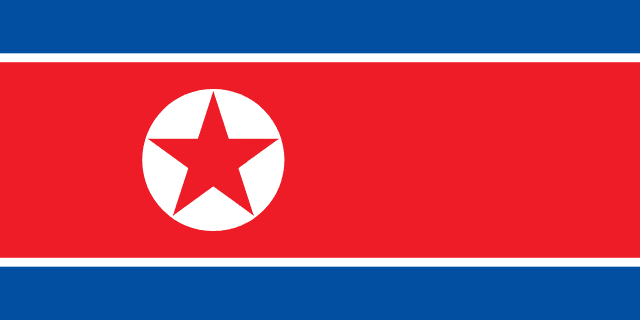
At a Glance
Alliances & Memberships
- Treaty of Friendship, Cooperation and Mutual Assistance (China)
- Strategic Partnership Treaty (Russian Federation)
- Non-Aligned Movement (NAM)
- Group of 77 (G77)
- ASEAN Regional Forum (ARF)
Foreign Policy Overview
The DPRK’s foreign policy is guided by 'Juche' (self-reliance) and 'Byungjin' (simultaneous development of the economy and nuclear force). The primary objective is regime survival and the preservation of the Kim dynasty against perceived 'hostile policies' led by the United States. Pyongyang seeks international recognition as a nuclear weapons state while demanding the withdrawal of US forces from the Korean Peninsula. Relations are prioritized with China and Russia to bypass UN sanctions and secure energy/food aid. The posture is one of strategic defiance, utilizing nuclear brinkmanship as a tool for diplomatic leverage and domestic legitimacy.
Key Positions on Major Issues
CLIMATE: Supports 'common but differentiated responsibilities'; emphasizes disaster mitigation (reforestation/flood control) under the UN Framework Convention on Climate Change (UNFCCC). SECURITY: Demands the dismantling of the UN Command in South Korea and a permanent end to US-ROK joint military exercises. Asserts its right to nuclear deterrence as a defensive measure. HUMAN RIGHTS: Considers the UN Human Rights Council and OHCHR reports as 'political provocations' and tools of Western interference; denies the existence of prison camps (Kwanliso). TRADE: Advocates for the unconditional lifting of all UN Security Council sanctions, which it labels as 'economic genocide.' REGIONAL: Rejects the Northern Limit Line (NLL) in the West Sea; views the 2024 abandonment of peaceful reunification policy as a shift toward treating South Korea as a 'hostile state' rather than a kin nation.
UN Voting Record Notes
Consistently votes against resolutions targeting the human rights situations in Iran, Syria, and Belarus. Regularly votes in alignment with Russia regarding the Ukraine conflict (e.g., voted against UNGA ES-11/1). Consistently votes in favor of Palestinian statehood and G77 economic priorities. Always votes against UNGA resolutions condemning its own human rights record.
Economy & Trade
GDP (PPP): Estimated $40 billion (CIA 2015/South Korean estimates); Currency: North Korean Won; Composition: Industry (47%), Services (31%), Agriculture (22%). Major Industries: Military products, machine building, electric power, chemicals, mining (iron ore, coal, magnesite). Trade Partners: China (over 90%), Russia. Economy is strictly state-controlled (Juche system), characterized by chronic shortages and reliance on informal markets (Jangmadang).
Military & Security
Korean People's Army (KPA): Approx. 1.2 million active personnel. Doctrine: Asymmetric warfare and Songun (Military-First). Nuclear Status: Declared nuclear power; possesses ICBMs (Hwasong-15/17/18) capable of reaching the US mainland. Defense spending estimated at 15-30% of GDP. Alliances: 1961 Mutual Defense Treaty with China; 2024 Comprehensive Strategic Partnership with Russia includes a mutual defense clause.
Recent History
Following the death of Kim Jong Il in 2011, Kim Jong Un assumed power, accelerating the nuclear program. In 2017, the DPRK tested the Hwasong-15 ICBM and a hydrogen bomb, leading to 'maximum pressure' sanctions. 2018-2019 saw unprecedented diplomacy, including summits with US President Trump in Singapore and Hanoi, which ended without a deal on sanctions relief. Since 2020, the country maintained a strict 'zero-COVID' border closure, further isolating the economy. In 2022, the DPRK codified its nuclear status into law, and in 2024, it officially designated South Korea as its 'primary foe,' abandoning the goal of peaceful reunification.
International Memberships
- United Nations (UN)since 1991
Joined simultaneously with the Republic of Korea.
- Non-Aligned Movement (NAM)since 1975
Core ideological alignment with developing nations.
- ASEAN Regional Forum (ARF)since 2000
Participation focused on security dialogue.
- International Atomic Energy Agency (IAEA)since 1974-1994
Withdrew in 1994; currently non-member/non-compliant.
- Nuclear Non-Proliferation Treaty (NPT)since 1985-2003
Officially withdrew in 2003.
MUN Negotiation Profile
Anti-Imperialist / Pro-Multipolarity (aligned with Russia, China, Cuba, Iran)
Adversarial, uncompromising, and highly formalistic; utilizes procedural delays and 'fire-and-fury' rhetoric to dominate floor time and signal domestic strength.
- Discussion of the legitimacy of the Supreme Leadership or the Kim Dynasty.
- Demands for 'CVID' (Complete, Verifiable, Irreversible Dismantlement) of nuclear assets without prior US security guarantees.
- Interference in internal affairs via Human Rights 'monitoring' or UN special rapporteurs.
- Any resolution referencing UN Security Council sanctions as 'legal' or 'justified'.
- "The Democratic People's Republic of Korea stands as a fortress of independence against the imperialist aggression of the United States and its puppet followers."
- "Our nuclear deterrent is a non-negotiable sword of justice, forged to defend our sovereignty from the nuclear blackmail of hostile forces."
- "Sanctions are not a tool of peace, but a criminal act of economic blockade intended to stifle the livelihoods of innocent Korean citizens."
- "We reject the politicization of human rights, which is merely a pretext for regime change orchestrated by the West."
- "If the United States sincerely desires peace on the Korean Peninsula, it must first withdraw its occupying forces and abandon its anachronistic 'hostile policy'."