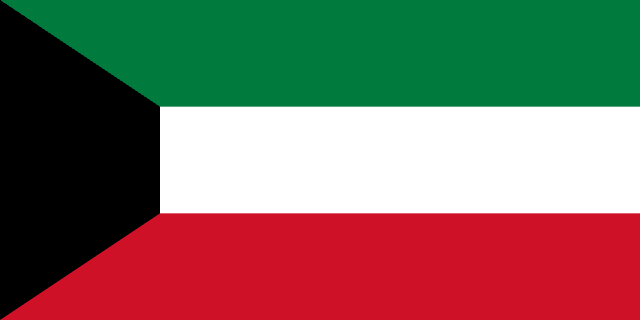
At a Glance
Alliances & Memberships
- GCC
- Arab League
- OIC
- OPEC+
- Major Non-NATO Ally (MNNA)
- G77+China
Foreign Policy Overview
Kuwait follows a doctrine of 'Moderate Neutrality' and proactive mediation, often referred to as the 'Middle Ground' of Middle Eastern diplomacy. It prioritizes the preservation of regional stability within the Gulf Cooperation Council (GCC) and maintains a strategic security partnership with the United States. Kuwait is a staunch supporter of the Palestinian cause, refusing normalization with Israel until a two-state solution is achieved. The government emphasizes humanitarian diplomacy, hosting multiple donor conferences for Syria and Iraq. It remains wary of Iranian regional influence but pursues de-escalation rather than direct confrontation.
Key Positions on Major Issues
CLIMATE: Targets Carbon Neutrality by 2050 (oil/gas sector) and 2060 (national). Focuses on CCS technology and hydrogen while defending fossil fuels as bridge fuels. SECURITY: Supports the sovereignty of Iraq; advocates for the denuclearization of the Middle East (including Iran and Israel); emphasizes maritime security in the Strait of Hormuz. HUMAN RIGHTS: Focuses on 'Values-based' rights; frequently criticized regarding the Bidoon (stateless) population; rejects external interference in domestic legal frameworks. TRADE: Strong advocate for the GCC Customs Union and diversified trade routes through the Mubarak Al-Kabeer Port project. REGIONAL: Rejects the Abraham Accords; supports a sovereign Palestinian state based on 1967 borders with East Jerusalem as its capital.
UN Voting Record Notes
Consistently votes with the Arab League on Palestinian issues. Voted to condemn the invasion of Ukraine (ES-11/1) but opposes unilateral sanctions. Often abstains on contentious human rights resolutions targeting specific Middle Eastern states to maintain its mediator status.
Economy & Trade
GDP Composition: Services (35%), Industry (64%), Agriculture (1%). Currency: Kuwaiti Dinar (KWD) - world's highest-valued currency. Exports: Petroleum and refined products (90% of revenue). Partners: China, South Korea, Japan, India, USA. Sovereign Wealth: Kuwait Investment Authority (KIA) manages over $800 billion.
Military & Security
Active Forces: 17,500. Spending: ~6.5% of GDP ($8-9 billion). Doctrine: Defensive and collaborative defense. Hosts ~13,500 US troops (Camp Arifjan). No WMD programs; signatory to NPT and CWC. Defensive strategy relies on the Peninsula Shield Force and US security guarantees.
Recent History
Post-1991 reconstruction focused on rebuilding oil infrastructure. The 2000s saw the 'Kuwait Vision 2035' (New Kuwait) launch to diversify the economy. Following the death of Emir Sabah al-Ahmad (the 'Dean of Diplomacy') in 2020, Kuwait navigated a transition of power while mediating the Qatar blockade (2017-2021). Internal politics have been defined by recurring friction between the elected parliament and the royally appointed cabinet, leading to multiple dissolutions of the National Assembly.
International Memberships
- Gulf Cooperation Council (GCC)since 1981
Founding member; primary focus on regional integration and security.
- OPECsince 1960 founding member
Provides 10% of global oil reserves; active in production quota negotiations.
- United Nationssince 1963
Active in UNRWA funding and humanitarian relief coordination.
- United States Major Non-NATO Ally statussince 2004
Ensures high-level military cooperation and equipment access.
MUN Negotiation Profile
GCC / Arab Bloc / G77
Conciliatory, mediator-oriented, focuses on consensus-building and humanitarian language.
- Any recognition of Israel without a sovereign Palestinian state.
- Infringement upon the sovereign right to extract and export hydrocarbons.
- Foreign interference in the legal status of the Bidoon population.
- Measures threatening the territorial integrity of GCC member states.
- "Kuwait stands as a bridge of dialogue in a region of discord; we urge parties to seek the middle path of mediation."
- "While we embrace the energy transition, the world must recognize the role of oil in global stability during this transition."
- "The humanitarian imperative must precede political calculation; Kuwait remains committed to being a center for global humanitarian work."
- "A lasting peace in the Middle East is impossible without the restoration of the full rights of the Palestinian people."
- "We call for a Middle East Free of Weapons of Mass Destruction, applying international standards to all regional actors without exception."