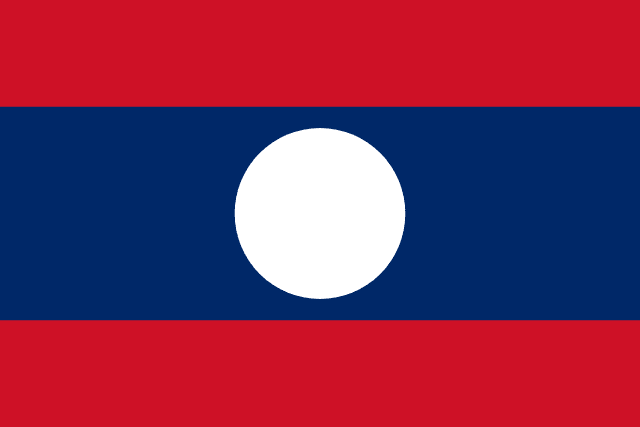
At a Glance
Alliances & Memberships
- ASEAN (Association of Southeast Asian Nations)
- Lancang-Mekong Cooperation (LMC)
- G77 + China
- Non-Aligned Movement (NAM)
- RCEP (Regional Comprehensive Economic Partnership)
- Francophonie
Foreign Policy Overview
Lao foreign policy is anchored in the principle of 'peace, independence, friendship, and cooperation' while maintaining a single-party socialist framework. As a land-locked nation transitioning to a 'land-linked' hub, its primary doctrine revolves around strategic balancing between China (its largest creditor and investor) and Vietnam (its historical political ally). Lao PDR strictly adheres to the ASEAN principle of non-interference in the internal affairs of sovereign states and prioritizes regional stability to facilitate economic growth. It utilizes its 2024 ASEAN Chairmanship to promote 'Connectivity and Resilience' while avoiding entanglement in Great Power competition. Relationships with the West are cordial but secondary to regional integration and South-South cooperation.
Key Positions on Major Issues
CLIMATE: Supports 'Common But Differentiated Responsibilities' (CBDR). Focuses on climate adaptation funding for LDCs and the sustainable management of the Mekong River basin amid upstream damming concerns. SECURITY: Firm advocate for the Treaty of Amity and Cooperation (TAC). Opposes unilateral sanctions and emphasizes diplomatic solutions for the Myanmar crisis via the ASEAN Five-Point Consensus. HUMAN RIGHTS: Views human rights through the lens of developmental rights and national sovereignty. Rejects universal periodic review criticisms regarding civil liberties, citing cultural context and internal stability. TRADE: Prioritizes the implementation of the RCEP and the China-Laos Railway corridor to reduce logistics costs and escape the 'land-locked' trap. REGIONAL: Supports the 'ASEAN Way' of consensus-based decision-making. Maintains a neutral but supportive stance on the Belt and Road Initiative (BRI).
UN Voting Record Notes
Laos typically votes in alignment with the ASEAN bloc and the G77. It frequently abstains from resolutions condemning specific regimes (e.g., abstained on UNGA resolutions regarding the situation in Ukraine in 2022-23) to maintain its policy of neutrality. It consistently votes against UNGA resolutions that target the domestic human rights records of specific countries (e.g., Iran, North Korea, Belarus), viewing them as politicized tools.
Economy & Trade
GDP Composition: Agriculture (20.9%), Industry (32.1%), Services (37.1%). Currency: Lao Kip (LAK). Major Industries: Mining (copper, gold), Hydropower (The 'Battery of Southeast Asia'), Timber, Tourism, and Textile. Exports: Electricity, Copper, Gold, Rubber, Cassava. Main Partners: Thailand (major export destination), China (major infrastructure investor), Vietnam. Facing high inflation and external debt crises as of 2024.
Military & Security
Lao People's Armed Forces (LPAF) - approx. 30,000 active personnel. Spending: ~0.2% of GDP. Doctrine: Territorial defense and internal security. Nuclear Status: Non-nuclear; signatory to the SEANZA Treaty (Bangkok Treaty). Close defense ties with Russia and Vietnam for equipment and training.
Recent History
The last 30 years have seen Laos transition from a subsistence economy to a market-oriented socialist model (New Economic Mechanism). The 2013 WTO accession marked a turning point in global trade integration. The 2021 completion of the $6 billion Boten-Vientiane (China-Laos) railway fundamentally altered its logistics landscape. However, the COVID-19 pandemic exacerbated debt vulnerabilities, leading to a significant currency depreciation of the Kip in 2022-2023. Politically, the 11th Party Congress in 2021 reaffirmed the LPRP's grip on power while pivoting toward technocratic management of the economic crisis. In 2024, Laos assumed the ASEAN Chair, focusing on the Myanmar conflict and regional economic recovery.
International Memberships
- ASEANsince 1997
Crucial forum for regional integration; Laos holds the 2024 Chairmanship.
- United Nationssince 1955
Active participant in South-South advocacy and developmental policy.
- World Trade Organization (WTO)since 2013
Facilitated trade liberalization and economic reforms.
- Mekong River Commission (MRC)since 1995
Core to its 'Battery of Southeast Asia' strategy and water resource management.
MUN Negotiation Profile
ASEAN / G77 / Pro-China Development Bloc
Quiet, consensus-seeking, non-confrontational, and strictly aligned with regional organizational positions.
- Direct interference in the internal political system of the Lao PDR or the LPRP.
- Unilateral sanctions against ASEAN member states (specifically Myanmar).
- Legally binding constraints on hydropower development without grandfathering existing projects.
- Questioning the legitimacy of the One-China Policy.
- "As a land-linked nation, Laos emphasizes that connectivity is the bedrock of regional resilience and shared prosperity."
- "We remind the committee that development is a prerequisite for the full realization of human rights in the Global South."
- "The Lao PDR calls for increased international assistance in UXO clearance, as unexploded ordnance continues to hinder our agricultural safety."
- "Western powers must respect the ASEAN Way; we favor constructive engagement over isolationist sanctions."
- "Sustainability on the Mekong must be balanced with the sovereign right of nations to utilize their natural resources for poverty alleviation."