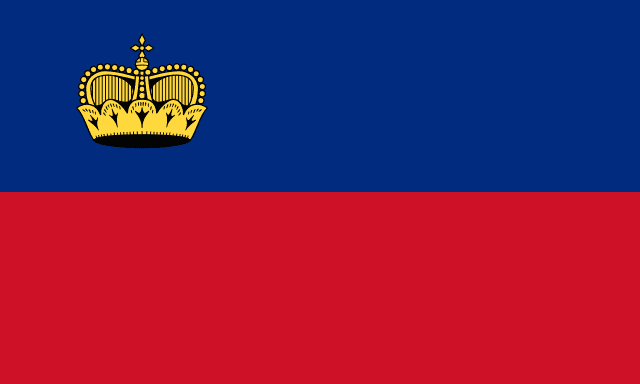
At a Glance
Alliances & Memberships
- EFTA (European Free Trade Association)
- EEA (European Economic Area)
- Schengen Area
- Council of Europe
- OSCE (Organization for Security and Co-operation in Europe)
- ICC (International Criminal Court)
Foreign Policy Overview
Liechtenstein pursues a policy of active neutrality, anchored in its membership in the EEA and EFTA while maintaining a 100-year-old customs and monetary union with Switzerland. Its doctrine centers on the 'Small State Diplomacy' model, championing the international rule of law and the protection of the sovereignty of small nations. A primary pillar of its foreign policy is the Veto Initiative at the UNGA, aimed at increasing accountability for UNSC permanent members. Liechtenstein maintains a 'special relationship' with Switzerland, which represents its interests abroad where it lacks diplomatic missions. The Principality is a staunch advocate for the International Criminal Court (ICC) and human rights, often punching above its weight in multilateral forums.
Key Positions on Major Issues
CLIMATE: Support for the Paris Agreement and Net Zero by 2050. Focus on private sector 'green finance' and the 'Water and Climate' nexus. SECURITY: Non-militaristic. Strong support for the Treaty on the Prohibition of Nuclear Weapons (TPNW). Leads the 'Veto Initiative' (UNGA Res 76/262). HUMAN RIGHTS: Leading advocate against human rights violations in Syria (IIIM mechanism). Champion of women's rights and gender equality (CEDAW). TRADE: Fierce advocate for the multilateral trading system (WTO) and the reduction of technical barriers to trade via the EEA. REGIONAL: Integration with Europe without EU membership; maintaining open borders with Switzerland and Austria via Schengen.
UN Voting Record Notes
Liechtenstein consistently votes with the European Union on human rights and environmental issues. It frequently co-sponsors resolutions regarding the 'Responsibility to Protect' (R2P). Notably, it led the 2022 UNGA Resolution 76/262 (the Veto Initiative), which mandates a GA meeting whenever a veto is cast in the Security Council. It strongly supports resolutions condemning territorial violations in Ukraine and human rights abuses in Myanmar and Syria.
Economy & Trade
GDP Composition: Industry (40%), Services (54%), Agriculture (under 1%). Currency: Swiss Franc (CHF). Highly industrialized, export-oriented economy specializing in high-tech precision instruments (Hilti), pharmaceuticals (Ivoclar Vivadent), and dental products. Financial services sector contributes 23% to GDP. Major Trade Partners: Switzerland (via Customs Union), Germany, USA, China. Liechtenstein is a global leader in blockchain legislation (TVTG Act).
Military & Security
Liechtenstein has no standing army; the military was abolished in 1868 for financial reasons. Internal security is managed by the Landespolizei. Defense is de facto provided by Switzerland, though no formal treaty obligates Switzerland to defend Liechtenstein. It is a nuclear-weapon-free state and supports global disarmament. Use of force is only recognized under UN Charter mandates.
Recent History
The last 30 years have been defined by Liechtenstein's transition from a perceived tax haven to a transparent, high-tech financial hub. Following the 2008 LGT tax affair, the Principality signed the 'Liechtenstein Declaration' in 2009, committing to OECD standards on transparency and exchange of information. In 2003, a major constitutional referendum granted the Prince broader powers while affirming the people's right to secede or abolish the monarchy. Recently, Liechtenstein has led UN efforts to address the 'Veto' issue following the 2022 invasion of Ukraine, solidifying its role as a defender of the UN Charter.
International Memberships
- United Nationssince 1990
Joined to assert sovereignty and participate in global law-making.
- EEA (European Economic Area)since 1995
Core of economic policy, providing access to the EU internal market.
- EFTA (European Free Trade Association)since 1960
A founding member; essential for the export-based economy.
- International Criminal Court (ICC)since 2002
Committed to the Rome Statute and international justice.
- Council of Europesince 1978
Focus on human rights, democracy, and the rule of law in Europe.
MUN Negotiation Profile
Western European and Others Group (WEOG); EFTA/EEA Bloc.
Principle-driven, legalistic, mediator-oriented, and highly collaborative. Focuses on procedural integrity.
- Any infringement on the sovereignty of the Principality or its customs treaty with Switzerland.
- Weakening of the International Criminal Court’s jurisdiction or the Rome Statute.
- Restricting the rights of small states to have an equal voice in UNGA proceedings.
- Mandatory EU membership requirements that would override the EFTA/EEA framework.
- "As a small state, Liechtenstein believes that the strength of the law must always prevail over the law of the strength."
- "We call upon the permanent members of the Security Council to justify any use of the veto before the General Assembly."
- "My delegation emphasizes that sustainable finance is not just an option, but a necessity for the stability of global markets."
- "Liechtenstein stands ready to support multilateral mechanisms that ensure accountability for the most serious crimes under international law."
- "We advocate for a digital governance framework that respects individual privacy while fostering innovation, as seen in our Blockchain Act."