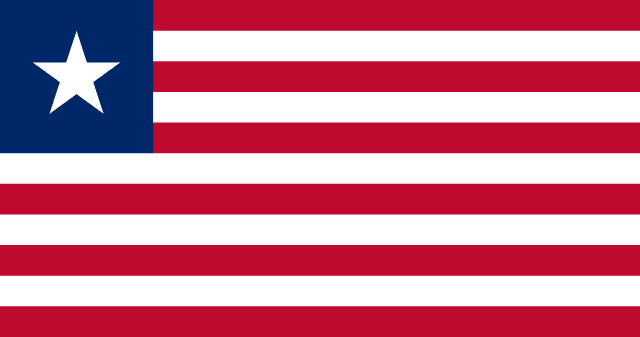
At a Glance
Alliances & Memberships
- UN
- AU
- ECOWAS
- Mano River Union
Foreign Policy Overview
Historic US ties; recovering from civil war and Ebola; war and economic crimes court being established.
Key Positions on Major Issues
Accountability for war crimes; rubber/iron ore exports; ECOWAS solidarity.
UN Voting Record Notes
Generally pro-Western; African consensus.
Economy & Trade
Liberia's economy is heavily dependent on natural resources, primarily rubber, iron ore, and gold, with agriculture employing over two-thirds of the workforce. The country utilizes both the Liberian Dollar (LRD) and the US Dollar as legal tender, maintaining a highly dollarized financial system. Top export partners include Switzerland, Germany, and the UAE, while imports are dominated by refined petroleum and foodstuffs from China and India. GDP growth remains vulnerable to global commodity price fluctuations and the lingering impacts of infrastructure deficits.
Military & Security
The Armed Forces of Liberia (AFL) consists of approximately 2,000 active personnel, rebuilt from scratch following the 2003 peace agreement with significant US training assistance. Defense spending is modest, typically hovering around 0.7% to 1% of GDP, focusing primarily on internal security and border control. Liberia maintains a non-nuclear status and is a signatory to the Pelindaba Treaty, establishing Africa as a nuclear-weapon-free zone. Current doctrine emphasizes 'Defense in Support of Civil Authority' and participation in UN peacekeeping missions (MINUSMA contribution).
Recent History
Following two devastating civil wars (1989–2003), Liberia underwent a significant democratic transition bolstered by the UN Mission in Liberia (UNMIL). The 2005 election of Ellen Johnson Sirleaf marked a turning point, focusing on debt relief, reconstruction, and becoming Africa's first female president. The 2014-2016 Ebola outbreak severely hindered economic progress, killing thousands and straining the fragile healthcare system. In 2017, the country achieved its first peaceful democratic transition of power in over 70 years when George Weah succeeded Sirleaf. Most recently, the 2023 election of Joseph Boakai demonstrated Liberia's maturing democracy, with a foreign policy now focused on transparency, anti-corruption, and regional security cooperation.
International Memberships
- United Nations (UN)since 1945
Founding member; active participant in regional peacekeeping and economic integration.
- Economic Community of West African States (ECOWAS)since 1975
Strategic regional alliance; Liberia has been a major recipient of ECOMOG peacekeeping support and now contributes to regional stability.
- African Union (AU)since 1963
Key member of the continental body; adheres to the African Continental Free Trade Area (AfCFTA).
- World Trade Organization (WTO)since 2016
Joined as the 163rd member to integrate into the global trading system.
MUN Negotiation Profile
Pro-Western/G7-aligned; strong traditional ties to the United States and active member of the African Group.
Collaborative and multilateral; often acts as a bridge-builder within ECOWAS, prioritizing consensus and regional stability.
- Any violation of the Principle of Non-Interference in internal sovereign affairs.
- Reductions in international development aid or debt relief mechanisms for LDCs.
- Encroachment on maritime sovereignty or territorial waters (exclusive economic zone).
- "Advocating for sustainable debt restructuring and increased Foreign Direct Investment (FDI) for post-conflict developing nations."
- "Strengthening institutional frameworks to combat illegal, unreported, and unregulated (IUU) fishing in West African waters."
- "The necessity of global North-South cooperation in climate change adaptation and resilience funding."