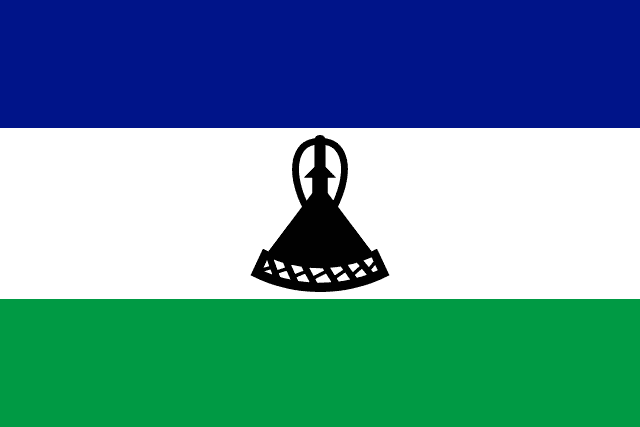
At a Glance
Alliances & Memberships
- UN
- AU
- SADC
- Commonwealth
- SACU
Foreign Policy Overview
South Africa-enclaved; water exports (Highlands Project); textile economy threatened by AGOA changes.
Key Positions on Major Issues
Constitutional reform; water-energy; SADC integration.
UN Voting Record Notes
African consensus; pro-Palestine.
Economy & Trade
Lesotho's economy is heavily integrated with South Africa's, characterized by the Loti's peg to the Rand and significant revenue from the Southern African Customs Union (SACU). Its key industries include garment manufacturing—largely exporting to the US under AGOA—and the export of water and electricity through the Lesotho Highlands Water Project. Major exports include diamonds, knitted apparel, and footwear, with South Africa, the United States, and the European Union serving as primary trade partners. Despite being a lower-middle-income country, it faces high unemployment and deep wealth inequality.
Military & Security
The Lesotho Defence Force (LDF) is a modest force of approximately 2,000 active personnel focused primarily on internal security and border protection. Following a history of political instability and military intervention, recent reforms—supported by SADC—have focused on reaffirming civilian control and professionalism. Lesotho is a signatory to the Treaty on the Prohibition of Nuclear Weapons and maintains a non-aligned, defensive military doctrine. Defense spending remains low, prioritizing peacekeeping contributions to regional missions like SAMIM in Mozambique.
Recent History
The last three decades in Lesotho have been defined by a transition toward parliamentary democracy punctuated by periods of political volatility and military involvement. The 1998 election aftermath saw a SADC-led military intervention (Operation Boleas) to restore order after a coup attempt. In the 2010s, the country faced further instability, leading to the SADC Oversight Committee's deployment to monitor constitutional reforms and security sector overhaul. The 2022 election of businessman Sam Matekane and his 'Revolution for Prosperity' party marked a shift toward technocratic governance aimed at transparency. Current foreign policy is dominated by managing the 'enclave' relationship with South Africa and seeking economic diversification through international trade agreements.
International Memberships
- Southern African Customs Union (SACU)since 1910
Founding member; central to Lesotho's trade and customs revenue.
- Southern African Development Community (SADC)since 1980
Regional cornerstone for security and economic cooperation.
- African Union (AU)since 1966
Active participant in the Non-Aligned Movement and South-South cooperation.
- The Commonwealthsince 1966
Key partner for development assistance and democratic governance support.
MUN Negotiation Profile
Non-Aligned Movement (NAM) / African Group
Consensus-oriented, multilateralist, and focused on regional stability through SADC mediation. Lesotho often aligns with the G77 on development issues.
- Encroachment on national sovereignty by external military powers.
- Changes to the SACU revenue-sharing formula that would disadvantage smaller economies.
- Infringement upon the Lesotho Highlands Water Project (LHWP) agreements.
- "Advocating for increased climate adaptation funding for landlocked, mountainous nations."
- "Stressing the importance of the African Continental Free Trade Area (AfCFTA) in reducing dependence on a single neighbor."
- "Promoting global cooperation in combating the HIV/AIDS pandemic, which remains a critical national health security threat."