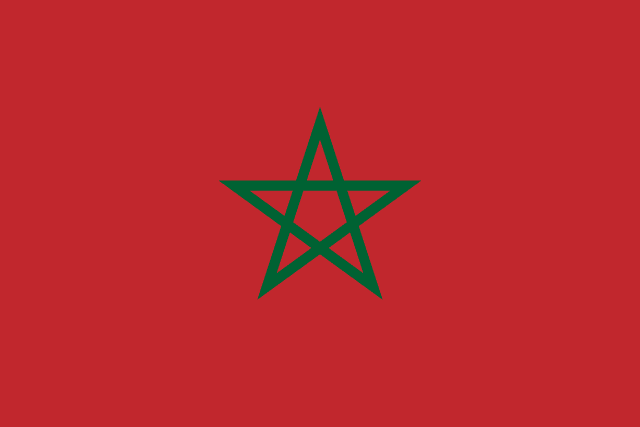
At a Glance
Alliances & Memberships
- UN
- AU (rejoined 2017)
- Arab League
- OIC
- Major non-NATO ally (US)
- Abraham Accords
Foreign Policy Overview
Western Sahara central; signed Abraham Accords; co-hosting 2030 World Cup; phosphate exports; tense with Algeria.
Key Positions on Major Issues
Western Sahara is Moroccan (autonomy plan); pro-Israel normalization; pro-Palestine humanitarian.
UN Voting Record Notes
Arab/OIC consensus; pro-Western on Western Sahara recognitions.
Economy & Trade
Morocco possesses a diversified economy dominated by services (50% of GDP), agriculture (12%), and a growing manufacturing sector focused on automotive and aerospace. It is the world's largest exporter of phosphate and its derivatives, which accounts for a significant portion of foreign exchange earnings. The Dirham (MAD) is the official currency, and top trade partners include Spain, France, and China, bolstered by the 2006 US-Morocco Free Trade Agreement. Despite stability, the country faces challenges with high youth unemployment and a reliance on rainfall for agricultural output.
Military & Security
The Royal Moroccan Armed Forces (FAR) consist of approximately 200,000 active personnel and maintain a defense budget representing roughly 4% of GDP. Morocco is a non-nuclear state and a signatory to the NPT, focusing its military doctrine on the defense of its southern provinces (Western Sahara) and counter-terrorism. Its strategic alliance with the United States and France includes large-scale annual military exercises like 'African Lion.' Recent modernization efforts have prioritized drone technology and intelligence-driven border security.
Recent History
Since the ascension of King Mohammed VI in 1999, Morocco has undergone significant modernization and constitutional reform, particularly following the 2011 Arab Spring protests. A primary focus of the last decade has been the diplomatic push for international recognition of its sovereignty over Western Sahara, achieving a major breakthrough with U.S. recognition in 2020. The 2017 return to the African Union marked a shift toward 'Pan-Africanism,' positioning Morocco as a regional financial and logistical hub. Recent years have been defined by the normalization of ties with Israel via the Abraham Accords and the massive 2023 Al Haouz earthquake recovery. These events have solidified Morocco's role as a mediator and stable gateway between the Global North and South.
International Memberships
- African Union (AU)since 2017
Rejoined after a 33-year absence; key focus on African integration.
- NATO (Mediterranean Dialogue)since 1994
Major Non-NATO Ally (MNNA) status since 2004.
- European Union (Association Agreement)since 2000
Advanced Status partner since 2008.
- League of Arab States (Arab League)since 1958
Active participant in Arab-Israeli normalization efforts (Abraham Accords).
MUN Negotiation Profile
Western-leaning, Pro-African Union, Moderate Arab state.
Pragmatic and bilateral; emphasizes 'South-South' cooperation and territorial integrity above all else.
- Any recognition or legitimacy granted to the 'Saharawi Arab Democratic Republic' (SADR).
- Questioning of Moroccan sovereignty over the Western Sahara.
- External interference in internal governance or monarchical structures.
- "The Moroccan Autonomy Initiative is the only credible, lasting solution for the Western Sahara."
- "Morocco acts as a vital bridge between Africa and Europe in managing migration and regional security."
- "Promotion of 'Atlanticism' through the African Atlantic Countries Process."