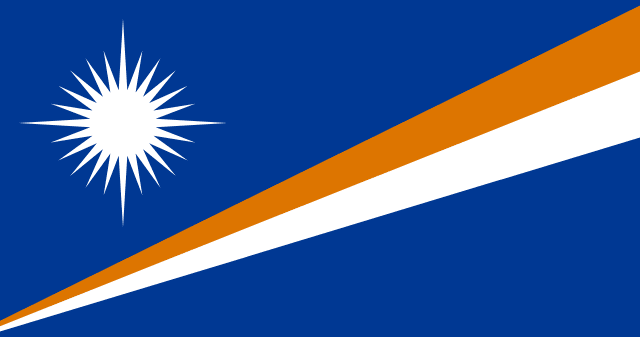
At a Glance
Alliances & Memberships
- United States (Compact of Free Association)
- Pacific Islands Forum
- Forum Fisheries Agency
Foreign Policy Overview
The Republic of the Marshall Islands (RMI) maintains a foreign policy deeply rooted in its sovereignty and its unique relationship with the United States under the Compact of Free Association (COFA). A primary tenet is the aggressive pursuit of climate change action and compensation for the legacy of US nuclear testing. The RMI acts as a strong advocate for small island developing states (SIDS) and maintains close ties with other Pacific nations, prioritizing regional stability and sustainable development. While aligned with the US on many global issues, RMI also engages with countries like Taiwan and Japan, seeking to diversify partnerships and secure economic and developmental assistance. Multilateralism, particularly within the UN system, is a crucial avenue for amplifying its voice on existential threats.
Key Positions on Major Issues
Climate: The Marshall Islands is one of the most vocal nations on climate change, advocating for legally binding emissions reductions and increased climate finance from developed nations. It champions the 1.5-degree Celsius target, calling for urgent action to address sea-level rise, ocean acidification, and extreme weather events that threaten its very existence. The nation also seeks international recognition and support for climate-induced displacement and loss and damage. Security: National security is largely guaranteed by the United States under the Compact of Free Association, which grants the US responsibility for RMI's defense. However, the RMI also prioritizes regional security through cooperation with Pacific island nations, focusing on maritime security, combating illegal fishing, and disaster preparedness. It remains vigilant against geopolitical tensions in the Indo-Pacific and emphasizes adherence to international law. Human Rights: The Marshall Islands champions human rights, particularly focusing on the right to a healthy environment, given the existential threat of climate change. It advocates for the rights of indigenous peoples, women, and children, and actively participates in UN human rights mechanisms. The lasting health and environmental impacts of nuclear testing remain a significant human rights concern. Trade: The economy is heavily reliant on fishing rights fees, US assistance, and a small tourism sector. The RMI seeks to expand its trade relationships and attract foreign investment, particularly in sustainable industries. It participates in regional trade agreements to foster economic growth and resilience but faces challenges due to its small size, remoteness, and vulnerability to external shocks. Regional: A staunch advocate for Pacific regionalism, the Marshall Islands actively participates in the Pacific Islands Forum and other regional bodies. It promotes collective action on issues such as climate change, ocean governance, sustainable fisheries, and regional security. The RMI emphasizes the importance of solidarity among Small Island Developing States (SIDS) to address shared vulnerabilities and advance common interests.
UN Voting Record Notes
The Marshall Islands consistently aligns with other Small Island Developing States (SIDS) and often with Western democracies on key UNGA resolutions. On Russia-Ukraine, RMI has consistently voted in favor of resolutions condemning Russian aggression and calling for humanitarian aid (e.g., UNGA ES-11/1, ES-11/2, ES-11/6). Regarding Israel-Palestine, RMI tends toabstain or vote against resolutions critical of Israel, showcasing its alignment with the US position, though it has supported resolutions on humanitarian aid. On climate change, RMI is a leading voice, consistently co-sponsoring and voting for ambitious resolutions advocating for stronger climate action, loss and damage mechanisms, and recognition of climate justice. On human rights issues, RMI generally supports resolutions promoting universal human rights, often aligning with the US and other democratic nations.
Economy & Trade
The GDP composition is heavily reliant on services (approximately 60-70%), followed by negligible agriculture and a small industrial base. Key industries include services, particularly government services, wholesale and retail trade, and transportation. Top exports are fish and handicrafts; top imports include food, machinery and equipment, fuels, and manufactured goods. The official currency is the US Dollar. Top trade partners include the United States, Japan, Australia, and New Zealand, with a significant amount of imports originating from Asian markets.
Military & Security
The Marshall Islands has no standing military. Defense is the responsibility of the United States under the Compact of Free Association (COFA). There is a small maritime surveillance unit that collaborates with regional partners, including the US Coast Guard and Australia, to monitor its Exclusive Economic Zone (EEZ) against illegal fishing. The RMI is not a nuclear power and actively advocates for global nuclear disarmament, given its history as a US nuclear test site. Its security doctrine is based on collective security through COFA and regional cooperation.
Recent History
Since gaining independence in 1986 under the Compact of Free Association (COFA) with the United States, the Marshall Islands' recent history has been dominated by several key themes. The most enduring is the ongoing legacy of US nuclear testing from 1946-1958, particularly the environmental and health impacts on atolls like Bikini and Enewetak, leading to continuous calls for compensation and healthcare. In the 1990s and 2000s, focus shifted to economic development and managing the challenges of a small island economy. More recently, climate change has emerged as the paramount existential threat, driving much of its foreign policy and domestic agenda, with the RMI becoming a leading voice for climate action on the global stage since the 2010s. Simultaneously, the RMI has navigated geopolitical dynamics in the Pacific, balancing its COFA relationship with expanding ties with other nations. Discussions around the renewal of the economic provisions of the COFA have been a recurring feature.
International Memberships
- United Nationssince 1991
Joined as a sovereign state, amplifying its voice on global issues.
- Pacific Islands Forum (PIF)since 1989
Key regional body for political and economic cooperation.
- Secretariat of the Pacific Community (SPC)since 1983
Focuses on scientific and technical cooperation for development.
- Alliance of Small Island States (AOSIS)since Early 1990s
A coalition of low-lying coastal and small island countries, advocating on climate change.
- International Monetary Fund (IMF)since 1992
Provides financial assistance and promotes international monetary cooperation.
- World Banksince 1992
Provides financial and technical assistance to developing countries.
MUN Negotiation Profile
Small Island Developing States (AOSIS), generally aligns with Pacific Islands Forum members and often with G77+China on climate issues; strong bilateral ties with the US.
Principled, persistent, and morally persuasive, often leveraging its vulnerability to climate change as a powerful argument. Collaborative with SIDS, but firm on core demands.
- Any agreement that does not commit to limiting global warming to 1.5 degrees Celsius above pre-industrial levels.
- Any proposal that postpones or significantly dilutes commitments to a Loss and Damage fund and its operationalization.
- Obligations that infringe upon our sovereignty or the terms of the Compact of Free Association with the United States.
- Agreements that negatively impact our exclusive economic zone (EEZ) or sustainable fishing practices.
- Ignoring the historical responsibilities of major emitters for climate change and nuclear legacy.
- ""The Republic of the Marshall Islands does not simply face climate change; we live it. Our islands are on the frontline, and for us, climate action is not a policy choice, it is a matter of survival.""
- ""We urge all nations to remember their historical responsibilities. The time for pledges is over; what we need now are binding commitments and robust implementation, particularly for adaptation and loss and damage.""
- ""Our sovereignty and the well-being of our people depend on a healthy ocean. We must protect our marine resources from illegal exploitation and the devastating impacts of pollution and climate change.""
- ""The legacy of nuclear testing reminds us of the profound consequences of global inaction. Let this serve as a stark warning of what happens when the voiceless are ignored.""
- ""As a small island developing state, we bring a unique and urgent perspective to these negotiations. We are not asking for charity, but for climate justice and the equitable sharing of responsibility.""