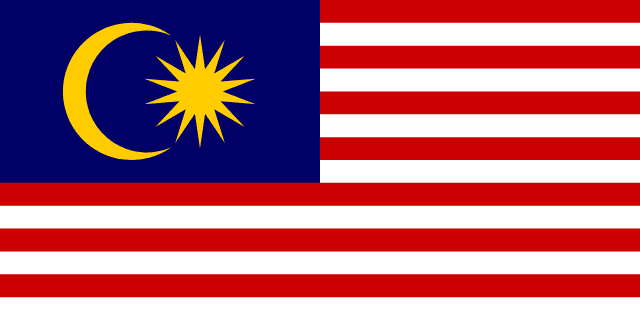
At a Glance
Alliances & Memberships
- ASEAN
- Organization of Islamic Cooperation (OIC)
- Commonwealth of Nations
- Five Power Defence Arrangements (FPDA)
- Non-Aligned Movement (NAM)
- G77+China
- CPTPP
Foreign Policy Overview
Malaysia pursues a policy of 'Dynamic Neutrality' and non-alignment, emphasizing regional stability through the ASEAN 'ZOPFAN' (Zone of Peace, Freedom and Neutrality) principle. The doctrine focuses on 'Prosper-Thy-Neighbor' diplomacy and multilateralism. Relationships are balanced between Western economic ties and China as the primary trade partner. Malaysia is a vocal advocate for Palestinian statehood and Islamic solidarity in the OIC. Policy is heavily influenced by the 'Look East' policy, prioritizing East Asian economic models. South China Sea claims are managed via 'quiet diplomacy' and international law (UNCLOS) while rejecting superpower militarization.
Key Positions on Major Issues
CLIMATE: Supports the Paris Agreement but emphasizes 'Common but Differentiated Responsibilities.' Focuses on sustainable palm oil (MSPO) and demands financial assistance for energy transition from developed nations. SECURITY: Firmly opposes nuclear proliferation; supports South East Asia Nuclear-Weapon-Free Zone (SEANWFZ). Focuses on counter-terrorism and maritime security in the Sulu Sea. HUMAN RIGHTS: Generally promotes moderated Islamic values; criticizes Western double standards regarding Gaza. Maintains reservations on certain ICC/ICJ statutes regarding sovereignty. TRADE: Strong advocate for the rules-based multilateral trading system (WTO) and regional blocks like RCEP and CPTPP. REGIONAL: Prioritizes ASEAN Centrality. Advocates for the Five-Point Consensus on Myanmar. Claims portions of the South China Sea based on its continental shelf.
UN Voting Record Notes
Consistently votes in favor of resolutions condemning Israeli settlements. Voted to suspend Russia from the HRC (2022) but generally abstains on resolutions that target specific countries for human rights unless there is ASEAN consensus. Closely aligns with the G77 on TRIPS waivers and technology transfer. Consistently supports the 'Zone of Peace, Freedom and Neutrality' (ZOPFAN).
Economy & Trade
GDP Composition: Services (54.2%), Manufacturing (23.4%), Agriculture (10.1%), Mining (6.5%). Key Industries: Electronics (E&E), Palm Oil, Petroleum/LNG, Rubber. Currency: Malaysian Ringgit (MYR). Major Partners: China, USA, Singapore, Japan. Top exports: Integrated circuits, Refined petroleum. Status: High-middle income country, aspiring to High-Income status by 2030.
Military & Security
Malaysian Armed Forces (ATM) consist of 115,000 active personnel. Spending is approx. 1% of GDP. Doctrine: 'Kertas Putih Pertahanan' (Defense White Paper) focuses on human-centric defense and regional cooperation. No WMDs; signatory to TPNW. Strategic focus on the 'Two Territories' (Peninsular and East Malaysia) defense. High participation in UN Peacekeeping (UNIFIL).
Recent History
The last 30 years were defined by the rapid industrialization under Dr. Mahathir Mohamad (1981-2003, 2018-2020), the 1MDB financial scandal which led to the first-ever change of government in 2018, and several years of political 'musical chairs' until the 2022 General Election. The current 'Unity Government' under Anwar Ibrahim (Malaysia MADANI) focuses on anti-corruption, economic restructuring, and navigating the US-China rivalry. The 1997 Asian Financial Crisis remains a core memory influencing Malaysia's cautious approach to international capital markets and IMF intervention.
International Memberships
- ASEANsince 1967
Founding member, central to all foreign policy frameworks.
- Organization of Islamic Cooperation (OIC)since 1969
Active in promoting Islamic finance and Palestinian rights.
- G77since 1964
Promotes interests of developing nations in the UN.
- Five Power Defence Arrangements (FPDA)since 1971
Multi-lateral defense agreement with UK, Australia, NZ, and Singapore.
- United Nations (UN)since 1957
Active member of the UN Human Rights Council (2022-2024 term).
MUN Negotiation Profile
ASEAN / G77 / OIC / Non-Aligned Movement
Consensus-driven, polite but firm, prioritizing regional stability and sovereignty over ideological interference. Uses the 'ASEAN Way.'
- Infringement on sovereign maritime rights in the South China Sea (EEZ).
- Any interference in domestic bumiputera (affirmative action) policies or religious laws.
- External military intervention in ASEAN member states without consensus.
- Sanctions on the palm oil industry under the guise of environmental protection.
- "Malaysia calls for an immediate cessation of hostilities in Gaza and the recognition of a sovereign Palestinian state based on pre-1967 borders."
- "We urge developed nations to fulfill their $100 billion climate finance commitment without penalizing the agricultural exports of developing states."
- "My delegation maintains that the South China Sea must remain a zone of peace and trade, governed by UNCLOS 1982, not by military posturing."
- "We advocate for a reformed UN Security Council that reflects the geopolitical realities of the 21st century and eliminates the disproportionate power of the veto."
- "Sovereignty and non-interference are the bedrocks of international peace; Malaysia will not accept mandates that bypass national domestic legal frameworks."