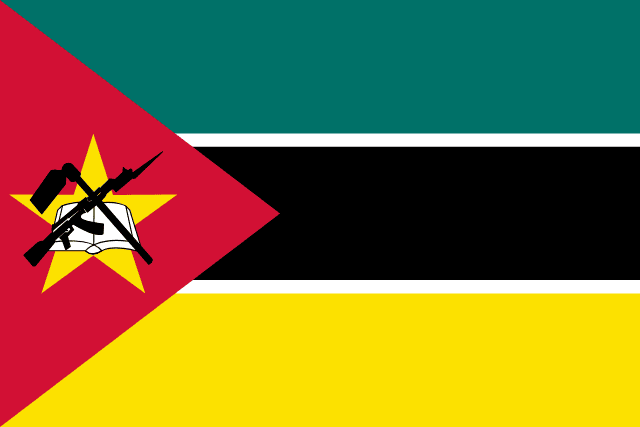
At a Glance
Alliances & Memberships
- UN
- AU
- SADC
- CPLP
- OIC
- Commonwealth
Foreign Policy Overview
Cabo Delgado insurgency (Rwandan and SAMIM forces); LNG mega-projects; close South Africa ties; hosts Mozambique Channel.
Key Positions on Major Issues
Counter-insurgency; LNG development; SADC regional security.
UN Voting Record Notes
African consensus; pro-Palestine.
Economy & Trade
Mozambique's economy is heavily reliant on agriculture, which employs over 70% of the workforce, though its GDP is increasingly driven by aluminum, coal, and massive offshore natural gas reserves in the Rovuma Basin. The country uses the Mozambican Metical (MZN) and maintains primary trade relationships with South Africa, China, India, and the UAE. Despite significant foreign direct investment in the extractive sector, the nation faces high external debt and remains one of the world's poorest countries per capita. Major exports include aluminum, coal, tobacco, and electricity produced via the Cahora Bassa dam.
Military & Security
The Mozambique Defence Armed Forces (FADM) consist of approximately 12,000 active personnel, focusing primarily on internal security and maritime protection. Defense spending has surged recently due to the insurgency in Cabo Delgado, supported by SADC Mission in Mozambique (SAMIM) and Rwandan security forces. Mozambique is a non-nuclear state and a signatory to the Treaty of Pelindaba, establishing Africa as a nuclear-weapon-free zone. The current military doctrine emphasizes counter-insurgency and regional security cooperation to protect critical energy infrastructure.
Recent History
Following a 16-year civil war that ended in 1992, Mozambique emerged as a model for post-conflict reconstruction until the discovery of massive gas reserves sparked new tensions. In 2013, a low-level insurgency by the former rebel group RENAMO resurfaced, eventually leading to a definitive Peace and National Reconciliation Agreement in 2019. Since 2017, the country has been destabilized by an Islamist insurgency (Al-Sunnah Wa-Jamo) in the northern Cabo Delgado province, causing a massive humanitarian crisis and stalling multi-billion dollar LNG projects. The 'hidden debt' scandal of 2016, involving $2 billion in undisclosed loans, caused a freeze in IMF donor support and a prolonged economic crisis. Currently, the government under President Filipe Nyusi focuses on stabilizing the North and fostering economic recovery through extractive industries and climate resilience initiatives.
International Memberships
- Southern African Development Community (SADC)since 1980
Founding member; actively involved in regional peacekeeping and trade integration.
- Community of Portuguese Language Countries (CPLP)since 1996
Member of the Lusophone community, maintaining strong cultural and diplomatic ties with Portugal and Brazil.
- African Union (AU)since 1975
Reflects Mozambique's historical ties and commitment to African unity and security.
- United Nations Security Council (UNSC)since 2023
Elected as a non-permanent member for the 2023-2024 term, focusing on counter-terrorism and climate change.
MUN Negotiation Profile
Non-Aligned / African Bloc / Lusophone Group
Mozambique employs a consensus-driven and pragmatic approach, often acting as a bridge between Western investors and Global South political interests. Following its recent UNSC tenure, it has become more assertive in advocating for 'African solutions to African problems.'
- Any violation of national sovereignty regarding the management of natural resources (LNG).
- External interference in the internal management of the Cabo Delgado security crisis.
- Reductions in international climate adaptation funding for developing coastal nations.
- "The necessity of international cooperation in combating terrorism and violent extremism in Southern Africa."
- "Demanding 'Climate Justice' and financial compensation for Loss and Damage as a country disproportionately affected by cyclones."
- "Promotion of the 'Youth, Peace, and Security' agenda to prevent radicalization in underdeveloped regions."