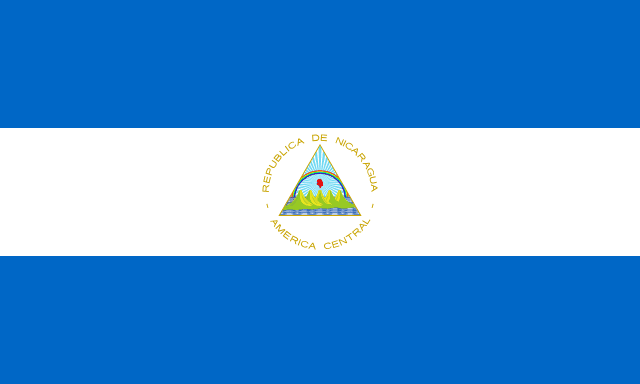
At a Glance
Alliances & Memberships
- UN
- ALBA
- CELAC
- G77
Foreign Policy Overview
Aligned with Russia, China, Iran, Venezuela, Cuba; left OAS (2023); cracked down on church and civil society.
Key Positions on Major Issues
Anti-US; pro-Russia/China; recognized Russian-occupied Ukraine territories; severed Israel ties; brought ICJ case against Germany over Israel arms.
UN Voting Record Notes
Votes consistently anti-Western; with Russia/China.
Economy & Trade
Nicaragua remains the poorest country in Central America, with an economy heavily reliant on agriculture (coffee, beef, sugar) and gold mining, which accounts for a significant portion of export earnings. Despite international sanctions on high-ranking officials, the country maintains trade via the CAFTA-DR agreement with the US, though it is aggressively pivoting toward China following the 2021 resumption of diplomatic ties. The currency is the Córdoba (NIO), and remittances from Nicaraguans abroad—primarily in the US and Costa Rica—account for nearly 30% of the GDP. Key trade partners include the United States, El Salvador, and increasingly the People's Republic of China under a new Free Trade Agreement.
Military & Security
The Nicaraguan Army (Ejército de Nicaragua) maintains approximately 12,000 active-duty personnel with a focus on border security and counter-narcotics. Defense spending is relatively low by international standards but prioritize internal stability and sovereignty; the country possesses no WMDs and is a signatory to the Treaty of Tlatelolco. Nicaragua maintains a strong military cooperation agreement with Russia, which includes the presence of Russian personnel for training and humanitarian purposes, as authorized by the National Assembly. Current doctrine emphasizes "Active Defense" and the protection of national sovereignty against perceived "imperialist" intervention.
Recent History
After the return of Daniel Ortega to power in 2007, Nicaragua transitioned from a nascent democracy to one characterized by centralized FSLN control. A pivotal moment occurred in April 2018, when mass anti-government protests were met with a severe crackdown, leading to hundreds of deaths and a long-term political crisis. Following the 2021 elections, which were widely denounced by the international community as fraudulent due to the imprisonment of opposition candidates, Nicaragua formally withdrew from the OAS in 2023. In a major geopolitical shift, the government severed ties with Taiwan in 2021 to recognize the People's Republic of China, seeking new avenues for investment. Domestically, the government has shuttered thousands of NGOs and tightened control over the Catholic Church and media outlets. In 2024 and 2025, policy has focused on deepening ties with the "BRICS-plus" orbit and Russia to bypass Western financial isolation.
International Memberships
- United Nations (UN)since 1945
Founding member; currently has a contentious relationship with the Secretariat regarding human rights.
- Organization of American States (OAS) - Former Membersince 1950-2023
Withdrew formally in Nov 2023 following international criticism of the 2021 elections.
- ALBA-TCPsince 2007
Core member of the leftist regional integration bloc.
- PRC-Nicaragua Strategic Partnershipsince 2021
Strategic partner in the Pacific Basin; FTA signed in 2023.
- Central American Integration System (SICA)since 1991
Active member of the regional economic and political integration body.
MUN Negotiation Profile
Socialist / Anti-Imperialist / Revisionist (aligned with Russia, China, Cuba, and Venezuela).
Confrontational and sovereignty-focused; often uses international forums to denounce Western "interventionism" and "unilateral coercive measures."
- Any resolution questioning the legitimacy of the 2021 general elections or the current constitutional framework.
- Proposed humanitarian interventions or "Responsibility to Protect" (R2P) mechanisms that bypass central government consent.
- Support for international sanctions or "unilateral coercive measures" against sovereign states.
- "The imperative of national sovereignty and the right of peoples to self-determination without foreign interference."
- "The condemnation of "illegal" international sanctions which Nicaragua views as modern-day economic warfare."
- "The promotion of a "multipolar world order" to counter the perceived hegemony of the United States and its allies."