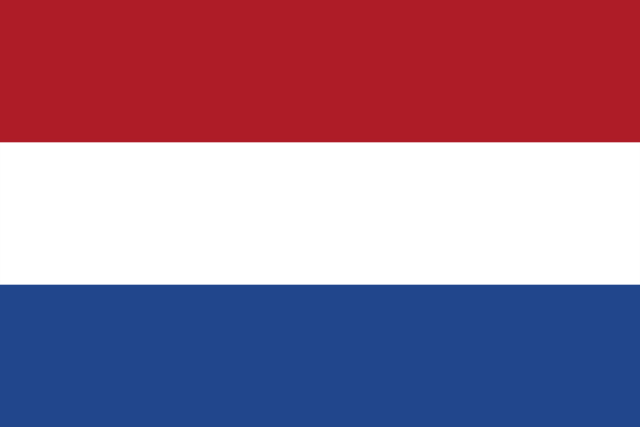
At a Glance
Alliances & Memberships
- EU (European Union)
- NATO (North Atlantic Treaty Organization)
- OECD (Organisation for Economic Co-operation and Development)
- Benelux Union
- Schengen Area
- G10 (Group of Ten)
- The Hague Code of Conduct (HCoC)
Foreign Policy Overview
The Netherlands follows a doctrine of 'International Law as a Pillar of Peace,' rooted in Article 90 of its Constitution which tasks the government with promoting the development of the international legal order. It maintains a staunchly pro-Atlanticist and pro-EU posture, acting as a bridge between the 'Frugal Four' and the larger EU powers. Key relationships are defined by deep integration with Germany, a 'special relationship' with the US on intelligence and security, and a commitment to multilateralism through the UN and NATO. The Hague’s status as the 'legal capital of the world' (hosting the ICJ and ICC) makes the promotion of human rights and the rule of law its primary foreign policy objective. Recently, it has pivoted toward a more assertive stance on European strategic autonomy while remaining wary of decoupling from Transatlantic security structures.
Key Positions on Major Issues
CLIMATE: Aiming for climate neutrality by 2050; strong advocate for the European Green Deal and carbon pricing. Focus on water management and maritime adaptation. SECURITY: Committed to NATO’s 2% GDP spending target; major contributor to Ukraine's defense (F-16 coalition lead). Focus on cyber-security and counter-terrorism. HUMAN RIGHTS: Global leader in LGBTQ+ rights, gender equality, and freedom of the press. Firm supporter of the International Criminal Court (ICC). TRADE: Pro-free trade; champion of the 'Level Playing Field' in EU-China relations. High emphasis on sustainable supply chains. REGIONAL: Strong advocate for EU enlargement based on strict rule-of-law criteria; supporter of Benelux cooperation.
UN Voting Record Notes
Consistently votes in favor of UNGA resolutions condemning Russian aggression in Ukraine. Always votes 'Yes' on resolutions concerning LGBTQ+ rights and the abolition of the death penalty. Frequently joins the 'Nordic-plus' group in supporting high levels of development aid. Often sponsors resolutions related to the ‘Responsibility to Protect’ (R2P). In the UNSC (last term 2018), focused heavily on the nexus between climate change and conflict.
Economy & Trade
The Netherlands is the world's 18th largest economy. GDP composition: Services 70.2%, Industry 17.9%, Agriculture 1.6%. It is the second-largest agricultural exporter globally. Currency: Euro (EUR). Key industries: chemicals, petroleum refining, electrical machinery, and food processing. Trade partners: Germany, Belgium, China, USA, UK. Port of Rotterdam is Europe's largest maritime hub.
Military & Security
The Netherlands Armed Forces consists of approximately 40,000 active personnel. Defense spending has surged to meet the 2% NATO target by 2024. Doctrine focuses on high-tech, integrated operations with Germany (the 11th Airmobile Brigade and 13th Light Brigade are integrated into the German Army). It participates in NATO nuclear sharing (B61 gravity bombs at Volkel Air Base). Key focus: Cyber Command and Rapid Reaction Forces.
Recent History
Since the 1990s, the Netherlands has transitioned from a traditionally socially liberal consensus toward a more complex political landscape shaped by the rise of populism (Pim Fortuyn, Geert Wilders). In 2014, the downing of flight MH17 over Ukraine—killing 193 Dutch citizens—fundamentally shifted Dutch policy toward Russia, leading to a hardline stance on sanctions and defense. Economically, the country navigated the Eurozone crisis as a 'frugal' state. The 2020s have been marked by the 'Nitrogen Crisis' impacting the agricultural sector and a shift in leadership following the long tenure of Mark Rutte (2010-2024), culminating in the 2024 formation of a right-leaning coalition under Prime Minister Dick Schoof.
International Memberships
- European Unionsince 1951/1957
Founding member; core of economic and political policy.
- NATOsince 1949
Founding member; cornerstone of national defense.
- United Nationssince 1945
Primary forum for global legal advocacy and development aid.
- OPCWsince 1997
Host of the Secretariat; global influence on chemical disarmament.
- International Criminal Court (ICC)since 2002
Host of the court; central to the Hague's legal identity.
MUN Negotiation Profile
Western European and Others Group (WEOG), European Union, NATO.
Direct, pragmatic, and consensus-oriented. 'Polder Model' approach (seeking compromise among stakeholders). Highly technical and legally grounded.
- No compromise on the independence or funding of the International Criminal Court (ICC).
- Strict adherence to the 'Copenhagen Criteria' for any EU enlargement (no shortcuts on rule of law).
- Rejection of any international agreement that lacks clear, binding accountability mechanisms for human rights violations.
- Opposition to protectionist trade measures that undermine the WTO-led global order.
- "The Kingdom of the Netherlands maintains that there can be no lasting peace without justice; perpetrators of international crimes must be held accountable before the ICC."
- "As a nation reclaimed from the sea, we urge this committee to treat the climate crisis not as a future threat, but as an immediate existential challenge to global security."
- "We must transition from voluntary commitments to binding legal frameworks if we are to protect the digital frontier from state-sponsored cyber aggression."
- "My delegation bridge-builds through pragmatism, yet we will never sacrifice the principle of universal human rights for the sake of political expediency."
- "We call upon all member states to honor their financial obligations to the UN, ensuring the stability of our collective multilateral institutions."