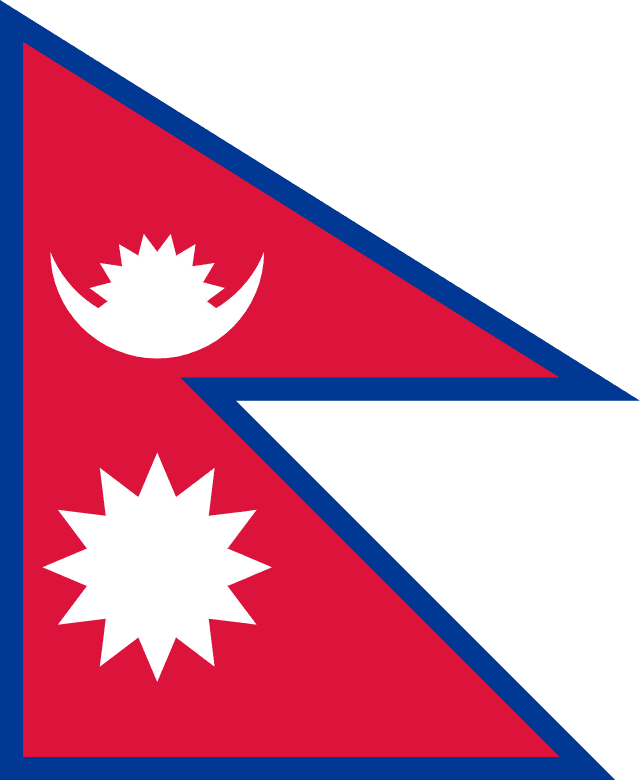
At a Glance
Alliances & Memberships
- SAARC (Charter Member)
- BIMSTEC
- Non-Aligned Movement (NAM)
- G77+China
- LDC Group
- United Nations (UNESCAP)
Foreign Policy Overview
Nepal follows a policy of 'Amity with all, enmity with none,' rooted in Panchsheel (five principles of peaceful coexistence). As a landlocked country positioned between India and China, Nepal maintains a delicate 'Equidistant' or 'Balanced' doctrine to safeguard its sovereignty and transit rights. Current policy prioritizes economic diplomacy, regional connectivity through BIMSTEC and BBIN, and active participation in UN Peacekeeping Operations to enhance international prestige. Nepal is a vocal advocate for the rights of Landlocked Developing Countries (LLDCs) and Least Developed Countries (LDCs), particularly regarding climate justice and trade facilitation. It maintains a strictly non-aligned posture, refusing to join any formal military alliances.
Key Positions on Major Issues
CLIMATE: Demands 'Loss and Damage' compensation for Himalayan melting (the Third Pole); pushes for Mountain Agenda in COP negotiations. SECURITY: Committed to non-proliferation; global leader in providing UN Peacekeeping personnel (currently 2nd largest contributor). HUMAN RIGHTS: Focus on the rights of migrant workers abroad and transitional justice following the 2006 Comprehensive Peace Accord. TRADE: Urgent need for unconditional transit rights for landlocked states; seeks duty-free quota-free (DFQF) market access. REGIONAL: Strong advocate for reviving SAARC and strengthening the BIMSTEC framework for integration.
UN Voting Record Notes
Consistently votes in favor of resolutions supporting Palestinian statehood. Voted to deplore the invasion of Ukraine (ES-11/1) in line with sovereignty principles, despite regional neighbors abstaining. Strong supporter of UN Disarmament resolutions and the TPNW. Generally aligns with the G77 on economic and environmental matters.
Economy & Trade
GDP: Mixed (Service 61%, Agriculture 24%, Industry 13%). Currency: Nepalese Rupee (NPR), pegged to Indian Rupee. Trade: Heavily dependent on India (over 60% of trade). Major exports: Soybean oil, palm oil, synthetic yarn, carpets, nutmeg. Major imports: Petroleum products, iron and steel, machinery. Remittances account for approx. 23-25% of GDP.
Military & Security
Total active personnel: ~95,000 (Nepali Army). Spending: ~1.4% of GDP. Doctrine: Territorial defense and internal security. Non-nuclear state; signatory to the TPNW (Treaty on the Prohibition of Nuclear Weapons). No foreign military bases on soil. Expert in high-altitude and jungle warfare.
Recent History
1996–2006: Decade-long Maoist insurgency ends with the Comprehensive Peace Accord. 2008: Abolition of the 240-year-old monarchy and transition to a republic. 2015: Promulgation of a new secular federal constitution followed by a major earthquake and a border blockade. 2017–Present: Implementation of federalism with local, provincial, and federal elections; ongoing navigation of the US-China-India geopolitical 'triangulation.'
International Memberships
- SAARCsince 1985
Founding member; hosts the Secretariat in Kathmandu.
- United Nationssince 1955
Consistently one of the top troop-contributing countries (TCC).
- BIMSTECsince 2004
Key regional cooperation for Bay of Bengal integration.
- World Trade Organization (WTO)since 2004
Active member and former chair of the LDC Group.
MUN Negotiation Profile
G77, LDCs, LLDCs, NAM
Mediatory, consensus-oriented, and principled on legal sovereignty. Often acts as a bridge between regional powers.
- Non-interference in internal sovereign affairs.
- Any restriction on transit rights to the sea for landlocked nations.
- Explicit alignment with military blocs (e.g., IPS vs BRI competition).
- Dilution of the 'Least Developed Country' special provisions during graduation.
- "As a country on the front lines of the climate crisis, Nepal demands that the international community recognize the melting of the Himalayas as a global emergency."
- "Nepal reminds this committee that as a landlocked state, our right of access to and from the sea is a recognized international principle that cannot be compromised."
- "My delegation emphasizes that international security is best served through multilateralism and UN peacekeeping, not through unilateral military expansions."
- "We call upon our development partners to ensure a smooth transition and continued support as Nepal prepares to graduate from LDC status by 2026."
- "Nepal remains committed to the principles of non-alignment and urges all parties to prioritize dialogue over confrontation in regional disputes."