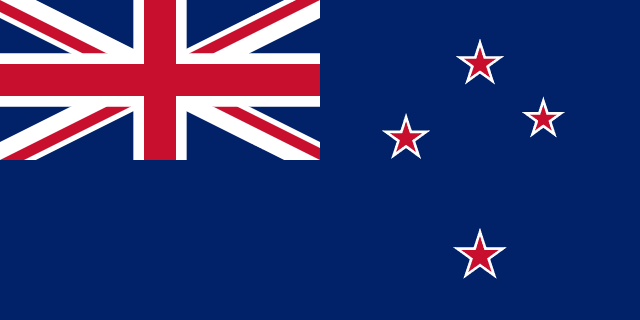
At a Glance
Alliances & Memberships
- Five Eyes
- ANZUS (de facto, though treaty inactive)
- various bilateral defense agreements
Foreign Policy Overview
New Zealand's foreign policy is characterized by an independent, rules-based approach, emphasizing multilateralism, disarmament, human rights, and environmental protection. It seeks to promote stability and prosperity in the Pacific region through diplomacy, aid, and strong relationships with island nations. Key relationships include Australia, the United Kingdom, the United States, China, and Japan. The country often acts as a bridge-builder, advocating for peaceful resolution of disputes and upholding international law. New Zealand maintains a non-nuclear stance and actively promotes nuclear disarmament globally.
Key Positions on Major Issues
Climate: New Zealand is committed to addressing climate change through domestic emissions reductions and international cooperation. It has set ambitious targets, including achieving net-zero carbon emissions by 2050 and transitioning to 100% renewable electricity generation. New Zealand actively participates in UNFCCC negotiations and provides support to Pacific Island nations vulnerable to climate impacts. Security: New Zealand's security policy prioritizes regional stability, counter-terrorism, and maritime security in the South Pacific. While a member of Five Eyes, it maintains an independent foreign policy, carefully balancing relationships with major powers. It contributes to UN peacekeeping operations and disaster relief efforts, emphasizing a non-militaristic approach to security challenges. Human Rights: New Zealand is a strong advocate for human rights globally, promoting gender equality, indigenous rights, and the rights of minorities. It actively participates in the UN Human Rights Council and uses its voice to condemn human rights abuses, often through multilateral fora and diplomatic channels. Trade: New Zealand is a strong proponent of free trade, pursuing agreements that benefit its export-driven economy. It is a member of various regional trade blocs, including APEC and CPTPP, and seeks to diversify its trade relationships. Key exports include dairy, meat, wood products, and tourism. New Zealand advocates for fair and open markets, while also championing ethical and sustainable trade practices. Regional: New Zealand prioritizes its engagement with Pacific Island countries, providing significant development assistance, humanitarian aid, and diplomatic support. It works to strengthen regional institutions, address shared challenges like climate change and sustainable development, and promote stability and prosperity throughout the Pacific.
UN Voting Record Notes
New Zealand consistently supports resolutions upholding international law and multilateralism. In the context of Russia-Ukraine, New Zealand has strongly condemned Russia's aggression, voting in favor of resolutions like UNGA ES-11/1 and ES-11/x calling for an end to hostilities and upholding Ukraine's territorial integrity. On Israel-Palestine, New Zealand generally supports a two-state solution, often voting in favor of resolutions that call for a cessation of violence, protection of civilians, and respect for international humanitarian law. In climate discussions, it advocates for ambitious emissions reductions and support for vulnerable nations. On human rights, New Zealand consistently supports resolutions promoting universal human rights and condemning abuses, often aligning with Western democracies.
Economy & Trade
GDP composition: Services (65%), Industry (26%), Agriculture (7%). Key industries: Agriculture, horticulture, fishing, forestry, manufacturing, tourism, mining. Top exports: Dairy products, meat, wood and wood articles, fruit, machinery. Top imports: Machinery, vehicles, mineral fuels, electronics, plastics. Currency: New Zealand Dollar (NZD). Top trade partners: China, Australia, United States, Japan, European Union.
Military & Security
Active personnel: Approximately 9,000. Defense spending: Approximately 1.5% of GDP. Alliances: Five Eyes intelligence-sharing alliance. ANZUS treaty remains in existence, but the US suspended its security obligations to New Zealand in 1986 due to New Zealand's anti-nuclear policy. New Zealand maintains strong bilateral defense relationships with Australia and other partners. Nuclear/WMD status: Non-nuclear state, staunch advocate for nuclear disarmament. Doctrine: Focus on maritime security, regional stability, peacekeeping, and humanitarian assistance/disaster relief.
Recent History
The last ~30 years have seen New Zealand solidify its independent foreign policy. The anti-nuclear stance adopted in the mid-1980s continued to define its approach to security, leading to a strong commitment to disarmament. Economically, New Zealand transitioned to a more open, free-market economy, diversifying its trade relationships, particularly with Asia. Socially, there's been growing recognition and reconciliation concerning Māori rights and culture, impacting domestic policy and international representation. Engagements in peacekeeping operations and disaster relief efforts in the Pacific and further afield have underscored its role as a responsible global citizen. The COVID-19 pandemic significantly impacted its economy and border policies, further highlighting its self-reliant yet interconnected global position.
International Memberships
- United Nations (UN)since 1945
Founding member, committed to collective security, human rights, and international cooperation.
- Commonwealth of Nationssince 1931 (Statute of Westminster)
Maintains historical ties and promotes shared values with former British territories.
- Asia-Pacific Economic Cooperation (APEC)since 1989
Promotes free trade and economic cooperation across the Asia-Pacific region.
- World Trade Organization (WTO)since 1995
Committed to a rules-based multilateral trading system.
- Pacific Islands Forum (PIF)since 1971 (as South Pacific Forum)
Key regional body fostering cooperation and addressing challenges in the Pacific.
MUN Negotiation Profile
Independent, but often aligns with liberal democracies on human rights and international law; strong regional focus on the Pacific.
Principled, pragmatic, and consensus-driven, often seeking common ground while firmly upholding its core values. Willing to compromise on non-core issues for broader agreement.
- Undermining nuclear disarmament efforts or promoting nuclear proliferation.
- Erosion of international law or multilateral institutions, particularly the UN.
- Actions that significantly destabilize the South Pacific region or threaten the sovereignty of Pacific Island nations.
- Any policy that discriminates against indigenous populations or undermines human rights.
- Trade protectionism that unfairly targets New Zealand's key export industries.
- "“New Zealand firmly believes in the power of multilateralism and a rules-based international order to address global challenges.”"
- "“As a small island nation, New Zealand understands the critical urgency of climate action and calls upon all members to meet their commitments.”"
- "“Our commitment to a nuclear-free world is unwavering; disarmament is not merely an aspiration, but a collective responsibility.”"
- "“New Zealand stands in solidarity with our Pacific Island neighbors, advocating for their resilience and sustainable development.”"
- "“Promoting human rights and the dignity of all peoples is not just a policy for New Zealand; it is fundamental to who we are.”"