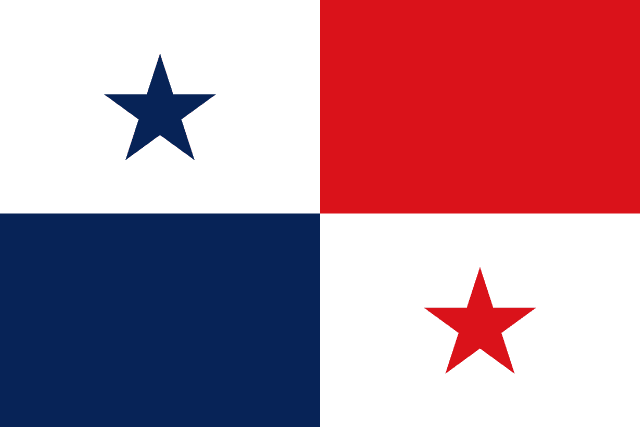
At a Glance
Alliances & Memberships
- UN
- OAS
- SICA
- CELAC
Foreign Policy Overview
Canal sovereignty (Trump rhetoric 2024-25); recognized PRC over Taiwan (2017); US-aligned historically; Darién Gap migration.
Key Positions on Major Issues
Canal sovereignty (responding to US); migration; financial transparency post-Panama Papers.
UN Voting Record Notes
Generally Western-aligned in OAS.
Economy & Trade
Panama's economy is service-based, driven primarily by the Panama Canal, logistics, and the Colon Free Trade Zone, which collectively account for over 75% of GDP. The country uses the Balboa (PAB) at par with the US Dollar (USD) and maintains a high-income status with key exports including copper ores, refined petroleum, and bananas. Top trade partners include the United States, China, and Japan, with China being the second-largest user of the Canal. Recent years have seen a transition away from mining following the 2023 closure of the Cobre Panamá mine due to environmental protests.
Military & Security
Panama is a demilitarized nation, having constitutionally abolished its standing army in 1994, and relies on the Panamanian Public Forces (Senafront, Senan, and National Police) for internal and border security. Defense spending is primarily allocated to maritime policing and border control in the Darien Gap to manage record-breaking irregular migration flows. Panama maintains a neutral stance regarding the Canal, governed by the 1977 Neutrality Treaty which ensures the waterway remains open to all nations even in times of war. The country is a signatory to the Tlatelolco Treaty and does not possess weapons of mass destruction.
Recent History
Following the 1989 US invasion and the restoration of democracy, Panama regained full control of the Canal in 1999, marking a shift toward total sovereignty. The completion of the Canal expansion in 2016 solidified its role as a global logistics hub, though it has faced scrutiny over transparency following the 1990s-era 'Panama Papers' scandal. In 2017, Panama broke ties with Taiwan to recognize the People's Republic of China, signaling a pragmatic shift in its economic foreign policy. Recent years have been dominated by the Darien Gap migration crisis and the 2023-2024 domestic unrest regarding the First Quantum Minerals contract, which led to a landmark Supreme Court ruling closing the mine. Under President José Raúl Mulino (elected 2024), Panama has pivoted toward stricter border controls and renewed security ties with the United States.
International Memberships
- United Nations (UN)since 1945
Founding member; active in regional security and democratic promotion.
- Organization of American States (OAS)since 1948
Host of many regional summits; emphasizes hemispheric cooperation.
- SICA (Central American Integration System)since 1991
Central to regional trade and political integration.
- Major Non-NATO Ally (MNNA) status (USA)since 2024
Non-NATO ally partner with deep security cooperation.
MUN Negotiation Profile
Pro-Western/Non-Aligned/Regionalist (SICA)
Mediation-oriented; focuses on consensus-building, maritime law, and international commerce stability.
- Violations of the Neutrality Treaty regarding the Panama Canal.
- Mandatory quotas for migrant absorption without international financial support.
- Infringements on national sovereignty regarding financial regulation and 'grey lists'.
- "The necessity of international burden-sharing for the humanitarian crisis in the Darien Gap."
- "Climate change mitigation as a priority for maritime trade and Canal water levels."
- "Global cooperation in combating drug trafficking and organized crime in the transit zone."